
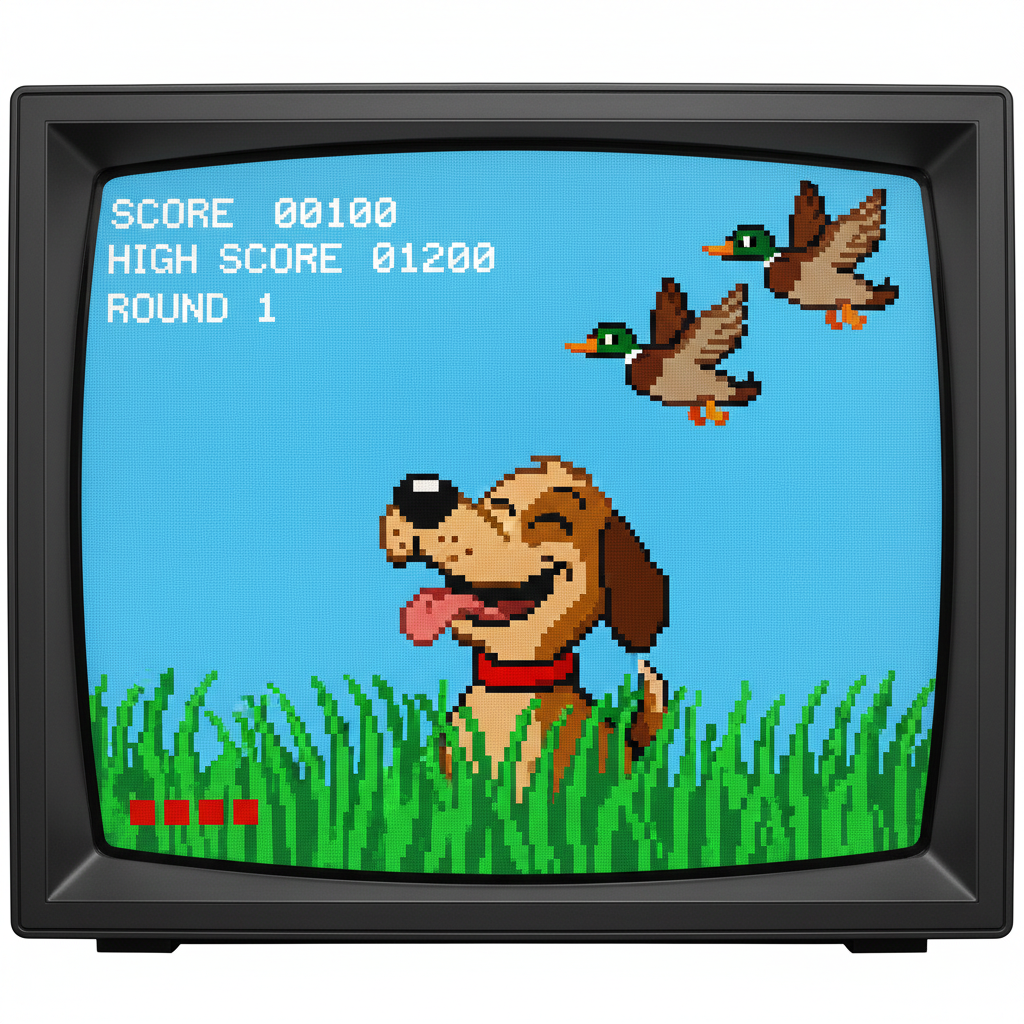
Introduction to Duck Hunt
Duck Hunt, a pioneering video game developed by Nintendo, was released in 1984 and quickly became a significant title in the realm of electronic entertainment. The game was originally launched alongside the Nintendo Entertainment System (NES) and marked the beginning of a new era in home gaming. Its unique use of the Zapper light gun peripheral allowed players to experience a level of interaction that was unprecedented at the time, as they aimed and shot at virtual ducks appearing on the screen.
Upon its release, Duck Hunt received a warm reception from both critics and players alike. The innovative gameplay, combined with simple yet engaging graphics, established Duck Hunt as a staple of early video gaming. The game’s design cleverly appealed to players through its straightforward mechanics, where the objective was to shoot down ducks while avoiding the pesky laughing dog that would mock players missing their shots. This blend of challenge and humor contributed to its enduring popularity.
The significance of Duck Hunt in video game history cannot be overstated. It introduced many gamers to the concept of light gun gaming, setting the foundation for future titles that would exploit similar mechanics. Duck Hunt remains a nostalgic symbol of the 1980s gaming landscape, as it was often included alongside major consoles and frequently cited in discussions about retro gaming. For many players who grew up in this era, the game evokes fond memories of family game nights and friendly competitions.
Today, Duck Hunt continues to hold a special place in the hearts of both retro gaming enthusiasts and new players discovering its charm. Its legacy endures, proving that sometimes simplicity, creativity, and engaging gameplay are all that is needed to create a timeless classic.
Gameplay Mechanics and Features
Duck Hunt, released in 1984 for the Nintendo Entertainment System (NES), stands out owing to its innovative gameplay mechanics that illuminated the capabilities of the NES Zapper light gun. Players engage in a hunting experience where they aim to shoot ducks appearing on the screen, presenting a unique blend of skill and reflexes. The primary objective is simple: use the Zapper to hit as many ducks as possible before they elude capture.
The gameplay begins with the player positioning themselves in front of the television and aiming the Zapper at the screen. As ducks flutter across the display, the player must pull the trigger to score points. The game employs a sophisticated scoring system where players receive one point for each duck successfully hit. If the player misses three ducks, the game ends, encouraging precise aiming and quick response times.
In addition to standard shooting, Duck Hunt offers two primary game modes: Duck Hunt and Shooting Gallery. In Duck Hunt mode, players can take turns shooting ducks, either solo or with a friend, adding a competitive element to the experience. The Shooting Gallery mode enhances the challenge by allowing players to target clay pigeons that are launched into the air, offering a different yet equally compelling gaming experience. Players can select between various difficulty levels, enabling novices and veterans alike to find enjoyment at their own pace.
Overall, Duck Hunt’s gameplay mechanics, especially the utilization of the NES Zapper, played a pivotal role in setting it apart from contemporary titles. Its combination of scoring systems, diverse game modes, and stimulating gameplay continues to evoke nostalgia for fans of retro gaming.
Graphics and Sound Design
The graphical style of Duck Hunt is emblematic of the 8-bit era, showcasing a pixel art aesthetic that is both simplistic and charming. Released in 1984, the game utilized a limited color palette, effectively conveying vibrant scenery and lively animations that captivated players. The ducks, the primary characters in this hunting simulation, exhibit fluid animations, creating a sense of realism and challenge as they swoop across the screen. The various backgrounds, ranging from open fields to wooded areas, are depicted with clarity, despite the constraints of the technology available at the time.
Each duck is rendered with distinct colors and patterns, allowing players to differentiate them during gameplay. The animated movements of the ducks contribute significantly to the game’s engagement; their unpredictable flight paths enhance the challenge, compelling players to improve their timing and aim. The attention to detail in the animations, coupled with the background illustrations, forms a nostalgic visual experience that resonates with players who experienced the game in its heyday.
The sound design of Duck Hunt plays an equally pivotal role in shaping its overall appeal. One of the most memorable aspects of the game is the iconic sound effects accompanying each successful shot. The distinctive “pfft” of the gunshot, followed by the satisfying quack of a downed duck, creates an auditory feedback loop that is both rewarding and addicting. Additionally, the cheerful jingle that plays upon completing a difficult round adds to the exhilaration of victory.
Combined, the pixel art graphics and sound design of Duck Hunt contribute substantially to its charm, making it not only a game of skill but also an immersive experience. The iconic visuals and sounds have left an indelible mark on fans, marking the game as a classic title in video game history.
Cultural Impact and Legacy
Launched in 1984, Duck Hunt was not just a video game; it was a pioneering force in the arcade gaming landscape that has continued to resonate through generations. This shooting game utilized the Zapper light gun, an innovative controller that fundamentally altered the interaction between players and games. Duck Hunt’s engaging gameplay and unique premise encouraged countless players to participate actively, paving the way for subsequent arcade titles that favored similar interaction mechanics.
The game’s simplistic yet challenging mechanics helped establish a new benchmark for casual gaming. As players sought to improve their shooting skills by aiming at the screen, Duck Hunt introduced friendly competition, making it a staple in living rooms and arcades alike. Its successful formula inspired a myriad of shooting games that followed, many of which adopted and adapted the light gun technology, laying the groundwork for future franchises.
Beyond its significance in gaming, Duck Hunt has enjoyed a prominent spot in pop culture. Its inclusion in various media, such as television shows, films, and even music, showcases its broad appeal and lasting influence. Memorable references in comics and animated series serve as testament to the game’s ubiquitous presence in the collective memory of both gamers and non-gamers. Additionally, Duck Hunt’s legacy has fueled nostalgia and a resurgence of interest in retro games, influencing modern developers to incorporate classic elements into their own creations. As a result, the game remains a significant milestone in gaming history, marking the transition from traditional arcade systems to more interactive home gaming experiences.

Innovations in Technology: The NES Zapper
The NES Zapper was a groundbreaking accessory introduced for the Nintendo Entertainment System (NES) that significantly impacted the world of gaming. Released alongside the popular game Duck Hunt in 1984, the Zapper was one of the first light guns to be used extensively in home console gaming. Its innovative design and functionality enabled players to experience a new level of interactivity and immersion.
The technology behind the NES Zapper was relatively simple yet effective. It operated using a cathode ray tube (CRT) and detected light from the screen. When the player pulled the trigger, the Zapper emitted a burst of light and the screen would flash white in the areas where the targets were located. The gun then registered whether the light from the screen hit the sensor inside the Zapper. If the gun was aimed at a targeted area and the timing was correct, the game registered a hit, allowing players to feel a sense of achievement when they successfully shot a virtual duck.
This ingenious technology not only made Duck Hunt immensely popular but also paved the way for future light gun games. It offered a new way of gameplay that combined traditional joystick controls with a more dynamic aiming mechanism, bridging arcade experiences and home gaming. As a result, the NES Zapper shaped the development of various shooting games to come, prompting other game developers to explore similar mechanics for their titles. The impact of the NES Zapper is well-cherished both in historical context and in its lasting influence on the gaming industry, marking a significant advancement in gaming hardware during the early years of home consoles.
Multiplayer Experience and Competition
The multiplayer experience in Duck Hunt is one of the key elements that elevates its gameplay, allowing players to engage in friendly competition. The game supports a turn-based system for two players, where they alternate shooting at ducks that appear on the screen. This dynamic encourages participants to not only strive for personal high scores but also to outscore their opponent, fostering a competitive atmosphere.
Playing with friends introduces several strategies that can enhance the overall enjoyment of Duck Hunt. For instance, players can take turns utilizing the Zapper, the iconic light gun controller, which adds a physical element to the competition. It is essential for players to develop accuracy and rhythm; therefore, practicing shot placement and timing can significantly affect performance. Additionally, determining when to aim for the swiftly flying ducks versus the stationary clay targets can lead to higher scores.
The multiplayer duel can also involve various psychological elements, including the element of suspense and the pressure of competition. Players often find themselves not just competing against the game, but also against each other, making it a test of skill, focus, and determination. Observing an opponent’s strategies can provide insight into the necessary adjustments one might need to make in their approach. Ultimately, a match can be viewed much like a rapid back-and-forth exchange, where until the very last turn, the outcome remains uncertain.
The simplicity of Duck Hunt’s multiplayer setup, combined with the engaging challenge of high-score competition, ensures that players return to the game time and time again. This aspect of Duck Hunt not only resonates with those familiar with retro gaming but continues to attract new players, highlighting the enduring appeal of classic arcade competition.
When examining Duck Hunt alongside other shooting games from its era and beyond, a number of significant parallels and distinctions emerge that highlight the evolution of the genre. Released in 1984, Duck Hunt utilized the NES Zapper and allowed players to shoot virtual ducks in a simplistic, yet engaging setting. Its immediate contemporaries, such as Hogan’s Alley, also employed light gun technology, allowing players to engage in shooting challenges with a twist, specifically focusing on accuracy and reflexes in a variety of scenarios.
One noteworthy similarity between these titles is their emphasis on player interaction through innovative input devices. Both Duck Hunt and Hogan’s Alley aimed to create an immersive experience that drew players into the action. However, while Hogan’s Alley presented a more urban backdrop with its shooting gallery setup, Duck Hunt offered a more tranquil natural environment that often appealed to a broader audience. The essential gameplay mechanics of both games involved target shooting, yet their aesthetic and thematic differences contributed to distinct player experiences.
As we compare these early classics to more modern shooters, the evolution in gameplay complexity becomes apparent. Contemporary shooting games often incorporate intricate narratives, multiplayer modes, and expansive worlds, a stark contrast to the straightforward objectives of Duck Hunt. Games like Call of Duty and Battlefield utilize advanced graphics and immersive storytelling to draw players into their environments, presenting a high level of interactivity and realism that was unattainable in earlier titles.
Notably, Duck Hunt remains relevant as a cultural icon, fostering nostalgia and attracting discussions about the roots of shooting games. In contrast, modern gaming has embraced high-paced action and detailed gameplay, yet the simplicity and charm of titles like Duck Hunt continue to resonate with audiences, demonstrating the enduring appeal of classic gaming experiences.
Nostalgia and Modern Relevance
Since its release in 1984, Duck Hunt has remained a cherished classic amongst gaming enthusiasts. The game, developed by Nintendo, not only introduced players to innovative gameplay with its light gun technology but also crafted a unique experience that has ingrained itself in the fabric of gaming culture. Today, it evokes a sense of nostalgia among those who played it in their youth, serving as a bridge connecting generations of gamers.
The simplicity of Duck Hunt is what makes it particularly memorable. Players recall their interactions with the cheerful dog who retrieved the ducks and the challenge of improving their shooting skills in a pixelated environment. This fondness has prompted a resurgence in interest, with many modern gamers seeking out Duck Hunt on retro consoles or through emulators. Various platforms that embrace classic games celebrate the community’s passion by providing the opportunity to relive these moments while introducing the game to new audiences.
Moreover, the influence of Duck Hunt can be seen in numerous remakes, ports, and references across contemporary gaming titles. For instance, games with shooting mechanics often evoke similarities, either thematically or stylistically. Some modern titles pay homage to Duck Hunt through Easter eggs, such as featuring a similar shooting mechanic or referencing the iconic dog in their gameplay. These nods serve to honor the legacy of this beloved game while making it relevant for today’s players.
As gaming continues to evolve, the enduring appeal of Duck Hunt reflects the importance of nostalgia in connecting past and present. The game’s charm persists, ensuring that its spirit lives on through both classic gaming platforms and modern titles alike, thus maintaining its iconic status in video game history.
Conclusion: The Enduring Appeal of Duck Hunt
Since its release in 1984, Duck Hunt has established itself as a hallmark of early video gaming, integrating innovation with engaging gameplay. The game is renowned for its unique light gun peripheral, which allowed players to interact with their television screens in a manner previously unseen. This pioneering control scheme significantly contributed to the immersive experience and set a benchmark for future shooting games. Its simplicity combined with the challenge of aiming at virtual ducks resonated with audiences, encapsulating the joy of gaming in its most fundamental form.
Furthermore, Duck Hunt’s legacy can be observed through its influence on subsequent generations of games. Many modern titles borrow elements from its mechanics, showcasing how the foundations laid by Duck Hunt continue to inform game design. This ongoing influence is a testament to the game’s lasting appeal, allowing it to transcend time and remain relevant in the ever-evolving universe of video games.
Moreover, Duck Hunt offers valuable lessons for new players and game developers alike. It exemplifies how simplicity in game mechanics can lead to enhanced enjoyment and accessibility. The ability to engage players without complex narratives or intricate systems highlights the importance of gameplay fundamentals in crafting a memorable experience. For those exploring the rich history of video games, Duck Hunt serves as a crucial reminder of the creativity and innovation that can arise from modest beginnings.
In summary, Duck Hunt stands as an enduring icon in the gaming world, characterized by its inventive mechanics and the sense of nostalgia it imparts. As new generations discover this classic, they not only experience a piece of gaming history but also appreciate the timeless charm that still captivates players today.