
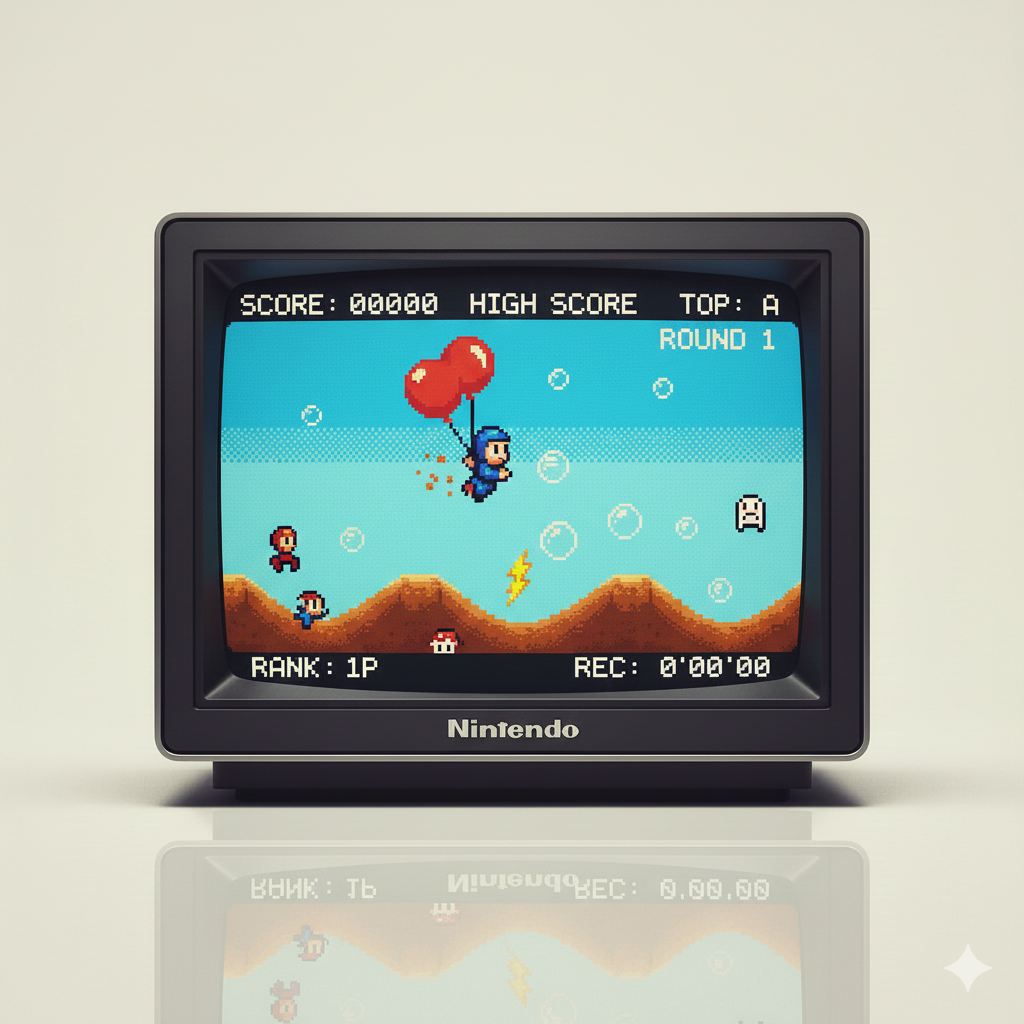
Introduction to Balloon Fight: A Nostalgic Gem
Launched in 1985, Balloon Fight is a quintessential title in the early catalog of Nintendo games, heralding a unique blend of simplicity and engagement. As one of the earliest platformers developed by Nintendo, it holds a special place in the hearts of both retro gamers and newcomers alike. The game invites players into a delightful world where they control a balloonist, navigating the skies while attempting to pop adversaries’ balloons, thus creating an exhilarating aerial duel.
The innovative concept of Balloon Fight is complemented by its straightforward mechanics. Players can ascend and glide gracefully through the air, while also engaging in strategic maneuvers to avoid falling into the water below or being ensnared by enemies. With easy-to-learn controls and an emphasis on quick reflexes, the game encourages players to improve their skills over time, making it a timeless gem that continues to appeal across generations.
This engaging gameplay, coupled with charming graphics and sounds, has allowed Balloon Fight to resonate with a diverse audience. Its competitive nature fosters a sense of camaraderie among friends and family, as players often find themselves vying for the highest score or the most impressive stunts. The nostalgic charm of the game sparks fond memories for those who played it during its initial release, while simultaneously attracting new players eager to experience the classic gameplay.
As we delve further into the features, development history, and lasting impacts of Balloon Fight, it becomes clear why this title is celebrated not only as an iconic part of Nintendo’s legacy but also as a representation of the joyful spirit and creativity of early video gaming.
Gameplay Mechanics: How Balloon Fight Captured Hearts
Launched in 1985, Nintendo’s Balloon Fight became an instant classic thanks to its engaging gameplay mechanics that resonated with players of all ages. At its core, the game revolves around simple yet captivating objectives: players control a character who must navigate through the skies, popping balloons belonging to opponents while ensuring their own balloons remain intact. This balance between offense and defense fosters a dynamic gaming experience.
The primary challenge in Balloon Fight lies in avoiding enemies such as the notorious ‘Sparrow’. These adversaries heighten the tension by actively seeking to pop the player’s balloons. This element of threat adds layers to the gameplay, as players must remain vigilant, strategically maneuvering to evade the Sparrows while executing their balloon-popping goals. The necessity to stay agile and alert significantly enriches the overall experience.
The controls are straightforward, allowing players to jump, float, and move fluidly through the air. This simplicity contributes to the game’s accessibility, encouraging both novice and seasoned players to engage without feeling overwhelmed. Additionally, players can utilize power-ups: certain bonuses enhance gameplay by providing extra abilities or temporary advantages, thereby increasing the game’s depth and variety.
Moreover, Balloon Fight features a cooperative multiplayer option, allowing two players to team up against the adversaries. This collaborative dynamic enhances the fun factor, as players can strategize together, helping each other pop balloons and fend off the Sparrows. The multiplayer mode not only promotes camaraderie but also amplifies the game’s replayability, as each session offers new strategies and challenges to explore.
Art and Sound Design: The Aesthetic Appeal of Balloon Fight
Released in 1985, Nintendo’s Balloon Fight captivates players not only through its engaging gameplay but also via its distinctive art and sound design. The vibrant graphics are a hallmark feature of the game, showcasing colorful backgrounds that contribute to its endearing appeal. The lush environments depicted in each level are characterized by an assortment of colors, with blues and greens dominating the scenery. These elements create a lively atmosphere that effortlessly draws players into the whimsical world of floating balloons.
The character design is another highlight of Balloon Fight. Players control a charming figure who, equipped with balloons, must navigate the skies while evading adversaries. The simplicity of the character’s design complements the game’s overall aesthetic, ensuring that players can easily connect with the protagonist. Additionally, the enemy designs are cleverly conceived, with various characters such as the “Balloon Fighter” and the antagonistic fish adding a layer of personality that enhances the game’s uniqueness.
The level layout of Balloon Fight is equally crucial in creating its memorable experience. Each stage introduces new challenges that encourage players to adapt their strategies, further adding to the game’s charm. The balance between difficulty and playability ensures that both new and seasoned players remain engaged throughout their gaming sessions.
Equally memorable are the audio elements, which play a vital role in establishing the game’s atmosphere. The sound effects, such as the delightful burst of balloons, evoke a sense of accomplishment, while the catchy music reinforces the whimsical charm that defines Balloon Fight. The combination of engaging visuals and pleasant audio elements creates an immersive experience that has left a lasting impact on players, making it a classic in the Nintendo library.
Legacy and Influence: Balloon Fight’s Impact on Gaming
Nintendo’s Balloon Fight, released in 1985, has made a significant mark in the annals of video game history. Its unique gameplay mechanics, combining elements of platforming and competitive play, established a precedent for numerous titles that followed. One of the most notable aspects of Balloon Fight was its multiplayer capability, allowing players to engage with each other in an exhilarating tug-of-war experience. This foundational approach to multiplayer gaming paved the way for future Nintendo titles, including the iconic Super Smash Bros. franchise, which also thrives on competitive interactions between players.
Furthermore, the game’s simplistic yet engaging graphics and sounds contributed to its charm, influencing the aesthetics of games in subsequent generations. The straightforward controls and lighthearted theme became integral components in the design philosophy of many later Nintendo games, fostering an environment that prioritized playful experiences over complex mechanics. The charming ambiance of Balloon Fight resonates throughout Nintendo’s portfolio, with echoes found in other franchises such as Mario and Kirby.
The lasting impact of Balloon Fight extends beyond its initial release; the game has seen re-releases on various platforms, including the Wii Virtual Console and Nintendo Switch Online. These modern adaptations have rejuvenated interest in this classic, allowing new audiences to experience its whimsical charm. Such re-releases not only underscore its enduring popularity but also its ability to connect with modern gaming culture. Additionally, the title has made cameo appearances in numerous Nintendo games, serving as a nostalgic nod to long-time fans while introducing its delightful gameplay to younger generations.
In summary, Balloon Fight’s legacy is evident in both its direct influence on contemporary gaming and its persistent presence in popular culture. The game’s innovative design and joyful spirit continue to inspire game developers and entertain players, thus securing a revered status within the gaming community.