
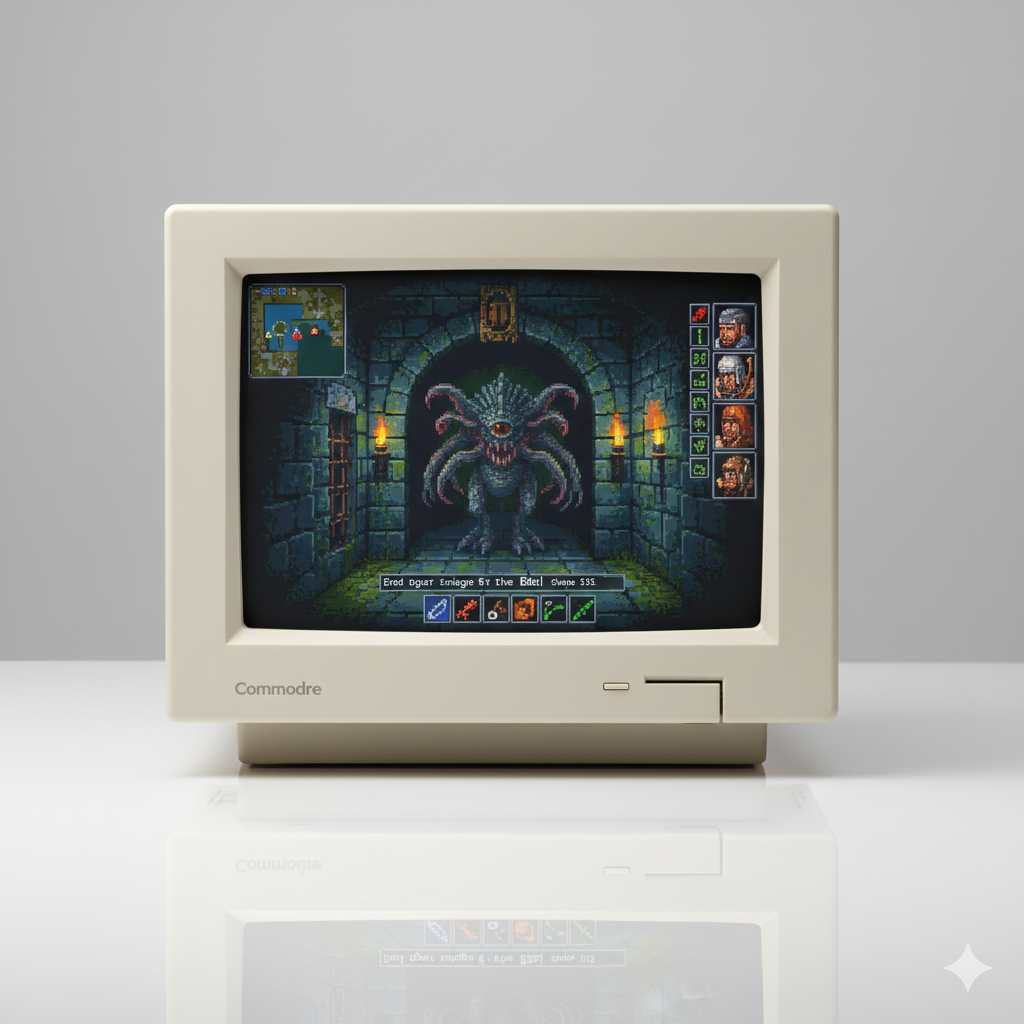
Introduction to Eye of the Beholder
Released in 1991 by Westwood Associates, Eye of the Beholder is a role-playing video game that captured the hearts of gamers in the early 90s. It is set in the iconic Dungeons & Dragons universe, specifically taking place in the city of Waterdeep. The game follows a party of adventurers who embark on a quest to defeat a powerful evil that threatens the city, utilizing a first-person perspective that was innovative for its time.
The game’s significance extends beyond its engaging storyline and immersive gameplay. Eye of the Beholder was one of the pioneering titles to successfully incorporate real-time graphics with a first-person viewpoint, allowing players to navigate intricate dungeon designs and engage in tactical combat. The advanced use of computer graphics, coupled with a suspenseful soundtrack, contributed to a formidable atmosphere that kept players on the edge of their seats. During an era dominated by tile-based graphics, the game’s seamless movement made it a standout title that showcased the technological capabilities of the Commodore Amiga, where it initially gained popularity.
Eye of the Beholder’s impact is evident not only in its critical acclaim but also in the evolution of the role-playing genre. It laid the groundwork for subsequent games to explore fantasy worlds with a similar depth of engagement and storytelling. The integration of puzzles, combat, and character development set a benchmark for future titles, influencing game design principles for years to come. As a result, the game remains a nostalgic artifact of early 90s gaming culture and a cornerstone in the annals of video game history.
The Development Story
The development of “Eye of the Beholder” stands out as a significant milestone in the realm of video gaming, particularly within the genre of role-playing games (RPGs). Launched in 1991 by Westwood Studios and published by Strategic Simulations, Inc. (SSI), the game was inspired by Dungeons & Dragons and sought to immerse players in a richly crafted fantasy environment. The creative team comprised a blend of talented artists, designers, and programmers, each contributing their expertise to the project.
One of the primary challenges faced during the game’s development was the innovative transition from 2D graphics to a fully immersive 3D environment. The team needed to create a dynamic gameplay experience that would captivate players while remaining true to the essence of Dungeons & Dragons lore. This shift was not merely technical; it required an intricate balance between storytelling and operational mechanics, ensuring that gameplay remained both engaging and strategic.
The influence of tabletop gaming on the narrative design of “Eye of the Beholder” cannot be overstated. The developers drew deeply from known D&D campaigns to construct a world filled with intricate storylines, character development, and compelling quests. Notably, the game introduced players to a series of diverse monsters, magic systems, and intricate puzzles, all contributing to a palpable sense of adventure.
Incorporating feedback from playtesters was another crucial aspect of the development. The team listened to player experiences, using this information to refine gameplay mechanics and enhance user interaction. This iterative design process ultimately shaped the game, resulting in a cohesive and polished final product. The commitment to quality and player engagement paved the way for “Eye of the Beholder” to become a landmark title in both RPGs and video game development as a whole.
Game Mechanics and Gameplay
Eye of the Beholder, developed by Westwood Studios, is a notable title in the role-playing game (RPG) genre, primarily recognized for its innovative game mechanics and immersive gameplay. The game employs a turn-based combat system that allows players to strategically plan their actions during encounters with various enemies. This system enhances the tactical depth, as players must consider their party’s array of abilities, positions, and available spells before executing their turns.
Each character in the party possesses unique skills, with attributes that influence combat effectiveness and interactions within the in-game world. The game introduces traditional RPG elements, such as character class selection and leveling up, which adds layers of complexity and personalization to gameplay. Players have the option to assemble a party consisting of different classes, including fighters, wizards, and clerics, thereby creating various combat strategies that cater to their play styles.
Puzzle-solving is another significant aspect of Eye of the Beholder’s gameplay. Players are frequently required to engage in environmental challenges that necessitate critical thinking and cooperation among party members. Many puzzles involve finding hidden items or deciphering clues that unlock new areas of the game. These mechanics encourage exploration and enhance immersion, as players delve deeper into the mysterious dungeons filled with traps and treasures.
The balance between combat and puzzle-solving ensures that players remain engaged, as they navigate through the intricacies of the game. The turn-based mechanics not only make battles more manageable for players but also emphasize its strategic nature. Furthermore, the integration of these mechanics contributes to a richly layered gameplay experience, ultimately placing Eye of the Beholder as a pioneering title in the realm of immersive RPGs.
Visual Design and Art Style
The visual design and art style of Eye of the Beholder on the Amiga platform play a crucial role in establishing the game’s immersive atmosphere. Developed during a period when graphic capabilities were limited, the game made significant use of the Amiga’s 32 colors to create detailed and engaging environments. The developers showcased impressive artistry, with carefully crafted backgrounds that evoked the dark, mysterious atmosphere of a dungeon crawling experience.
Character designs were meticulously detailed, with each figure displaying unique traits and characteristics that brought them to life. Players could encounter a diverse array of creatures, all of which were designed with purpose—whether to challenge players or to enhance the narrative experience. This diversity in character design helped to enrich the game’s fantasy world, allowing players to feel as though they were truly part of a larger story.
The use of graphical limitations characteristic of the Amiga system prompted innovative decisions in the design process. Developers were compelled to focus on creating a cohesive visual narrative with the available resources, which often led to the development of recognizable and iconic imagery. The constrained palette forced artists to prioritize clarity and distinctiveness in their designs, ensuring that players could quickly understand the game mechanics and situational contexts through visual cues.
This emphasis on visual storytelling is evident in the way enemies and environments are presented. The dungeons are filled with atmospheric lighting and shadowing techniques that heighten the sense of tension and uncertainty for players. Overall, the artistic choices made in Eye of the Beholder not only showcase the potential of the Amiga system but also serve to deepen the player’s engagement with the unfolding adventure.
Sound and Music Composition
The sound design and musical score of Amiga’s Eye of the Beholder play a pivotal role in creating an engaging atmosphere that resonates emotionally with players. The game’s composers, particularly the talented David Whittaker, crafted an intricate soundscape that deepens the immersive experience, effectively drawing players into its fantasy world. The combination of haunting melodies and ambient sounds enhances the game’s setting, making every encounter feel significant.
Throughout the gameplay, music transitions dynamically according to the player’s actions, although the compositions remain consistent in style. The use of MIDI technology allowed for crisp and clear sound, even on the limited hardware of the Amiga. The music not only serves as an auditory backdrop but also reflects the fluctuating tension and excitement inherent in a fantasy role-playing game. Each melody accompanies pivotal moments, guiding players’ emotional responses and reinforcing the narrative’s intensity.
Moreover, the sound effects contribute significantly to the overall atmosphere. The soft rustle of footsteps, the distant echo of monsters, and the clanging of swords create a sense of space and urgency within the dungeons. These auditory cues allow players to adjust their strategies according to the sounds they perceive, engaging them further in the experience. Effectively, the sound design of Eye of the Beholder works in tandem with visual elements to shape the game’s identity.
Through this rich editorial framework, Amiga’s Eye of the Beholder demonstrates how thoughtful sound and music composition can elevate a gaming experience. Players are not merely viewers but participants, emotionally connected to the narrative through the compelling use of music and sound that echoes throughout their journey.

Narrative and World-Building in Eye of the Beholder
The narrative structure of Amiga’s Eye of the Beholder plays a crucial role in immersing players into its richly developed world. The game is set in the city of Waterdeep, a hub of intrigue and adventure, where players must confront the dark forces that threaten the realm. The overarching plot revolves around the quest to explore the depths of the treacherous Undermountain, a perilous dungeon filled with monsters and mystery. This clear objective not only drives the gameplay forward but also invites players to engage deeply with the lore of the universe.
Character development is another pivotal aspect of Eye of the Beholder. Players begin by assembling a party, choosing from several classes such as the valiant fighter or the cunning rogue. Each character possesses unique abilities and backgrounds that contribute to the overall narrative. Throughout their journey, players interact with various non-player characters (NPCs), who provide backstory, quests, and insight into the world. This interaction fosters a sense of connection between the player and the characters, enhancing the emotional investment in the storyline.
The lore of Eye of the Beholder is meticulously crafted, enriching the setting and providing a foundation for world-building. The game features intricate details, from ancient texts and mysterious artifacts to the history of Waterdeep itself. Such elements not only create a vibrant backdrop for the characters’ journeys but also encourage exploration and discovery, making the world feel alive. In essence, the narrative and world-building are integral to the player’s experience, as they weave a cohesive tapestry of adventure and intrigue that captures the imagination and reinforces the game’s enduring legacy in the realm of classic RPGs.
Legacy and Influence
Released in 1991, Eye of the Beholder remains a seminal title in the realm of role-playing games (RPGs), particularly in the dungeon-crawler genre. Its pioneering design and innovative mechanics have influenced an array of subsequent titles, making it a touchstone for both developers and players alike. The game combined engaging graphics with immersive storytelling, allowing players to navigate through intricate dungeons filled with puzzles, enemies, and complex characters. This blend of elements would later become a blueprint for many RPGs that followed.
The first-person perspective of Eye of the Beholder was groundbreaking for its time, offering a level of immersion that had not been widely explored. This design choice set a precedent for future RPGs, embedding the first-person viewpoint as a staple in the genre. Titles such as Legend of Grimrock and Doomdark’s Revenge owe a debt to the innovative mechanics introduced by Eye of the Beholder, demonstrating its extensive reach and enduring legacy.
Moreover, the game’s intricate level design and resource management have influenced the tactical framework of modern dungeon crawlers. The asymmetrical movement and strategic combat introduced in Eye of the Beholder inspired later titles that sought to balance depth with accessibility, pushing the boundaries of player engagement. As a result, developers have adopted similar gameplay elements, enhancing the complexity and satisfaction of the gameplay experience in their own titles.
Thus, Eye of the Beholder not only laid foundational stones for dungeon-crawlers but also shaped the broader landscape of role-playing games, cementing its status as a classic that continues to inspire and influence even decades after its release.
Fan Reactions and Community
The release of Amiga’s Eye of the Beholder in the early 1990s not only captivated players but also sparked enthusiastic reactions that gave rise to a vibrant community. Fans celebrated the game’s innovative design, immersive storytelling, and groundbreaking graphics at the time. It became a touchstone for those who appreciate tactical gameplay and rich world-building, leading to passionate discussions and analyses across various platforms.
As technology evolved, so did the Eye of the Beholder community. With the advent of online forums and social media, fans began to share their experiences, tips, and strategies, creating an inclusive space for both newcomers and veterans. This exchange fostered a unique camaraderie, as players banded together to explore every nook and cranny of the game’s labyrinthine dungeons. The creation of fan-driven content, including walkthroughs and fan art, solidified the game’s status in the gaming pantheon.
Moreover, the enduring appeal of Eye of the Beholder has led to the development of mods and remakes that pay homage to the original. Talented enthusiasts have dedicated countless hours to enhancing the game, introducing modern graphics, updated soundtracks, and quality-of-life improvements. These projects are often born from a love for the game and a desire to share it with new generations. This has sparked a renaissance of sorts, allowing for renewed interest in a classic title and inviting even more gamers into the fold.
The continued enthusiasm for Eye of the Beholder highlights not just the game itself, but also the strength of the community that surrounds it. Fans have formed a tight-knit group that celebrates not only the gameplay experience but also the nostalgia and memories tied to this iconic title. Their dedication ensures that Eye of the Beholder remains a significant part of gaming history.
Conclusion: Why Eye of the Beholder Remains Timeless
Amiga’s Eye of the Beholder continues to resonate with gamers and enthusiasts decades after its initial release, marking it as a pivotal moment in the evolution of role-playing games (RPGs). This classic title’s enduring appeal can be attributed to several factors, including its innovative gameplay mechanics, rich storytelling, and impressive atmosphere, which set a standard for future game development.
One of the most notable characteristics of Eye of the Beholder is its unique implementation of a first-person perspective. This approach provided players with an immersive experience, as they navigated the treacherous dungeons of Waterdeep. The visually striking graphics for its time enhanced this immersive quality, drawing players deeper into its fantastical world. Furthermore, the strategic turn-based combat required tactical thinking, which appealed to those who cherish deep gameplay experiences.
The game’s narrative strength also contributed to its lasting legacy. rooted in the Dungeons & Dragons mythology, Eye of the Beholder introduced rich lore and compelling characters. This storytelling depth encourages players to invest emotionally in their quest, a feature that many modern games still aspire to replicate. The blend of atmospheric sound design and evocative music further enhances the overall experience, immersing players in its remarkable setting.
Eye of the Beholder’s impact on the gaming landscape cannot be overstated. It has influenced numerous titles in the RPG genre, inspiring game developers to incorporate similar mechanics and storytelling approaches into their own works. The continued interest in this classic game, alongside remastered versions and fan discussions, highlights its relevance even amidst the rapidly evolving gaming industry. As a result, Eye of the Beholder remains a celebrated example of interactive storytelling and immersive gameplay that retains its charm and significance to this day.