
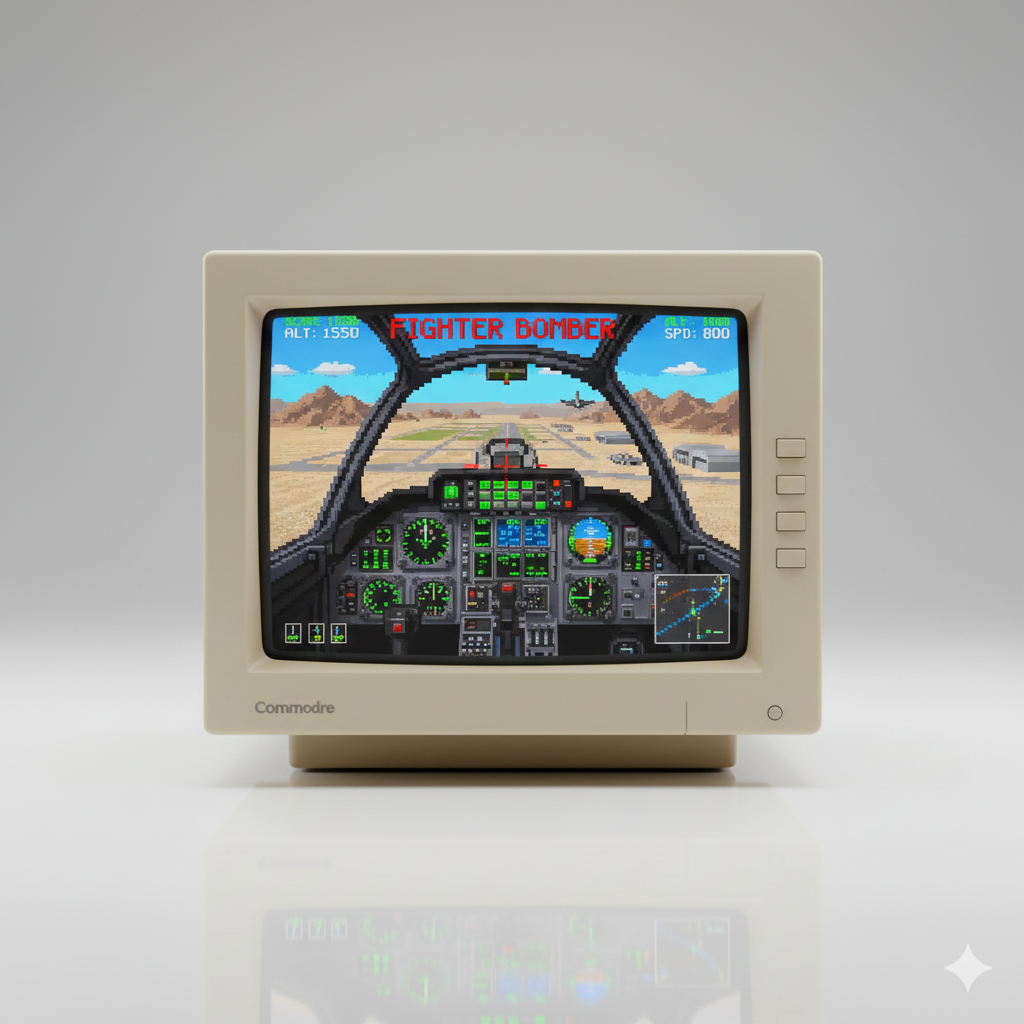
Introduction to Fighter Bomber
Fighter Bomber is a classic video game that was released in 1990, developed by the well-known software company, Image Works. Designed for the Amiga computer system, Fighter Bomber has earned a place of significance in the gaming industry, particularly among fans of military simulation games. The game combines elements of flight simulation and action combat, allowing players to engage in thrilling aerial dogfights and bombing missions.
As a member of the flight simulation genre, Fighter Bomber distinguishes itself from its contemporaries through its engaging gameplay mechanics and dynamic graphics, which were quite advanced for the time. Players take the role of a fighter pilot navigating various military scenarios, piloting a range of aircraft while undertaking missions that involve strategic bombing runs against enemy targets. The game features a detailed world map, allowing pilots to choose from different operational theaters, each with unique challenges and objectives.
Another standout feature of Fighter Bomber is its emphasis on realism and tactical planning. Players must take into consideration various factors such as wind conditions, fuel management, and enemy positions, making the gameplay experience both immersive and intellectually stimulating. The game’s graphics, brought to life by the Amiga’s superior capabilities, showcased stunning backgrounds and smooth animations that captivated players. The music and sound effects further enhanced the atmosphere, delivering an auditory experience that complemented the visual elements.
Overall, Fighter Bomber remains a noteworthy entry in the Amiga gaming library. Its innovative approach to the flight simulation genre, combined with engaging gameplay and high-quality presentation, helps it stand out as a memorable title that has influenced many similar games in the years following its release.
Gameplay Mechanics
Fighter Bomber offers an immersive and engaging gameplay experience, allowing players to take control of military aircraft in various combat scenarios. The controls are straightforward yet effective, enabling players to maneuver their aircraft with precision. Typically, players utilize a joystick or gamepad to navigate and control the plane’s speed, altitude, and direction. This responsiveness is paramount, as it enhances the overall control while dodging enemy fire and executing tactical maneuvers.
The game features a variety of missions, each designed to test the player’s skills and strategy. Players can embark on missions that involve bombing enemy bases, escorting friendly units, or engaging in dogfights against hostile planes. Objectives are clearly defined for each mission, ensuring players understand their tasks and the importance of completing them to progress through the game. The variety keeps each session fresh and engaging, drawing players into the immersive world of aerial combat.
Visually, Fighter Bomber is a testament to the capabilities of the Amiga platform. The graphics, though dated by modern standards, manage to create an intense atmosphere that captures the game’s essence. Aircraft, ground units, and environmental elements are well-rendered, contributing to the quality of the player’s experience. Additionally, the game captures the chaos of war with atmospheric sound effects; explosions, missile launches, and incoming enemy fire are all depicted with a striking realism that enhances the intensity of gameplay.
These gameplay mechanics, combined with robust controls, engaging missions, and the rich audio-visual presentation, culminate in a solid gaming experience. The classic feel of Fighter Bomber resonates well within the retro gaming community, making it a memorable title that continues to attract players who appreciate the depth of its mechanics and the nostalgia of aerial combat.
The Story and Setting
Fighter Bomber, a classic game on the Amiga platform, immerses players in the tumultuous world of aerial warfare. Set against the backdrop of a fictional conflict between two rival factions, the game crafts a narrative that unfolds as players navigate various missions. The graphics and sound design effectively transport gamers into a universe where high-stakes battles and strategic decisions are paramount.
The storyline revolves around a lone pilot tasked with the critical objective of turning the tide of war. Players step into the role of this ace pilot, who must take on perilous missions ranging from reconnaissance to bombing raids. As the narrative progresses, the character encounters unexpected plot twists and fierce adversaries, including rival aces and ground forces that add layers of complexity to the gameplay experience.
One of the significant themes within Fighter Bomber is the moral ambiguity of war. The game does not shy away from showcasing the consequences of the conflict, pushing players to consider their actions and the implications of their decisions. Additionally, the impact of teamwork and camaraderie is highlighted through the involvement of supporting characters, such as squadron members, who provide crucial assistance and motivation throughout the missions.
The game’s setting is meticulously designed, featuring diverse environments such as arid deserts, dense forests, and urban landscapes, each presenting unique challenges. This variety not only enhances the visual experience but also reinforces the feeling of navigating a sprawling war zone. Overall, Fighter Bomber’s story and setting contribute significantly to its enduring appeal, allowing players to engage deeply with its narrative elements while enjoying the thrill of aerial combat.
Mission Types and Challenges
The video game Fighter Bomber, a classic from the Amiga era, offers players a diverse range of mission types, each demanding a different set of skills and strategies. Missions in Fighter Bomber can largely be classified into three main categories: combat missions, reconnaissance missions, and strategic strikes. Each of these tasks presents its unique challenges, ensuring that gameplay remains engaging and dynamic.
Combat missions require players to engage enemy forces directly, utilizing evasive maneuvers and precise targeting to eliminate opponents while avoiding enemy fire. These encounters often take place in the heat of battle, making quick decision-making crucial. Success in combat missions necessitates not just reflexes but also an understanding of enemy patterns and positioning on the battlefield, thereby enhancing the player’s strategic capabilities.
On the other hand, reconnaissance missions shift the focus from engaging in combat to gathering critical intelligence. Players are tasked with navigating through hostile territory without being detected, which requires patience and a meticulous approach. Here, the challenges include identifying enemy locations, surveying terrain for strategic advantages, and returning to base safe and sound. Mastering reconnaissance demands a keen awareness of the environment and stealth, skills that may not always come into play during more straightforward combat scenarios.
Finally, strategic strikes embody the essence of tactical planning. These missions often hinge on planning the best approach to achieve objectives such as destroying key enemy infrastructure or intercepting supply lines. They require not only skillful piloting but also a deep understanding of the battlefield, timing, and resource management. Players must carefully consider when to engage or disengage, often leading to creative solutions that highlight strategic ingenuity.
Overall, Fighter Bomber incorporates a rich spectrum of mission types, each presenting layers of complexity and requiring varied skills and strategies. This multifaceted gameplay ensures that players remain challenged and engaged throughout their experience.
Graphics and Sound Design
Fighter Bomber, an iconic title for the Amiga system, showcases graphics and sound design that elevate the overall gaming experience. The visual elements employed in the game, particularly the sprite designs and backgrounds, play a significant role in creating an engaging atmosphere. The sprite designs are characterized by their detailed rendering, capturing the vibrant colors and dynamic animations typical of the era. These features not only serve the purpose of user engagement but also enhance the gameplay mechanics, allowing players to become fully immersed in the action.
The backgrounds of Fighter Bomber further contribute to the game’s aesthetic. Each level is beautifully crafted, providing a visually stimulating environment that complements the fast-paced gameplay. The varying themes and detailed landscapes not only represent the different settings within the game but also help in establishing a clear visual narrative. This meticulous attention to detail in both sprite designs and backgrounds significantly enhances the overall player experience.
In terms of audio, Fighter Bomber presents a soundtrack that is both memorable and well-composed. The quality of the music resonates with the energetic feel of the game, creating an engaging auditory backdrop that matches the excitement of the gameplay. Additionally, the sound effects are thoughtfully integrated, from the explosive sounds of combat to the subtle audio cues that guide the player’s actions. These auditory elements not only enrich the gaming experience but also reinforce the immersive nature of the overall design.
In conclusion, Fighter Bomber effectively combines its graphical artistry and auditory elements to create a cohesive and immersive experience for players. The impressive graphics and exceptional sound design work hand-in-hand, ensuring that every moment spent in this classic game remains memorable and engaging.

Comparative Analysis with Other Amiga Games
Fighter Bomber, released for the Amiga, captures the essence of the platform’s gaming era through its engaging mechanics and diverse gameplay modes. To appreciate its unique place, it is beneficial to compare it with other distinguished titles from the same period, such as Shadow of the Beast and Lemmings.
In terms of gameplay, Fighter Bomber presents a multifaceted approach where players control a fighter jet in a dynamic combat environment. This is markedly different from Shadow of the Beast, which is recognized for its linear progress through a rich, fantasy world, blending action with intricate platforming elements. Meanwhile, Lemmings, a puzzle game, offers entirely dissimilar gameplay, focusing on strategy and resource management, thus demonstrating the broader gaming landscape of the Amiga.
Graphically, Fighter Bomber employs vibrant colors and detailed sprites that were hallmark features of the Amiga’s capabilities. This presentation can be likened to Shadow of the Beast, which is often lauded for its stunning visuals and atmospheric design. However, where Shadow of the Beast emphasized artistic portrayal, Fighter Bomber focuses on fluidity and real-time action, resulting in a gameplay experience tightly interwoven with its graphical presentation.
Player reception offers another dimension for comparison. While Fighter Bomber received praise for its adrenaline-infused aerial dogfights, both Shadow of the Beast and Lemmings enjoyed broader cultural impacts and ongoing legacies. Players appreciated Fighter Bomber’s straightforward mechanics and engaging combat, but its depth and complexity did not resonate as universally as the innovative approaches adopted by its contemporaries.
Through this comparative analysis, it becomes evident that Fighter Bomber stands as a distinctive title within the Amiga library. Its unique contributions to gameplay, graphics, and player engagement serve not only to represent its era but also to highlight the diversity inherent in Amiga gaming culture.
Legacy and Impact on Future Games
The classic game Fighter Bomber, released for the Amiga in the late 1980s, has left a significant legacy in the realm of video games, particularly in the air combat genre. This title not only captured the imagination of gamers during its time but also laid the groundwork for future flight simulations and combat games that followed.
One of the most notable contributions of Fighter Bomber to the gaming industry is its innovative gameplay mechanics, which included a mixture of strategy and fast-paced action. The game’s incorporation of realistic flight dynamics allowed players to experience an authentic sense of piloting aircraft, an aspect that has become a standard in modern aerial combat games. The attention to flight physics in Fighter Bomber set a benchmark for developers, influencing subsequent titles such as Ace Combat and Tom Clancy’s H.A.W.X series.
Additionally, the game’s engaging mission structure and level design have become hallmarks of the genre. By offering a variety of objectives, from bombings to dogfights, Fighter Bomber illustrated how mission variety could enhance replayability. This approach has been echoed in later games where diverse mission types enrich the gameplay experience, allowing players to explore different tactical engagements within expansive environments.
The visual aesthetics and artwork in Fighter Bomber, which showcased detailed landscapes and intricate aircraft designs, also influenced future graphics in air combat games. Many contemporary titles continue to draw inspiration from the rich graphical style that Fighter Bomber exhibited, emphasizing the importance of visual storytelling in enhancing the overall player experience.
In summary, Fighter Bomber’s legacy is evident across multiple aspects of modern gaming, from core gameplay mechanics to artistic design. Its impact resonates through the years, shaping the development of flight simulation games and solidifying its place as a classic that continues to inspire creators within the industry.
Fan Community and Continued Interest
The enduring appeal of the game Fighter Bomber has fostered a vibrant fan community that remains active to this day. This community consists of both long-time players and new enthusiasts who share a mutual appreciation for the game’s innovative mechanics and nostalgic charm. Various online forums, social media groups, and gaming websites are dedicated to discussing strategies, gameplay experiences, and the overall impact of Fighter Bomber on the gaming landscape.
Events such as retro gaming conventions often feature segments dedicated to Fighter Bomber, where fans gather to celebrate their love for the title. These gatherings provide an opportunity for players to interact in person, share their gaming experiences, and even participate in tournaments. Such events not only honor the legacy of Fighter Bomber but also invigorate interest among a new generation of players, demonstrating how this classic title transcends time.
Online platforms like Discord and Reddit serve as hubs for collaboration and discussion, where fans can share gameplay tips, modifications, and fan art. Testimonials from long-time aficionados reveal a deep emotional connection to Fighter Bomber, attributed to the hours spent mastering its challenging levels and the community bonds formed through gameplay. New players, often introduced by nostalgic references or recommendations, express amazement at the game’s depth and engagement level. This cross-generational interaction further affirms Fighter Bomber’s status as a relevant piece of gaming history.
Ultimately, the fan community surrounding Fighter Bomber acts as a testament to its lasting legacy. Through shared experiences and ongoing dialogue, both veteran players and newcomers contribute to the game’s narrative, ensuring that Fighter Bomber remains a cherished classic in the gaming world.
Conclusion and Final Thoughts
In reflecting upon the exploration of Fighter Bomber, it is essential to recognize the unique characteristics that contributed to its status as a beloved title within the retro gaming community. Developed for the Amiga platform, Fighter Bomber showcased innovative gameplay mechanics that seamlessly blended strategic elements with immersive action. Its two-dimensional graphics and engaging soundtracks not only defined an era of gaming but also left a lasting impression on players worldwide.
The game’s enduring appeal can largely be attributed to its accessibility, which allowed players of various skill levels to enjoy a truly engaging experience. The captivating missions and intricate flight dynamics in Fighter Bomber invite players to immerse themselves in an exhilarating air combat environment, making nostalgia for this classic title resonate deeply even today. Furthermore, it serves as a nostalgic reminder of how far gaming has progressed, while also allowing enthusiasts to appreciate the foundational elements that paved the way for modern gaming experiences.
We encourage readers to reflect on their personal experiences with Fighter Bomber. Sharing your thoughts or fond memories can help contribute to the collective appreciation of this classic game. Additionally, discussing the impact that such titles have had on the gaming industry can foster an engaging dialogue within the gaming community. As we celebrate the legacy of Fighter Bomber, it is crucial to remember its influence on not just players, but on the evolution of video games as a whole.