
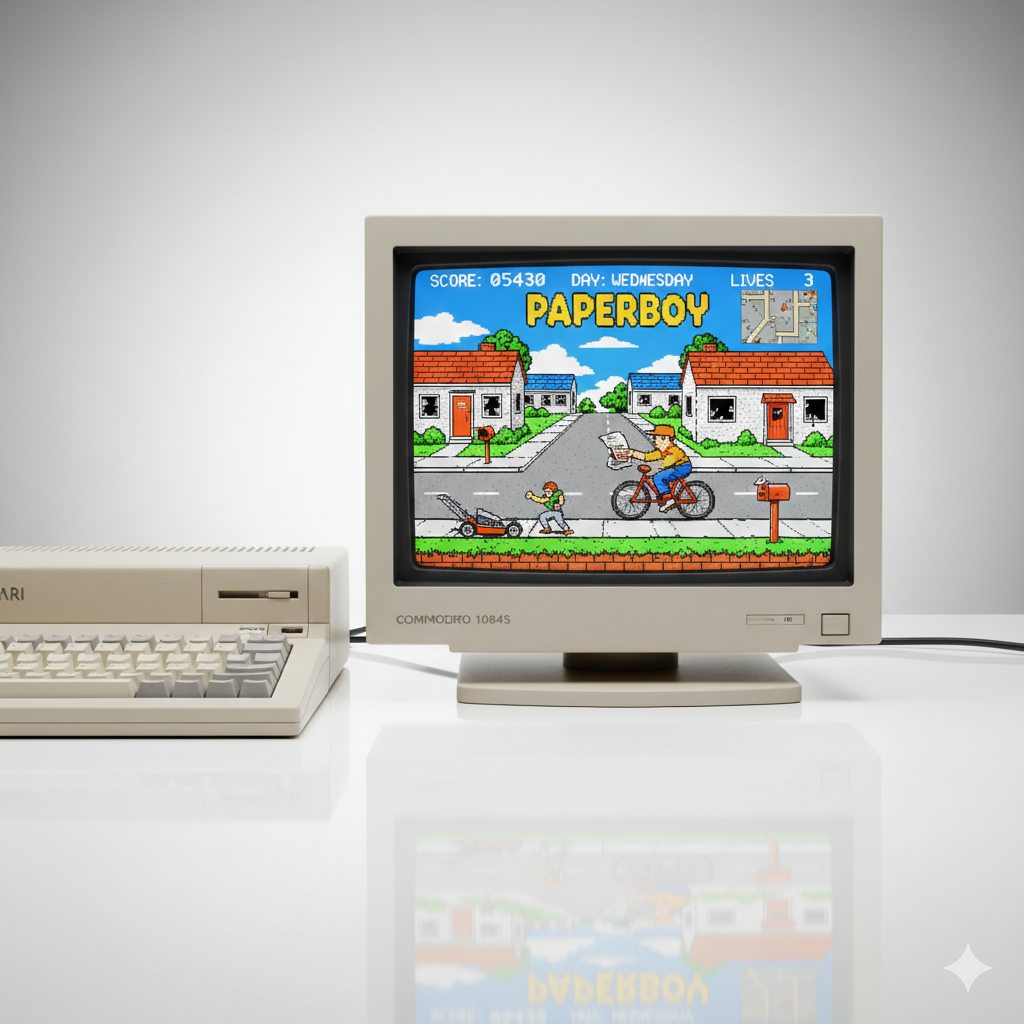
The Origins of Paperboy: A Retro Classic
Released in 1984 by Atari Games, Paperboy emerged as a distinctive title within the action simulation genre. It was developed in an era when video games were evolving, and the arcade culture was undergoing a significant transformation. At the core of Paperboy’s gameplay is the concept of delivering newspapers in a suburban neighborhood, a premise that was both relatable and engaging for players. The objective was simple: navigate a bicycle along a predetermined route while tossing newspapers at houses, avoiding obstacles, and managing the many challenges of neighborhood life.
The design philosophy of Paperboy was innovative for its time. It harnessed a unique blend of action and strategy, allowing players to experience a day in the life of a paperboy, complete with witty sound effects and vibrant graphics. The game’s mechanics required players to not only deliver newspapers accurately but also to keep an eye out for various distractions, such as mischievous dogs and rogue pedestrians. This interplay highlighted the importance of precision, timing, and quick decision-making, which contributed to its popularity in arcades.
Paperboy’s cultural significance cannot be overstated. Coming at the height of the arcade boom in the 1980s, it quickly became a pioneer, influencing game design in subsequent titles. The game’s quirky premise and engaging gameplay created a lasting appeal, making it a nostalgic favorite among gamers of that generation. It also introduced elements of environmental interaction, allowing players to create their own version of the neighborhood experience. This was a breakthrough in video game design and set a precedent for future simulation games.
As the gaming landscape progressed, Paperboy remained a touchstone in the history of arcade games, celebrated for its originality and lasting impact on game development. Its legacy continues to resonate, illustrating the remarkable journey of one of Atari’s most beloved classics.
Gameplay Mechanics: Delivering Papers and Dodging Obstacles
The gameplay mechanics of Paperboy revolutionized the way players interacted with video games during the era of classic arcade gaming. Players assume the role of a young paperboy tasked with delivering newspapers along a suburban street. The primary objective is to successfully deliver newspapers to designated houses while navigating a series of challenges. Each delivery scenario is designed to create a blend of strategy and reflex, capturing the essence of both fun and frustration that defines nostalgic gaming.
One of the key elements of the game is the players’ need to aim and throw newspapers accurately. Successful deliveries to homes earn players points, fostering a competitive atmosphere as they strive for higher scores. However, failure to hit a target, such as missing a customer’s porch or hitting obstacles, results in points being deducted. This mechanic encourages precision and skill development as the player matures in their role as a paperboy.
In addition to delivering newspapers, players must adeptly navigate an environment filled with obstacles—such as pedestrians, dogs, and cars—all of which can disrupt the delivery process. As players progress through the levels, the challenge intensifies, introducing more complex scenarios that require quick decision-making and agile maneuvering. Furthermore, players encounter customers with varying attitudes; some are understanding, while others may become irate if their papers are not delivered properly. This dynamic adds an engaging layer of realism to the game.
Through the integration of these gameplay mechanics, Paperboy provides a nostalgic experience that emphasized the importance of skillful navigation and strategic planning. The thrill of successfully delivering papers and overcoming obstacles has made this game a timeless classic in the realm of arcade gaming.
Cultural Impact and Legacy of Paperboy
Released in 1984 by Atari Games, Paperboy stands as a notable entry in the annals of video game history, shaping both the gaming landscape and popular culture. The game, which emulates the experience of delivering newspapers while navigating various obstacles, was groundbreaking in its simulation approach, influencing the direction of future simulation games. Its unique premise allowed players to engage in a mundane yet immersive activity, affirming that video games had the potential to reflect everyday life.
Paperboy garnered considerable attention during its time, receiving a polarizing reception that gave rise to a cult following. Critics praised its originality and engaging gameplay, while others found its mechanics challenging. Over the years, this divisive reception contributed to the game’s nostalgic value, as those who played it in arcades reminisce about the challenges and triumphs of mastering the delivery route.
Furthermore, the legacy of Paperboy extended into the realm of home consoles with its successful adaptations. As the gaming industry transitioned from arcade dominance to home gaming, the game was released on various platforms, including the NES and Sega Genesis. This transition introduced a new generation of gamers to the art of paper delivery and further cemented its status in gaming history.
The cultural impact of Paperboy can also be seen in popular media, inspiring references in television shows, films, and even other video games. The game serves as a reference point for discussions about nostalgia and the evolution of gaming. It continues to spark conversations among enthusiasts, underscoring its lasting influence on gaming culture.
Through its unique gameplay and enduring legacy, Paperboy remains a celebrated piece of gaming history, a testament to the creativity and innovation of its time and a key component in the ongoing dialogue about the evolution of simulation games.
Reviving Nostalgia: The Modern Reinterpretations of Paperboy
The classic arcade game Paperboy, originally released by Atari in 1984, has undergone various modern adaptations that have rekindled interest in this nostalgic title. Many developers and gaming enthusiasts have taken it upon themselves to reinterpret the game’s unique mechanics for a contemporary audience. In recent years, fan-made projects have surfaced, showcasing how devoted fans can breathe new life into retro games. These reinterpretations often embrace the original gameplay while integrating innovative features that appeal to today’s gamers.
A notable development has been the emergence of mobile game adaptations. As mobile gaming continues to dominate the market, applications recreating the Paperboy experience have become increasingly prevalent. These adaptations retain the core mechanics of delivering newspapers while allowing for simplified controls suited to touchscreen devices. Furthermore, these versions often enhance the visual appeal, providing crisp graphics and vibrant colors that modern gamers expect. This shift not only welcomes seasoned players back to the eccentricities of Paperboy but also introduces the game to a younger generation who may not be familiar with its legacy.
The original gameplay mechanics of Paperboy, while simple in nature, hold significant lessons for newcomers exploring the retro gaming universe. Elements such as timing, precision, and strategy are essential in completing daily routes and managing neighborhood chaos. New players can learn valuable skills by adapting to challenges the game presents, helping to build their understanding of game design pacing. Whether through a nostalgic experience on a console or a fresh adaptation on a mobile platform, Paperboy remains relevant, encouraging appreciation for classic gameplay while fostering creativity in modern interpretations.