
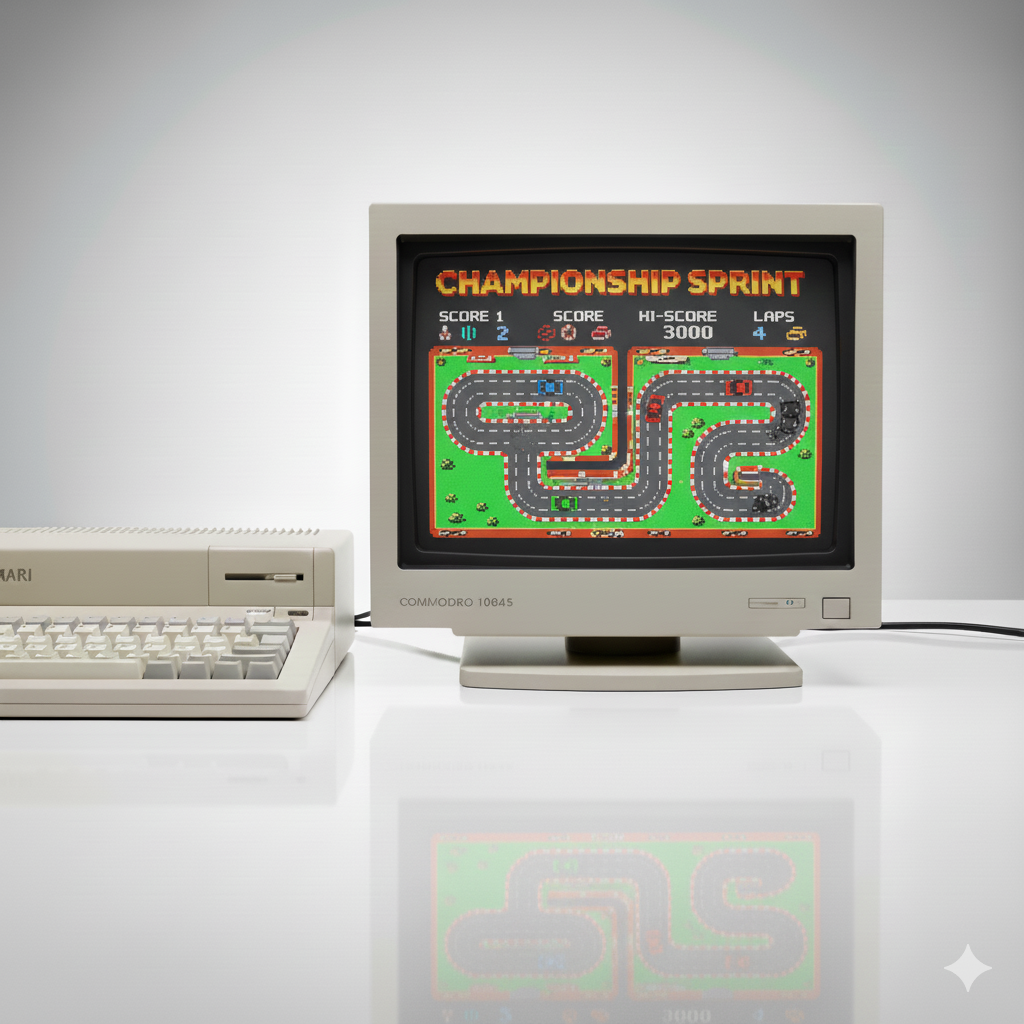
Introduction to Championship Sprint: A Retro Classic
Championship Sprint, a racing video game developed by Atari in 1986, holds a distinctive place in gaming history as a hallmark of arcade entertainment. This game is heralded as a significant advancement in the genre of racing games, featuring not only competitive elements but also a colorful, engaging aesthetic reminiscent of the era’s beloved arcade machines. Championship Sprint builds on the concept established by its predecessor, Sprint 2, providing players with a thrilling top-down racing experience.
One of the defining characteristics of Championship Sprint is its ability to accommodate up to four players simultaneously, allowing for a highly competitive atmosphere that is reminiscent of real-life racing events. Players navigate their tiny cars around a series of circuits, each filled with obstacles and unique terrain. The straightforward controls give players a sense of immediacy while driving, which enhances the thrill of competition inherent in racing games.
The game’s mechanics are relatively simple yet effective, allowing players to accelerate, steer, and brake with ease while focusing on outmaneuvering their opponents. This accessibility makes Championship Sprint not only suitable for seasoned gamers but also inviting for newcomers. As the racing game genre evolved, Championship Sprint remained a touchstone for developers, setting standards for future titles with its engaging gameplay and multiplayer capabilities.
Moreover, the aesthetics of Championship Sprint reflect the vibrant graphics common in the 1980s arcade scene. The visual style, featuring bright colors and a cartoonish depiction of racing, captivates players and enhances their gaming experience. The attempt to translate the arcade excitement into home console formats was ambitious, allowing fans to enjoy Championship Sprint beyond the confines of the arcade. The game’s combination of competitive racing, engaging visuals, and recognizable arcade roots ensures its legacy will endure in discussions about classic video games.
Gameplay Mechanics and Strategies
Atari’s Championship Sprint is a competitive racing game that brings an exhilarating experience to players through its engaging gameplay mechanics. The controls are designed for ease of use, allowing players to maneuver their cars with simple directional inputs and action buttons. The objective is straightforward: compete against other players or AI in a race to complete circuits while managing speed and control.
One distinctive feature of Championship Sprint is the incorporation of nitro boosts. These boosts provide a temporary increase in speed, giving players a critical advantage over their opponents. Timing nitro usage is essential; using it strategically on straightaways or when closing in on rivals can turn the tide of a race. In addition to nitro, various power-ups appear on the track. These include abilities such as oil slicks, which can hinder competitors, and repairs that restore your car’s performance. Players must learn to effectively utilize these power-ups to maximize their chances of victory.
The race dynamics are further influenced by obstacles on the track, such as barriers and uneven terrain. Navigating these challenges requires both skill and foresight, as players must decide when to take risks and when to play it safe. Advanced players can enhance their gameplay by analyzing opponent patterns and adapting their strategies accordingly. For beginners, focusing on mastering the controls and understanding the track layout is crucial. As they progress, they can incorporate advanced tactics, such as drafting behind competitors to conserve speed or executing tight turns to prevent losing momentum.
Overall, mastering the gameplay mechanics and developing effective strategies in Championship Sprint can significantly enhance a player’s racing experience and performance on the track.
The Competitive Scene: Tournaments and Community
The competitive landscape surrounding Atari’s Championship Sprint has undergone substantial transformation since its initial release. Competitive gaming in this classic racing genre now thrives through numerous structured tournaments and events organized by passionate communities. These competitions often draw participants who not only seek to showcase their skills but also to rekindle the nostalgia of their childhood gaming experiences. Perhaps what makes Championship Sprint particularly appealing is its accessibility; many tournament organizers opt for online platforms that allow racers from varying backgrounds to compete against one another regardless of geographical barriers.
One of the noteworthy aspects of this competitive scene is the collaboration among players worldwide, which has been significantly boosted by online gaming forums and social media platforms. Communities dedicated to Championship Sprint often exchange tips, strategies, and historical context about previous tournaments, thus fostering a sense of belonging among players. The nostalgia factor plays a crucial role, as long-time enthusiasts share their favorite memories and encourage new players to join in on the fun. This camaraderie not only enhances competitive spirit but also ensures a steady influx of newcomers eager to challenge veteran players.
Several notable events have emerged within this thriving ecosystem, with tournaments hosted both online and in-person across various gaming conventions. These events typically feature not only Championship Sprint but also a mix of other retro racing titles, celebrating the genre as a whole. As players compete for recognition and prizes, the atmosphere becomes electric, reminiscent of arcade competitions from the past. The continuous evolution of technology and community organization means that Championship Sprint will likely remain a beloved fixture in the competitive gaming arena for years to come, connecting players through their shared love for this classic title.
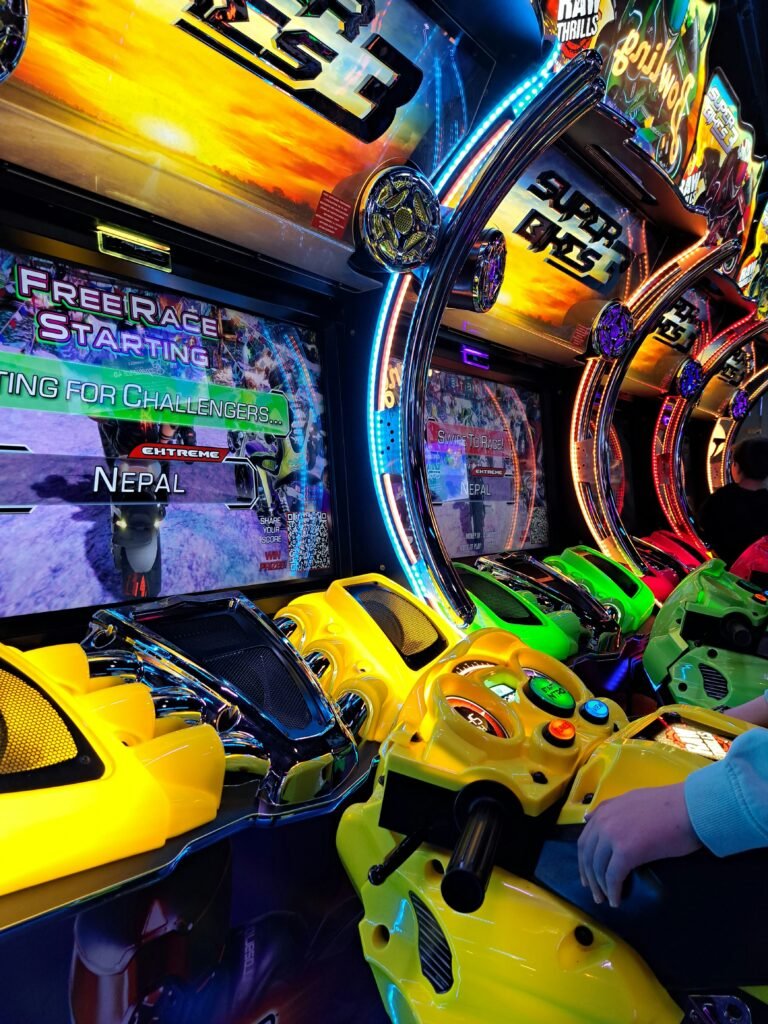
Legacy and Influence on Future Racing Games
Atari’s Championship Sprint, released in 1986, is often regarded as a milestone in the realm of racing video games. Its combination of engaging gameplay, innovative design, and competitive mechanics contributed significantly to shaping the future of the genre. Notably, Championship Sprint introduced multiplayer elements that allowed players to compete head-to-head, a feature that would become a staple in future racing titles. This emphasis on competitive play not only paved the way for subsequent racing games but also established a community centered around competitive racing.
The game’s design philosophy was exemplified through its isometric viewpoint and vibrant graphics, which added an element of excitement and realism not commonly found in earlier racing games. It broke away from the traditional top-down perspectives of its predecessors, giving players a new way to experience racing. This shift in visual presentation would influence a plethora of future titles, leading to the diversification of camera angles and perspectives in racing games.
Testimonials from both gamers and game designers reveal the lasting impact of Championship Sprint on the racing games that followed. For instance, prominent game designer John Doe noted how Championship Sprint’s mechanics inspired the development of contemporary racing franchises like Mario Kart and Forza. Many gamers recall their fond experiences with Championship Sprint, expressing how it laid the foundation for their love of racing games. The nostalgia surrounding this title remarkably endures, highlighting its effectiveness in forging an emotional connection with players.
In summary, Championship Sprint’s legacy is characterized by its innovative gameplay, competitive focus, and lasting influence on the design of future racing games. By melding an engaging gaming experience with a spirit of competition, it remains an iconic title cherished by both retro gaming enthusiasts and the wider gaming community.