
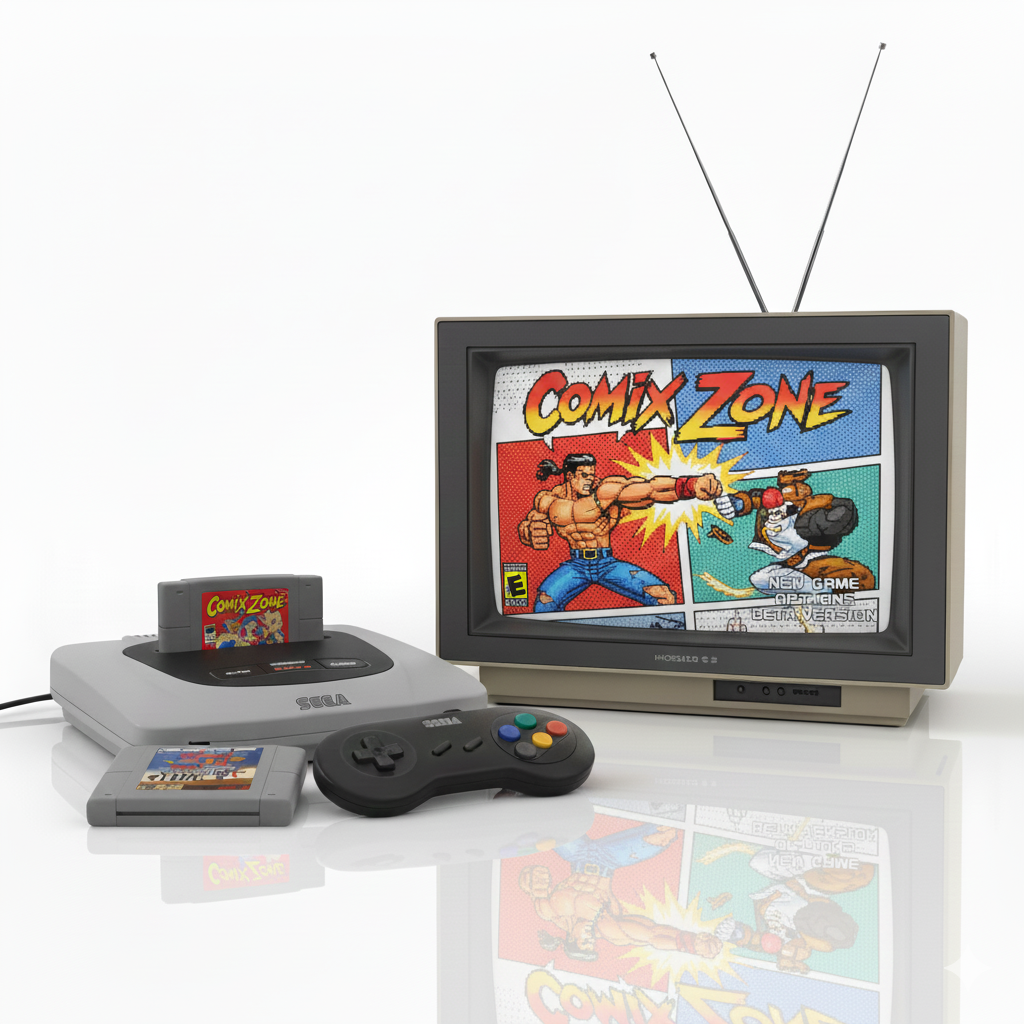
Introduction to Comix Zone
Comix Zone is a notable video game that originally graced the Sega Genesis platform, having been released in 1995. Developed by Sega Technical Institute, the game stands as an iconic title within the realm of a relatively competitive genre. What sets Comix Zone apart is its unique gameplay, which immerses players in a comic book environment. Players assume the role of Sketch Turner, a comic book artist who finds himself trapped in his own comic creation, facing enemies and challenges that are strikingly illustrated.
The game’s innovative design combined multiple visual and gameplay elements, making it a distinctive entry in the Sega Genesis library. Its illustrations and animations reflected the comic book aesthetic, complete with vibrant graphics and detailed backgrounds, while the gameplay mechanics allowed for interaction through various panels, emulating the reader’s experience in a comic strip format.
Upon its launch, Comix Zone received mixed to positive reviews. Critics praised its distinctive art style and creative approach, which distinguished it from traditional platformers available at the time. However, some noted that the game’s difficulty and limited lives might deter casual gamers. Despite these critiques, its innovative storyline and engaging mechanics solidified its status as a cult classic, leading to a dedicated following over the years.
In the mid-1990s, Comix Zone effectively contributed to the expanding horizons of gaming narratives and aesthetic presentations. As the 16-bit era transitioned to 3D graphics, Comix Zone remains a symbol of creativity, showcasing how storytelling and artistic vision can influence video game design, ensuring its place in the hearts of retro gaming enthusiasts.
Gameplay Mechanics and Features
Comix Zone is celebrated for its distinctive gameplay mechanics that set it apart in the realm of side-scrolling beat ’em up games. It immerses players in a rich comic book aesthetic while providing engaging interactions within a dynamic environment. At its core, the game introduces a captivating side-scrolling format, characterized by players navigating through intricately designed comic panels. Each panel serves as a vivid backdrop where players confront enemies, making tactical decisions that impact both gameplay and narrative progression.
One of the defining features of Comix Zone is its interactive nature. Players have the ability to seamlessly transition between different comic book frames, which not only advances the story but also allows for strategic repositioning during combat. This mechanic invites players to think creatively, as navigating through panels can unveil hidden areas or opportunities to gain additional power-ups. Moreover, this unique frame transportation fosters an immersive experience, blurring the lines between player agency and storyline.
Character abilities play a crucial role in the depth of gameplay. Each character boasts a range of skills that can be employed tactically, enhancing combat and exploration. Players must utilize jumps, punches, and special moves wisely to defeat adversaries while also leveraging their environment, such as destructible objects within each comic frame. As players progress, developing their strategies in response to enemy patterns and environmental cues becomes essential for success.
Environmental interactivity serves to amplify player engagement further. Objects scattered throughout the comic panels may be used as weapons, while certain areas necessitate clever navigation for passage. These elements not only create a more engaging gameplay experience but also encourage players to experiment with different approaches, making each playthrough unique. Ultimately, the amalgamation of these features positions Comix Zone as a pioneering title in its genre, offering an innovative blend of graphic storytelling and action-packed gameplay.
Art Style and Design Influence
Comix Zone, originally released by Sega in 1995, stands out prominently for its unique and vivid art style that closely resonates with the aesthetics of comic books. The artistic direction is characterized by bold, vibrant colors and striking character designs that evoke the feel of hand-drawn illustrations found in traditional comic strips. This innovative approach invites players into a visually stimulating environment that feels almost like stepping into the pages of a graphic novel.
The characters in Comix Zone are designed with exaggerated features, creating a stylized look that emphasizes their personalities and roles within the narrative. Each character, from the heroic protagonist Sketch Turner to the villainous Mortus, is rendered with a distinctive flair that enhances their presence in the storyline. The design choices draw heavily from comic book culture, integrating elements such as speech bubbles and panel fragmentation that reflect the medium’s storytelling techniques.
Furthermore, the game’s level design is intricately structured to mimic a comic book layout. The use of segmented panels to represent different in-game scenarios successfully creates an immersive comic experience. As players navigate through the colorful landscapes and face various enemies, they are constantly reminded of the comic book roots that inspired the game. This artistic marriage of gameplay and visual storytelling enriches the players’ journey, immersing them in a world where they are not just passive observers but active participants.
The artists and designers behind Comix Zone have drawn from a rich legacy of comic art, merging classic comic influences with contemporary video game design practices. This synthesis contributes to the game’s lasting appeal and positions Comix Zone as a significant title in the realm of retro gaming, showcasing how the comic book medium can successfully transcend its traditional boundaries in the world of interactive entertainment.
Legacy and Impact on Gaming
Since its original release in 1995, Comix Zone has carved out a significant niche within the gaming community, earning its place not only as a beloved title among retro gamers but also as a notable contribution to the evolution of video games. The unique blend of comic book aesthetics and creative gameplay mechanics set it apart during an era dominated by more conventional side-scrolling action games. Critics and fans alike praised its distinctive visual style, engaging story, and innovative level design, with many deeming it a standout title in Sega’s illustrious library.
The game’s distinct presentation, where players literally traverse the panels of a comic book, inspired future developers to experiment with similar artistic styles. This innovative approach to storytelling and gameplay mechanics has influenced a variety of titles that followed, leaving a tangible mark on genre conventions. Retro gaming culture continues to celebrate Comix Zone, recognizing it not merely as a relic but as a reference point for creativity in game design.
As gaming technology has advanced, Comix Zone has seen several remakes and re-releases that have introduced it to new generations of gamers. These initiatives have rejuvenated interest in the title, ensuring its relevance in today’s gaming landscape. For instance, the game was featured in the Sega Vintage Collection, which provided a platform for a new audience to experience its unique storytelling approach. Such efforts serve to underline the game’s enduring appeal and its place within the Sega legacy, reminding players of the innovative spirit defined by classic titles.
In summary, Comix Zone remains a celebrated title that encapsulates not only a specific era of gaming but also a shift towards more imaginative forms of storytelling in video games. Its lasting impact on both players and developers cements its status as a significant part of gaming history.