
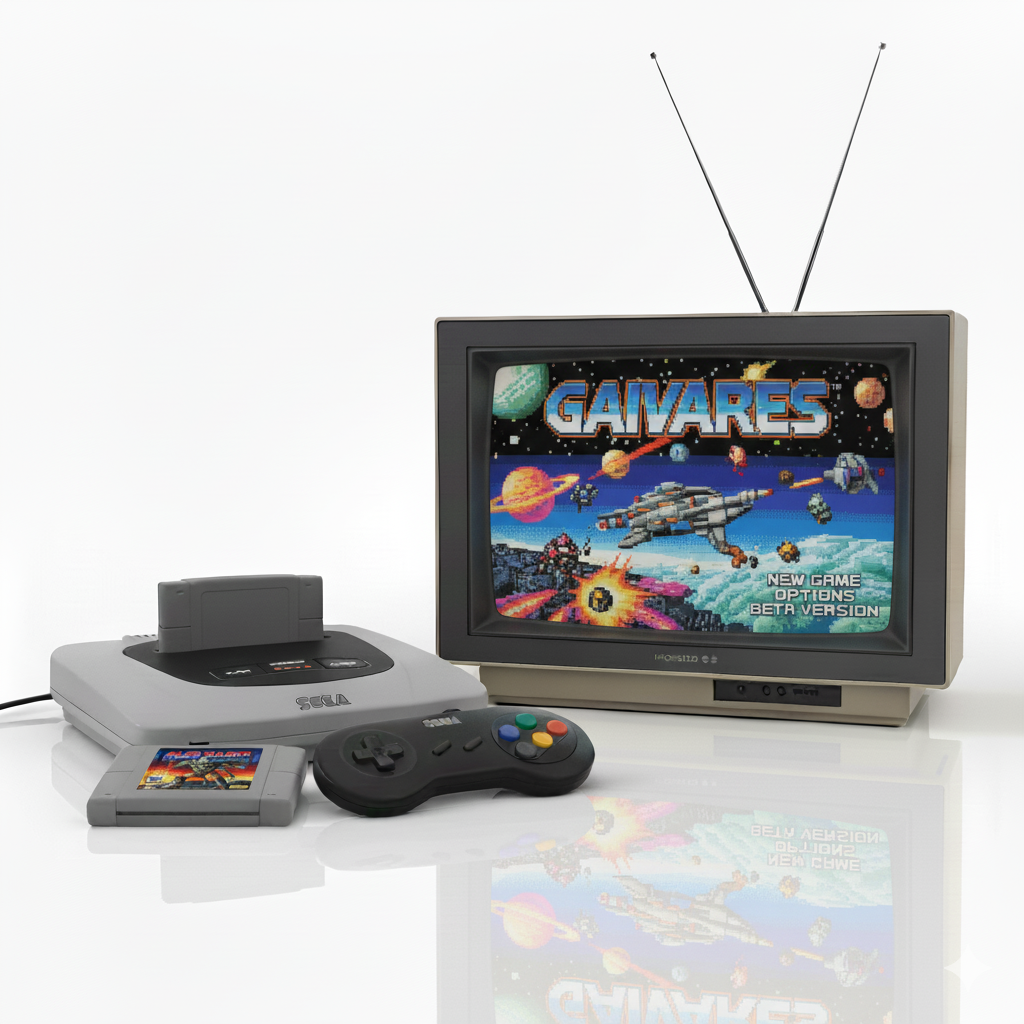
The Evolution of Shoot ‘Em Ups: Gaiares in Context
The shoot ’em up genre, commonly referred to as “shmups,” has a rich history that traces its origins back to the early days of arcade gaming in the late 1970s. Pioneering titles such as Space Invaders and Galaga set the standard, introducing players to the exhilarating experience of controlling a spaceship while battling waves of enemies. As technology progressed, so did the genre, expanding into various sub-genres and innovative gameplay mechanics.
By the late 1980s and early 1990s, the landscape of shoot ’em ups was rapidly evolving, with home consoles gaining popularity alongside arcade machines. Key technological advancements played a significant role in this transformation. Enhanced graphics capabilities and superior sound design allowed developers to create more immersive and captivating experiences. This period also witnessed the rise of prominent companies like Sega, which emerged as a leader in the gaming industry, pushing the boundaries of what was possible in video game design.
It was within this context that Gaiares was released in 1990, showcasing the best of what the genre had to offer at the time. Utilizing the Sega Mega Drive/Genesis’s capabilities, Gaiares featured stunning visuals and a compelling soundtrack that enhanced the overall gaming experience. The game’s mechanics, including unique weapon customization, set it apart from its contemporaries and solidified its status as a noteworthy entry in the shmups canon.
Gaiares not only exemplified the advancements made in the genre but also reflected Sega’s commitment to delivering high-quality gaming experiences. As a result, it plays a crucial role in understanding the evolution of shoot ’em ups and the lasting impact of Sega on the industry. Fans of the genre often regard Gaiares as a hidden gem that deserves recognition within the broader context of video game history.
Gameplay Mechanics and Features of Gaiares
Gaiares stands out in the realm of action-packed shoot-’em-up games with its innovative gameplay mechanics, offering players a dynamic experience as they navigate through various levels. At the core of its gameplay loop lies an engaging control scheme that allows for precise maneuverability of the player’s ship. The simplistic yet responsive controls enable players to swiftly dodge incoming enemy fire while strategically positioning their ship to unleash powerful attacks.
The shooting mechanics in Gaiares are particularly noteworthy. Players have the ability to fire from multiple angles, enhancing combat options and allowing for a more tactical approach to engaging enemies. This feature, combined with the distinctive weapon customization system, empowers players to adapt their strategies according to the challenges posed by different levels and adversaries. Players can collect various power-ups and modules to enhance their ship’s firepower, creating a unique fusion of attack styles tailored to individual play preferences.
One of the standout features of Gaiares is its unique energy transfer mechanic, which allows players to absorb energy from defeated enemies. This energy can then be redirected to enhance the ship’s offensive capabilities or restore lost resources, introducing a layer of strategy that encourages players to efficiently manage their energy reserves. This mechanic not only amplifies combat excitement but also differentiates Gaiares from other titles in the genre, fostering a sense of progression and evolution throughout the game.
Furthermore, comparisons to other classic shoot-’em-ups highlight Gaiares’ distinct contributions. While many games focus solely on rapid-fire shooting, Gaiares encourages a more contemplative approach, urging players to prioritize resource management and ship upgrades. The blend of traditional mechanics with innovative features makes Gaiares a compelling addition to the shoot-’em-up genre, ensuring that players remain engaged and invested as they advance through increasingly challenging scenarios.
Art and Sound Design: The Aesthetics of Gaiares
The visual and auditory elements in the game Gaiares play a crucial role in creating an engaging and immersive experience for players. At the time of its release, the graphics style showcased impressive use of color and detail that stood out among its contemporaries. The vibrant palette and thoughtfully designed character art not only provided a distinctive look but also contributed to the game’s unique charm. The level design enhanced this aesthetic, featuring intricate backgrounds and well-crafted environments that complemented the game’s themes of cosmic conflict.
One striking aspect of Gaiares is its imaginative portrayal of character designs, which exhibit a blend of futuristic elements and classic sci-fi tropes. Each character, from the protagonists to the various enemies encountered, reflects a creative approach that resonates with players. This artistic direction supports the narrative and allows players to form connections with the characters, thereby enhancing overall engagement.
Equally compelling is the soundtrack and sound effects, which elevate the gaming experience to new heights. The musical composition is masterfully curated, combining energetic rhythms with atmospheric melodies that reflect the intensity of gameplay. The soundtrack serves not only as an accompaniment to player actions but also as an emotional backdrop that captures the essence of each level and battle. Furthermore, the sound effects add depth to the gaming experience, seamlessly integrating with the visuals to create a compelling audio-visual synergy.
In essence, the art and sound design of Gaiares stand as a testament to the creativity and innovation of its creators. The combination of striking graphics, thoughtful level layouts, and a memorable soundtrack contributes significantly to its lasting appeal, allowing the game to resonate with new audiences even today. By exploring these elements, players can appreciate the artistry that defines this hidden gem from Sega.
Legacy and Influence: Gaiares’ Impact on Gaming
Upon its release in 1990 for the Sega Mega Drive, Gaiares garnered a mixed reception, with many players praising its innovative mechanics while others found its difficulty level somewhat prohibitive. Nevertheless, it quickly developed a dedicated following among enthusiasts of the shoot ’em up genre. These players appreciated the game’s unique power-up system and distinctive graphics, which set it apart from contemporaries. Over the years, the love for Gaiares has only intensified, making it a significant title in the history of Sega.
Gaiares has demonstrated a lasting impact on the gaming community, influencing both players and developers. It introduced gameplay mechanics that allowed players to absorb enemy weapons, a feature that has echoed throughout subsequent shoot ’em up games, inspiring titles such as R-Type Final and Gradius V. Developers often cite Gaiares as a reference point when designing modern gameplay systems that offer players unique abilities and weapon diversity. The game’s approach to power management and enemy encounters has made it a benchmark for quality in the genre.
Today, Gaiares remains a beloved gem within the Sega canon, remembered fondly by nostalgic fans and often reappearing in discussions surrounding early 90s gaming. Various remakes and ports have emerged over the years, making it more accessible to new generations. Its influence extends to pop culture as well, with references in various forms of media that highlight its significance. The game has created a legacy that not only honors its creators but also showcases the creativity within Sega’s history, ensuring that Gaiares maintains its relevance within modern gaming discourse.