
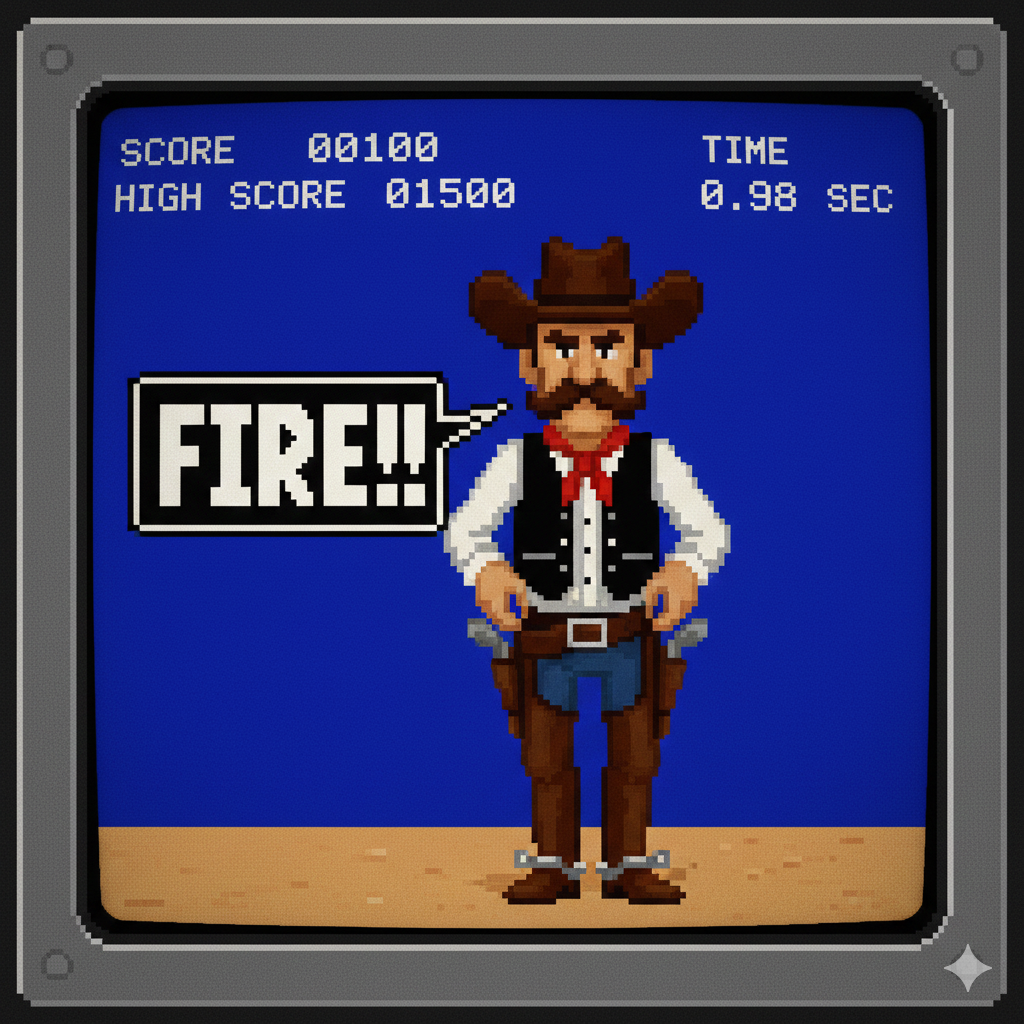
The Introduction to Wild Gunman
Released in 1984, Wild Gunman marks one of the pivotal early entries in the arcade-style video game category, developed by Nintendo. This title emerged during a significant transitional period for video games, evolving from simple pixelated visuals to more dynamic gaming experiences. Wild Gunman encapsulated the essence of the Wild West, engaging players with its thematic setting and unique gameplay mechanics.
The premise of Wild Gunman revolves around players taking the role of a gunslinger, aiming to outdraw a variety of opponents in quick-draw shooting contests. The game employs a distinct shooting mechanic that uses a light gun, a technology that was innovative at the time. This feature not only set Wild Gunman apart from other contemporaneous games ensuring an interactive gameplay experience but also made it a staple in arcade settings and home consoles alike.
Inherent in its design is the game’s ability to transport players to a stylized rendition of the Wild West, replete with western-themed music and graphics. This immersiveness is integral to the gaming experience, pulling players deeper into the action. The game primarily consists of duels against AI opponents, each designed to challenge the player’s reflexes and accuracy, further enhancing the competitive edge of the game.
Wild Gunman occupies a notable place within Nintendo’s portfolio, demonstrating the company’s capability in merging innovative technology with engaging gameplay. As video games were evolving rapidly, Wild Gunman offered a glimpse into the future of interactive entertainment, setting precedence for subsequent titles. Its unique mechanics and engaging theme helped solidify Nintendo’s reputation as a leading game developer during the arcade era.
Gameplay Mechanics and Features
Nintendo’s Wild Gunman, released in 1984, was truly innovative for its time, particularly in its gameplay mechanics that distinguished it from other arcade games. Players engage in a Wild West setting, where the primary objective involves dueling against adversaries. Utilizing a light gun peripheral, known as the Nintendo Zapper, players are tasked with improving their shooting accuracy and reflexes.
The controls of Wild Gunman are both straightforward and engaging. Players simply aim the light gun at the screen and pull the trigger to shoot at the on-screen outlaws. This simple yet effective approach allows players to immerse themselves deeply in the gameplay, drawing them into a thrilling Western showdown. There are two primary modes available: single-player and multiplayer. The single-player mode enables individuals to practice their shooting skills against a series of increasingly difficult opponents, promoting progression through the game’s levels. In contrast, the multiplayer mode allows friends to compete against each other, fostering a spirit of competition and enhancing the overall entertainment value.
Another key feature that sets Wild Gunman apart is the utilization of light gun technology. Unlike traditional joystick controls, the light gun’s precision demands heightened player reflexes and quick decision-making skills. As players advance through the game, they encounter varied challenges that test their speed and accuracy. This increasing difficulty requires continual adaptation to ensure victory over faster and more challenging foes. Consequently, the gameplay experience remains dynamic and engaging, effectively encouraging players to refine their techniques.
Overall, Wild Gunman successfully combines simple controls, innovative technology, and well-thought-out gameplay mechanics. This blend not only creates a compelling experience to captivate players but also helps establish it as a memorable title in the history of gaming.
Cultural Impact and Legacy
Nintendo’s Wild Gunman, released in 1984, holds a significant place in the history of gaming, particularly in its role within the shooting genre. As one of the early adopters of the light gun technology, Wild Gunman not only captivated players with its interactive gameplay but also set a precedent for future titles aiming to incorporate shooting mechanics. The arcade’s immersive experience was a novelty at the time, allowing gamers to engage with the environment in ways that were previously unexplored, and this innovative aspect laid the groundwork for a multitude of shooting games that followed.
The nostalgic value of Wild Gunman cannot be understated. Many players who frequented arcades in the 1980s remember the excitement of challenging friends to quick-draw contests, making the game a memorable part of their childhood gaming experiences. This connection to the past has fostered a culture of reminiscence around the game, often referenced in discussions about the evolution of gaming and its impact on future generations. The enduring affection for Wild Gunman reflects the game’s distinctive charm and contribution to the overall landscape of interactive entertainment.
Moreover, the influence of Wild Gunman extends into popular culture, where its branding and aesthetic have been recognized and celebrated. The game has appeared in various media formats, including movies and television shows, helping to cement its legacy as a symbol of early video gaming. In the critically acclaimed film “Back to the Future Part II,” the game is showcased, illustrating how Nintendo’s creation has transcended its original platform to become a cultural icon. This cross-media presence not only highlights Nintendo’s innovation but also serves as a testament to how Wild Gunman has engrained itself in the fabric of gaming history, influencing both game design and popular culture alike.
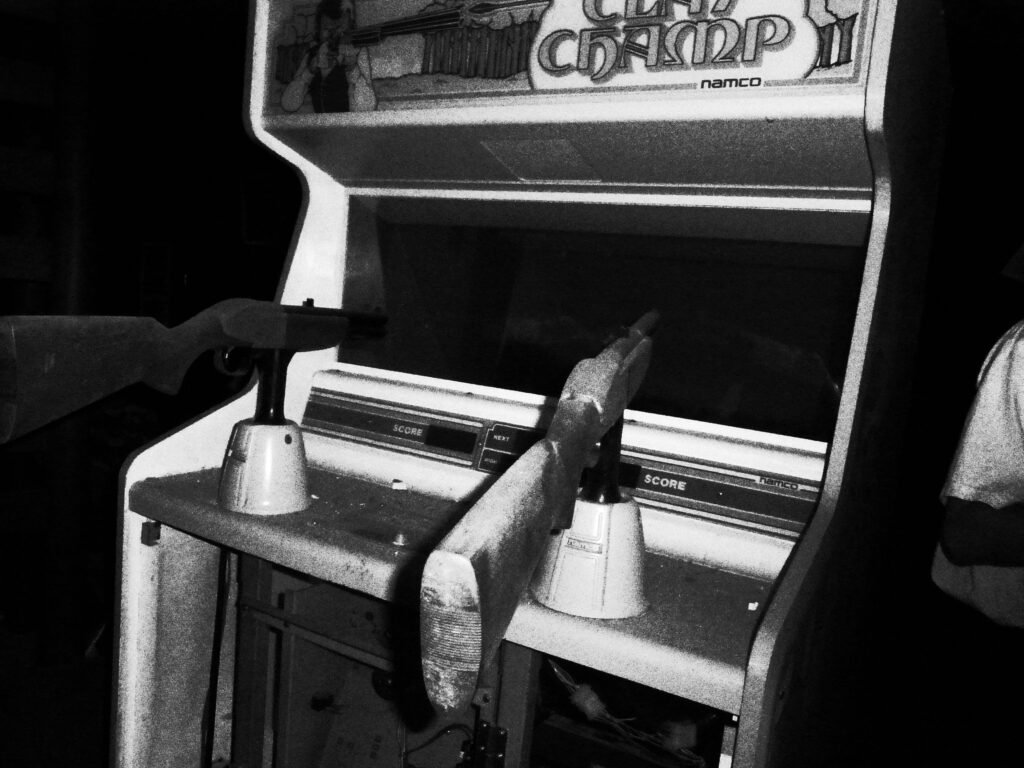
The Resurgence of Wild Gunman in Modern Gaming
Since its initial release in 1984, Wild Gunman has transcended its status as a retro arcade game, enjoying a noteworthy resurgence in the modern gaming landscape. This revival can largely be attributed to its availability on various virtual consoles and gaming collections, allowing new generations of players to experience its unique gameplay. Titles such as the NES Classic Edition and the Nintendo Switch Online service have made Wild Gunman accessible, bridging the gap between past and present gaming experiences.
Wild Gunman’s appeal lies not only in its nostalgic value but also in the simplicity of its mechanics and the humor embedded in its western theme. The game, originally designed to test players’ reflexes through a shooting mechanic, is often referenced in various contemporary titles and pop culture. This cross-generational recognition has played a significant role in sparking interest among younger gamers, who are now discovering its charm and straightforward gameplay. Additionally, the game’s representation in popular media, notably in the iconic movie “Back to the Future II,” has solidified its place in the hearts of both older fans and newcomers alike.
Moreover, the aesthetics and themes of Wild Gunman have inspired recent game developers, leading to tributes and homages within modern titles. The simplistic graphics and engaging gameplay mechanics can be seen as a foundation for many contemporary shooting games, promoting the idea that classic concepts still resonate well in today’s gaming culture. As a result, events such as gaming anniversaries often highlight Wild Gunman, showcasing its historical significance and its role in shaping the arcade genre. This continuous celebration reflects the timeless nature of Wild Gunman, ensuring that it remains a cherished piece of gaming history while being relevant in the rapidly evolving world of gaming.