
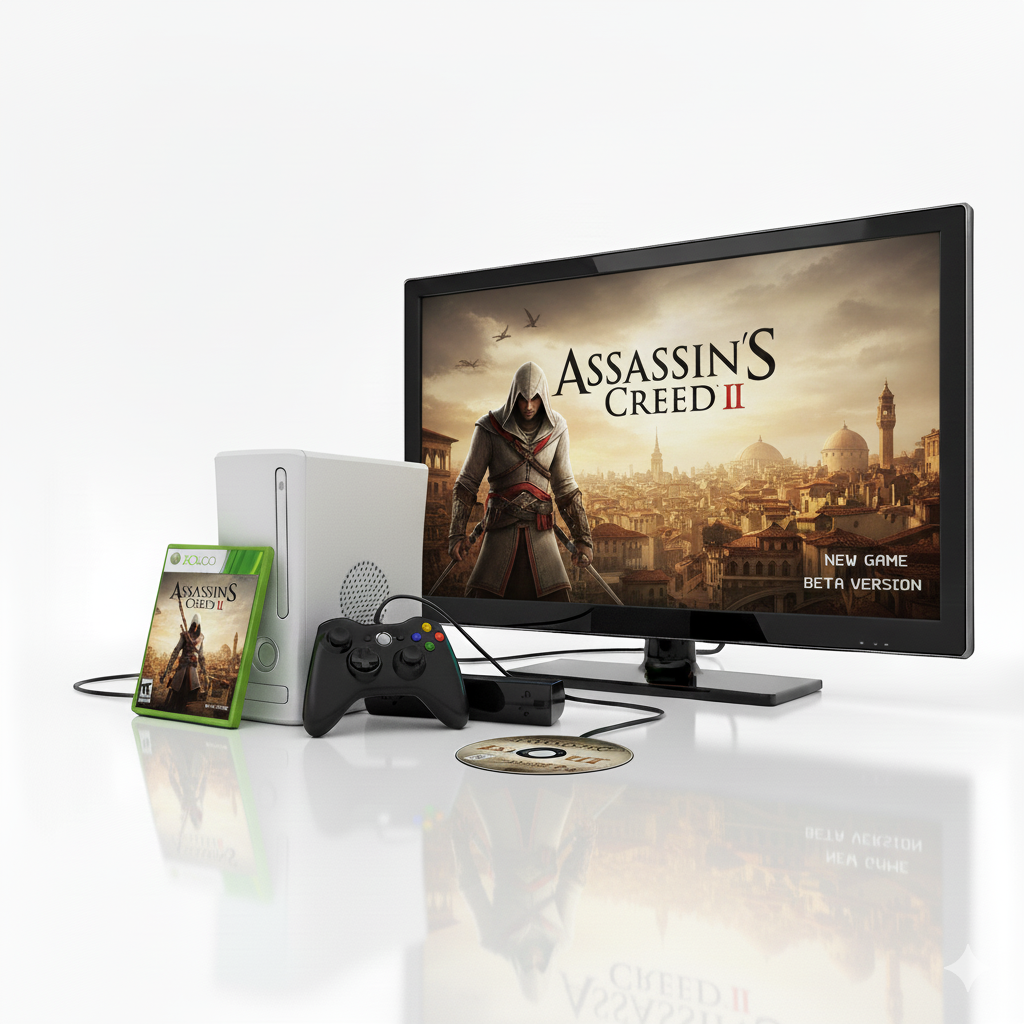
Introduction to Assassin’s Creed II
Assassin’s Creed II, developed by Ubisoft, was released on November 17, 2009, as a sequel to the original Assassin’s Creed. It quickly garnered critical acclaim and is often regarded as one of the greatest video games of all time, particularly on the Xbox 360 platform. The game is set in Renaissance Italy, where players are invited to step into the shoes of Ezio Auditore da Firenze, a young nobleman turned assassin, exploring beautifully rendered cities like Florence, Venice, and Rome.
The development of Assassin’s Creed II was a significant undertaking for Ubisoft, propelled by a desire to expand upon the core mechanics established in its predecessor while enhancing narrative depth and world-building. Following feedback from the first game, the developers aimed to create a more engaging open world that would allow players to interact with their environment more freely, along with a more complex storyline filled with historical intrigue, key to the series’ identity.
This installment felt momentous as it introduced players to a new protagonist, Ezio, whose character is deeply woven into the fabric of his time, navigating themes of power, betrayal, and revenge. Ezio’s journey from a carefree youth to a seasoned assassin reflects not only personal growth but also the broader societal struggles of the period. With its detailed open world, immersive storyline, and rich thematic elements, Assassin’s Creed II set a new benchmark in action-adventure gaming, influencing many subsequent titles in the genre.
Furthermore, the game serves as a pivotal entry in the Assassin’s Creed franchise, establishing foundational lore and character arcs that remain significant throughout the series. This introductory overview sets the stage for a deeper exploration into the game’s themes and the iconic character of Ezio Auditore, essential elements that have captivated players and critics alike.
The Storyline: A Journey Through Renaissance Italy
Assassin’s Creed II delivers an engaging narrative steeped in the rich tapestry of Renaissance Italy, a time characterized by cultural rebirth and political intrigue. Players are introduced to Ezio Auditore, a young nobleman whose life takes a tragic turn when his family is betrayed. The story unfolds against the backdrop of historically significant cities such as Florence, Venice, and Rome, showcasing the beauty and complexities of this era.
Ezio’s transformation from a carefree youth to a vengeful assassin is the crux of the narrative. Initially unaware of the deep-rooted conflict between the Assassins and the Templars, Ezio’s awakening comes after witnessing the execution of his father and brothers. This pivotal moment not only serves as a catalyst for his character arc but also introduces players to the overarching themes of revenge and justice. As he embarks on a quest to avenge his family’s death, Ezio encounters various historical figures, including Leonardo da Vinci, who aids him with inventions and wisdom, thus intertwining history with interactive storytelling.
The story progresses through a series of meticulously crafted missions that explore key events of the Renaissance period, including the power struggles within the Borgia family. As Ezio eliminates key members of the Templar hierarchy, he unravels a conspiracy that reaches far beyond his family’s tragedy. His journey is not solely about revenge; it also encompasses self-discovery and the fight for freedom against oppression. Through each conquest, Ezio gains new skills, allies, and insights into the Assassin Brotherhood, which enhances the narrative depth.
The character arcs, particularly that of Ezio, illustrate the evolution of an assassin who grows from a naïve aristocrat into a seasoned and principled leader of the Assassins. Ultimately, Assassin’s Creed II offers a gripping storyline that not only entertains but also provides players with a profound understanding of historical contexts and the underlying struggles between freedom and tyranny in Renaissance Italy.
Character Development: Meet Ezio Auditore and Others
The rich tapestry of characters in Assassin’s Creed II significantly enhances the gaming experience, with Ezio Auditore serving as a central figure in this narrative. As the protagonist, Ezio transitions from a carefree youth to a skilled and determined assassin. His journey is fueled by personal tragedy and a quest for revenge, resulting in substantial character development. At the outset, Ezio’s motivations are driven largely by emotion, particularly following the wrongful execution of his father and brothers. This inciting incident propels him into the world of the Assassins, where he begins to unravel the conspiracies surrounding his family’s demise.
Throughout the game, players witness Ezio’s evolution as he learns to navigate the conflicts between the Assassins and their foes, particularly the Templar Order. As he matures, Ezio becomes an influential leader, embodying the values of the Assassin Brotherhood. His relationship with key historical figures, notably Leonardo da Vinci, adds depth to his character. Leonardo serves not only as a mentor who provides crucial inventions and support but also as a friend, illustrating a bond that humanizes the narrative and contributes to Ezio’s growth.
Another pivotal character is Rodrigo Borgia, the antagonist whose ambitions and ruthless methods pose a substantial threat to Ezio and the Assassins. Borgia’s character serves as a foil to Ezio, highlighting the moral dilemmas faced by the protagonists. His involvement as a significant player in the political intrigues of Renaissance Italy deepens the conflict and enhances the overall story. As players immerse themselves in the intertwining lives of these characters, the layers of motivation, ambition, and betrayal unfold, creating an engaging backdrop for the game’s unfolding events.
Gameplay Mechanics: An Overview
Assassin’s Creed II offers a multifaceted gameplay experience characterized by its innovative mechanics. Central to the game is the parkour system, which allows players to seamlessly traverse the environment. This fluid movement system lets players climb buildings, leap across rooftops, and perform acrobatic stunts, providing a palpable sense of freedom and exploration. The well-designed graphical environments in cities like Florence and Venice enhance this aspect, drawing players into the richly detailed world of Renaissance Italy.
The combat mechanics in Assassin’s Creed II are equally impressive. Players engage in a mix of melee combat using a variety of weapons. The combat system encourages strategy; players can counter enemy attacks, utilize the environment for tactical advantages, and engage in stealth kills. This proactive gameplay rewards players for mastering combat techniques while also planning their attack approaches. The use of different weapons adds diversity, allowing players to switch between styles to suit their preferences or specific combat scenarios.
Stealth elements play a significant role in the overall gameplay experience as well. Players often must evade guards and blend into crowds to remain undetected. Utilizing stealth tactics, such as hiding in shadows and using distraction tools, heightens the thrill of gameplay. This mechanic contributes to the immersive atmosphere, where careful planning can lead to a successful mission completion without drawing attention. Each of these gameplay mechanics—parkour, combat, and stealth—intertwines to create a cohesive gaming experience that captivates players, making Assassin’s Creed II not just a game but an adventure infused with history and intrigue.

Open World Exploration: The Design of Renaissance Cities
Assassin’s Creed II masterfully transports players to the heart of the Renaissance, allowing them to explore meticulously crafted cities such as Florence and Venice. The game’s open-world design not only immerses players in a rich historical environment but also encourages them to engage deeply with the narrative. Each city is designed with a remarkable attention to detail, showcasing landmarks that reflect the architectural magnificence of the era.
Florence is a prime example of this dedication to authenticity. The bustling streets, vibrant public squares, and grand buildings are populated with NPCs that simulate the lively atmosphere of Renaissance life. Players can meander through the Uffizi Gallery, scale the heights of the Duomo, and witness the dynamic interplay between citizens, revealing the social structures of the time. The intricacies of these locations are not merely aesthetic; they offer gameplay mechanics tied to parkour and stealth that enhance interaction and exploration.
In Venice, players navigate a unique maritime landscape filled with canals and bridges, adding another layer of complexity to exploration. The design allows players to utilize boats, dive into the water, or engage in rooftop chases, integrating movement with the rich history of the city. This water-based navigation element underscores how the game’s design not only showcases historical landmarks but also incorporates them into the gameplay experience.
Ultimately, the open-world exploration in Assassin’s Creed II is not just about roaming freely; it’s about experiencing a living history. Each city serves as a backdrop to the dramatic storyline, with the exploration of its streets and landmarks enriching the player’s understanding of the narrative. The attention to detail in recreating these Renaissance cities fosters a sense of immersion that is both educational and entertaining, marking a pinnacle in the design of open-world gaming.
The Soundtrack and Voice Acting: Enhancing the Experience
Assassin’s Creed II is not only renowned for its engaging gameplay and rich storyline, but it also boasts a powerful musical score and impressive voice acting that greatly enhance the overall gaming experience. The score, composed by Jesper Kyd, employs a blend of orchestral and electronic elements that perfectly capture the game’s historical setting and emotional weight. Kyd’s work is recognized for its ability to evoke feelings of adventure and intrigue, seamlessly integrating with the game’s narrative and elevating the player’s immersion in the world of Renaissance Italy.
The use of music throughout the game is meticulously crafted, changing dynamically in response to the player’s actions and the game’s context. During moments of tension, the soundtrack intensifies, heightening the player’s emotional engagement. In contrast, quieter moments are complemented with haunting melodies that accentuate the gravity of the characters’ journeys, particularly that of the protagonist, Ezio Auditore. The overall audio experience in Assassin’s Creed II is vital, as it not only supports the game’s aesthetic but also informs the player of narrative developments and emotional shifts.
Voice acting also plays a crucial role in conveying the depth of characters and their motivations. The performances delivered by notable actors, such as Roger Craig Smith voicing Ezio and Delaina Dixon as Claudia, contribute significantly to the game’s authenticity. Their portrayals are deeply nuanced and allow players to form emotional connections with the characters, enhancing the storytelling experience. The dialogue is not only well-written but is also delivered with a sense of gravitas that reflects the historical context of the setting.
Overall, the soundtrack and voice acting in Assassin’s Creed II are instrumental in creating a compelling and immersive gaming experience. Both elements work in harmony to foster an emotional atmosphere that invites players to lose themselves in this intricately crafted world.
Critical Reception and Legacy
Upon its release in November 2009, Assassin’s Creed II garnered widespread acclaim from both critics and gamers alike. The game was praised for its engaging storyline, expansive open-world design, and refined gameplay mechanics that significantly improved upon its predecessor. Reviewers highlighted the depth of character development, particularly of the protagonist, Ezio Auditore, who became a symbol of the franchise. This installment received numerous awards, including the BAFTA Games Award for Best Game and nominations across various categories, further solidifying its place in gaming history.
Assassin’s Creed II holds a Metacritic score of 91/100, indicating universal acclaim. Many gaming publications rated it as one of the best games of all time, citing its historical narrative that intertwines factual events with imaginative storytelling. The richly detailed representation of Renaissance Italy enhanced the immersive experience, enticing players to explore every corner of the beautifully crafted environments.
The success of Assassin’s Creed II had a profound impact on the future of the franchise. It laid the foundation for subsequent titles by developing core gameplay elements, including improved parkour mechanics, more sophisticated AI behavior, and a focus on historical narratives framed through personal stories. The game also introduced multiplayer elements and extensive DLC content in later titles, showcasing a commitment to expanding the Assassin’s Creed universe.
Moreover, the legacy of Assassin’s Creed II extends beyond its critical success; it played a significant role in shaping player expectations for story-driven experiences within the action-adventure genre. The game’s influence is evident in the contemporary gaming landscape, where richly woven narratives and historical contexts are now frequently explored. The enduring popularity of Ezio Auditore as a beloved character further highlights the lasting impact Assassin’s Creed II has had in the gaming community.
Tips and Tricks for New Players
For those embarking on the journey through Assassin’s Creed II on Xbox 360, it is vital to start with a clear understanding of the game mechanics and strategies. First and foremost, familiarize yourself with the controls. Mastering the essentials, such as movement, combat, and parkour skills, will significantly enhance your gameplay experience. This foundation allows players to navigate the intricate world seamlessly and efficiently execute commands during missions.
As you progress through the narrative, take the time to approach each mission with patience and strategy. Every mission within Assassin’s Creed II offers a different challenge that may require varying tactics. Observing your environment is crucial; use the vantage points to scout the area and understand enemy patrol patterns. This creates opportunities for stealthy approaches, which are often more rewarding than direct confrontations. Additionally, do not hesitate to utilize the game’s extensive map for locating side quests or collectibles that enhance your experience and unlock valuable skills.
Another effective strategy for new players is to engage with the various skills and weapons available. As you advance, you will uncover new abilities that can be tailored to your playstyle. Upgrading your arsenal significantly improves your chances during combat encounters. It is beneficial to experiment with different weapon types, such as the hidden blade or ranged weapons, to determine which suits your approach and helps you navigate through challenges more efficiently.
Finally, remember to take breaks when needed. The expansive world of Assassin’s Creed II can be overwhelming. Stepping back allows for reflection on strategies and leads to a more enjoyable gaming experience. By implementing these tips and focusing on honing your skills, you will be well-equipped for the adventures that await in Assassin’s Creed II.
Conclusion: Why Assassin’s Creed II Remains a Must-Play Title
Assassin’s Creed II is undeniably a landmark title in the gaming industry, which has left an indelible mark on those who have embarked on its richly woven narrative. Its innovative gameplay mechanics, stunning visuals, and deep storytelling are just a few of the qualities that have contributed to the game’s lasting appeal. Developed by Ubisoft, this sequel broadened the horizons of its predecessor by introducing new layers of exploration, combat, and character development.
One significant aspect that resonates with players is the historical context in which the game unfolds. Set during the Renaissance period, players are immersed in beautifully recreated environments that reflect cultural richness and the spirit of the time. The game’s protagonist, Ezio Auditore, has become an iconic character in the gaming world. His evolution from a carefree youth to a skilled assassin resonates with a wide audience, fostering a deep emotional connection that enhances gameplay.
Furthermore, Assassin’s Creed II is praised for its intricate level design and open-world elements. Players have the freedom to explore various cities, engage in side quests, and uncover hidden secrets, making every playthrough unique. The gameplay emphasizes stealth, parkour, and strategic combat, elements that have continuously attracted both newcomers and returning fans. In this way, it serves as an inviting entry point for those unfamiliar with the franchise while also offering enough depth for seasoned players.
In summary, Assassin’s Creed II remains a must-play title due to its engaging story, memorable characters, and revolutionary gameplay. It invites players to not only enjoy an exhilarating gaming experience but also to learn and appreciate a pivotal historical era. Whether players are revisiting or experiencing the game for the first time, Assassin’s Creed II stands as a testament to what video games can achieve in sharing stories and fostering connections with their audience.