
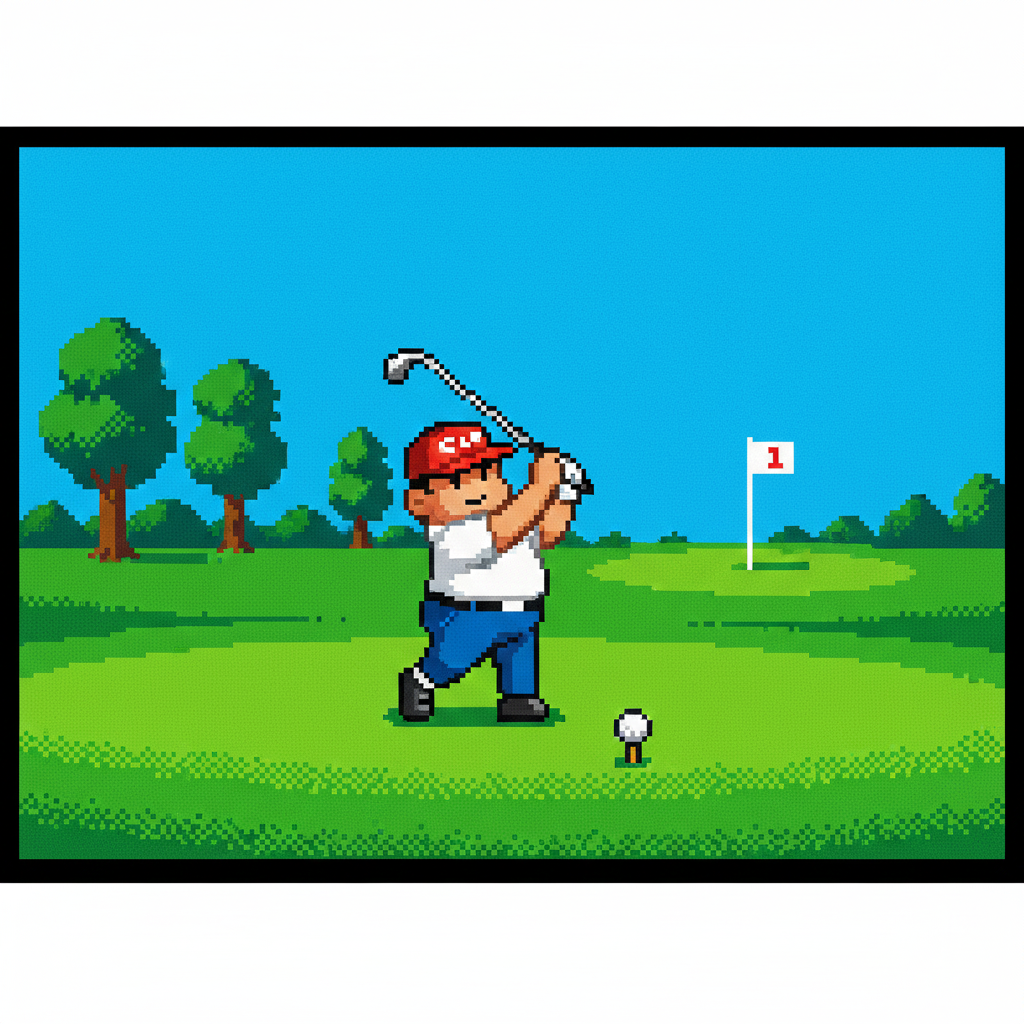
Introduction to Nintendo Golf
Nintendo Golf, released in 1984, marked a significant milestone in the evolution of sports video games. The game emerged during a time when the gaming industry was still finding its footing, establishing a foundation for the incorporation of sports themes in video gaming. This title, developed by Nintendo, was one of the early examples that bridged the gap between traditional sports and digital gaming, allowing players to enjoy the experience of golfing from the comfort of their homes.
The gameplay in Nintendo Golf is relatively straightforward, yet it captures the essence of golf through its mechanics and simplicity. Players could choose from various courses, each designed with distinct challenges, mirroring real-world golfing scenarios. The game featured a simplistic yet effective control scheme that required skill and precision, which engaged players and encouraged strategic thinking. With its pixelated graphics and minimalistic design, Nintendo Golf managed to convey the satisfaction of striking that perfect shot, enhancing the overall enjoyment of gameplay.
The impact of Nintendo Golf extends beyond the immediate success of the title. It laid crucial groundwork for the future of sports games, influencing subsequent releases not only from Nintendo but also from other developers. The game also played a significant role in popularizing golf as a viable theme for video games. As a pioneer in the sports genre, it set the stage for a multitude of franchises that would follow, promoting a culture where gamers could immerse themselves in various sporting experiences. Its contribution to the industry illustrates the importance of early adaptations in gaming that helped shape the direction of the genre, solidifying Nintendo Golf’s legacy in video game history.
Historical Context: 1984 and the Video Game Industry
The year 1984 marked a pivotal moment in the evolution of the video game industry, characterized by a series of technological advancements coupled with the emergence of new gaming platforms. During this period, the effects of the video game crash of 1983 were still being felt. Many consumers were disillusioned by poor-quality games and oversaturation of the market. However, this challenging environment also laid the groundwork for innovation and change.
At the time, home gaming consoles such as the Atari 2600 dominated the landscape. These platforms, although groundbreaking in their own right, faced significant limitations in terms of processing power and graphics capabilities. The technology of the era restricted developers in creating intricate game designs and rich narratives. It was against this backdrop that Nintendo, a company with roots in playing cards, entered the fray. Their decision to develop the Nintendo Entertainment System (NES) and release titles like “Golf” reflected a strategic shift aimed at restoring consumer confidence in video gaming.
Nintendo’s entry into the market brought with it a more rigorous approach to game quality and licensing, something that had been incredibly lacking in earlier consoles. The NES, equipped with enhanced graphics and a more sophisticated 8-bit microprocessor, set a new standard for what video games could achieve. This technological leap not only provided developers with new creative opportunities but also influenced consumer expectations, paving the way for a new age of gaming. By prioritizing quality and engaging gameplay, Nintendo helped to shift the industry’s focus from the pitfalls of the past to a more sustainable and innovative future.
Gameplay Mechanics of Nintendo Golf
Nintendo’s 1984 title, Golf, introduced players to a unique and engaging golfing experience that set it apart from other sports games of its era. The game employs a top-down perspective which allows for a clear view of the course layout and surrounding elements. Players navigate through a series of golf holes, aiming to complete each in as few strokes as possible. The simplicity of this design, along with its intuitive controls, contributed significantly to its appeal.
The controls in Nintendo Golf are straightforward, utilizing a limited number of buttons on the console. Players select their club and adjust their shot power by using a pull-and-release mechanism. A visual representation of the swing is displayed on-screen, providing immediate feedback on shot selection and strength. This innovative approach ensured that players could quickly learn the mechanics without extensive tutorials, enhancing the user experience.
Nintendo Golf features several gameplay modes that elevate its replay value. Players can engage in a single-player mode, where they take control of a golfer against the computer, or opt for multiplayer mode to challenge friends. A notable aspect of the game is its ability to maintain engagement through the use of varying difficulty levels, allowing seasoned players and newcomers to enjoy the game alike.
One unique feature of Nintendo Golf is its incorporation of local weather conditions into gameplay. Rainy weather impacts the course conditions significantly, affecting how the ball behaves on each hole. The game’s graphics, while simple by modern standards, effectively convey the atmosphere of a golf course, helping to immerse players into the world of golfing. By combining accessible controls, various gameplay modes, and immersive environmental detail, Nintendo Golf successfully established its place as a groundbreaking sports game during the early days of video gaming.
Graphics and Sound Design
Nintendo’s 1984 game, Golf, is a notable example of the innovative adaptations made within the limitations of 8-bit technology. The graphics in Golf are characterized by simplistic yet charming pixel art that successfully conveyed the essence of a golf course. The game employed a limited color palette, allowing the developers to focus on essential visual elements such as the fairway, greens, and obstacles. Players are greeted with top-down views that provided an overview of the course, enabling them to strategize their shots effectively. The use of 8-bit graphics is not just a limitation but rather a distinctive feature that contributed to the game’s nostalgic appeal.
Considering the technological constraints, the charm of Golf’s visual design lies in its ability to communicate the golfing experience through minimalistic graphics. While the characters were represented with basic shapes, their animations, albeit simple, successfully depicted various golfing actions. The golf ball’s movement across the screen, dictated by the player’s input, was a groundbreaking aspect that added layers of realism to the game.
In terms of sound design, Golf also made significant strides despite its rudimentary capacity for audio. The sound effects provided critical feedback to the players, enhancing their sense of immersion. The satisfying thud of the club striking the ball and the subsequent sound of the ball hitting the ground created an auditory environment that complemented the gameplay. Additionally, the cheerful background music was not overly complex but effectively set a lighthearted tone, contributing to the overall enjoyable experience.
Overall, the carefully crafted graphics and sound design in Nintendo’s Golf established a foundation for player engagement. The synergy between visual and auditory elements created an immersive golfing experience, showcasing how developers can transcend technological limitations to immerse players in a compelling gaming atmosphere.
Reception and Critique of Nintendo Golf
Nintendo Golf, released in 1984, is widely regarded as one of the pioneering titles in the sports gaming genre. Upon its debut, the game generated a considerable buzz among gamers and critics alike. Early reviews highlighted its innovative gameplay mechanics, particularly the inclusion of a simplistic yet engaging control system that allowed players to gauge their swings and aim effectively. This design was praised for its accessibility, appealing to both casual players and enthusiasts of the sport.
Critics noticed the game’s detailed graphics for the 8-bit era, carefully crafted to resemble real golf courses. The vibrant and colorful visual presentation distinguished it from other titles of the time, enhancing player immersion. Many reviews praised the authenticity of the gameplay experience, noting how accurately it represented the sport of golf, which was a significant positive aspect in attracting golf fans to the digital realm.
However, not all feedback was favorable. Some critics pointed out the game’s limited features, mentioning a lack of variety in courses and modes as a downside that hindered prolonged engagement. The absence of multiplayer options was also deemed a missed opportunity, as it restricted social play—an aspect that many players enjoyed in other contemporary games. The sound design, although functional, received mixed reviews, with some players longing for more dynamic audio quality to match the graphical experience.
In essence, the consensus among early reviewers placed Nintendo Golf as a solid, if not groundbreaking, representative of video game golf. While it received praise for its innovative mechanics and visuals, the limitations in content led to a mixed overall reception. Despite this, it certainly laid critical groundwork for future sports games, solidifying itself as a notable title in Nintendo’s extensive library.
Influence on Future Sports Games
Nintendo’s 1984 title, Golf, marked a significant turning point in the realm of sports video games, showcasing the potential of the medium in blending arcade-like entertainment with more simulated realism. Before its release, sports games were predominantly relegated to simple mechanics that failed to engage players on multiple levels. Golf, with its unique gameplay mechanics and user-friendly interface, acted as a catalyst, greatly influencing subsequent sports titles.
One of the defining characteristics of Nintendo Golf was its innovative design, introducing features such as a simple control system that allowed players to easily adjust their swing and shot strength. This approach not only made the game accessible to a wide audience but also established a framework that later sports titles would emulate. The emphasis on intuitive controls is now a hallmark of successful sports games, allowing for a broader demographic to engage with complex titles.
Moreover, Nintendo Golf successfully merged arcade-style play with a deeper sports simulation experience. Prior to its release, sports games often leaned heavily towards either side of this spectrum, but Golf struck a balance that appealed to casual and dedicated gamers alike. This synergy paved the way for titles such as NBA Jam and FIFA, which incorporated similar elements of both realism and fast-paced arcade action, enhancing player engagement.
Additionally, the introduction of strategic gameplay aspects in Nintendo Golf encouraged players to think critically about their choices on the course, which later games have expanded upon by including more complex decision-making elements. The impact of Golf’s hybrid style has been profoundly felt in various franchises, leading to the evolution of sports titles that cater to a wide range of play styles and preferences. Ultimately, Nintendo Golf laid a foundation that forever changed how sports games were designed, ensuring their presence and relevance in the gaming landscape.
Legacy of Nintendo Golf
Nintendo Golf, released in 1984, holds a prominent place in the annals of retro gaming history. As one of the early titles developed by Nintendo for the Famicom system, this game not only contributed to the popularity of sports video games but also established Nintendo’s presence in the gaming industry. Its simplistic yet engaging gameplay mechanism, which emphasized strategy over mere action, appealed to a broad audience and set a foundational premise for later golfing simulations.
Today, Nintendo Golf is often referenced in discussions surrounding classic video games due to its pioneering design and enduring legacy. The title is frequently lauded for its intuitive controls and charming visuals, which helped to solidify the concept of sports games in the video game marketplace. Players and retro gaming enthusiasts often reminisce about the game, intertwining their nostalgic experiences with their appreciation for its contribution to the genre.
The legacy of Nintendo Golf extends beyond mere remembrance; it gave rise to a series of sequels and spin-offs that maintained the spirit of the original. Notable successors include the sophisticated Golf series, released on various platforms, which introduced enhanced graphics, more complex gameplay elements, and multiplayer capabilities that have become staples in modern sports gaming. Additionally, the Wii Sports franchise embraced the essence of golf pioneered by Nintendo Golf, incorporating motion controls that expanded players’ immersion into the game.
In recent years, remakes and nods to this classic title have appeared, bridging the gap between generations of gamers. Its inclusion in retro gaming discourses reflects a commendable acknowledgment of its influence, inviting new audiences to experience the foundational gameplay that continues to resonate within the realm of sports games. As such, Nintendo Golf’s legacy remains vital in understanding the evolution of both Nintendo’s game development journey and the sports video game genre as a whole.
Tips and Tricks for Playing Nintendo Golf
Nintendo Golf, released in 1984, continues to captivate players with its entertainment value and simplicity. To improve your performance and overall enjoyment of the game, consider the following tips and tricks that can enhance your golfing experience.
First, familiarize yourself with the game mechanics and physics involved in Nintendo Golf. Understanding how the terrain affects your shots is crucial. The wind speed and direction can drastically alter the trajectory of your ball, necessitating an adjustment in your shot power and angle. Pay keen attention to the wind indicators, and don’t hesitate to modify your approach based on environmental factors.
Another important aspect is mastering the various clubs available in the game. Each club has unique strengths and weaknesses that can significantly affect your shot distances. Start with the basic clubs and gradually experiment with different options to find which ones suit your style best. For instance, use putters for short, precise shots on the green and drivers for maximum distance from the tee.
Scoring can be a challenging endeavor in Nintendo Golf. One effective strategy is to aim for the fairway when teeing off, as it provides the best chances for an improved subsequent shot. Avoiding bunkers and water hazards is essential for maintaining a low score. If your ball lands in a tricky location, assess your options carefully; sometimes playing safe with a less aggressive shot can save you from further penalties.
Finally, practice is key. Utilize the practice mode to refine your skills, from swing timing to shot placement. As your familiarity with the game increases, so too will your ability to anticipate how different factors affect your game play. With these strategies in mind, players can enjoy a more rewarding experience while navigating the landscapes of Nintendo Golf.
Conclusion and Final Thoughts
In reflecting on Nintendo’s 1984 game, Golf, it becomes clear that this title holds a significant place in the evolution of video gaming. As one of the early sports simulations, it not only introduced players to the mechanics of golf but also laid the groundwork for future sports games. With its simple yet engaging gameplay, Golf quickly became a defining title that showcased Nintendo’s innovative approach to game design.
Throughout this discussion, we have explored various aspects of the game, such as its features, gameplay mechanics, and lasting impact on both the Nintendo franchise and the gaming industry at large. The introduction of different challenging courses and the incorporation of strategy in the gameplay experience highlighted the game’s depth. These elements reveal how Golf was more than just a past-time; it was a pioneer in making sports accessible and enjoyable for all players, leveraging technology to create a lifelike experience.
The legacy of Nintendo’s Golf can still be felt today, as it influenced numerous sequels and similar games by other developers. Its importance is underscored by its place in the competitive gaming discussions that follow the evolution of sports simulations. For those who have yet to experience this classic, or for those who wish to revisit it, now may be the perfect time to do so. Understanding the roots of video gaming enhances appreciation for contemporary titles, and Nintendo’s Golf serves as a reminder of how far the gaming landscape has come. As digital nostalgia meets modern gaming innovations, revisiting such classics can provide both entertainment and insight into the history of interactive entertainment.