
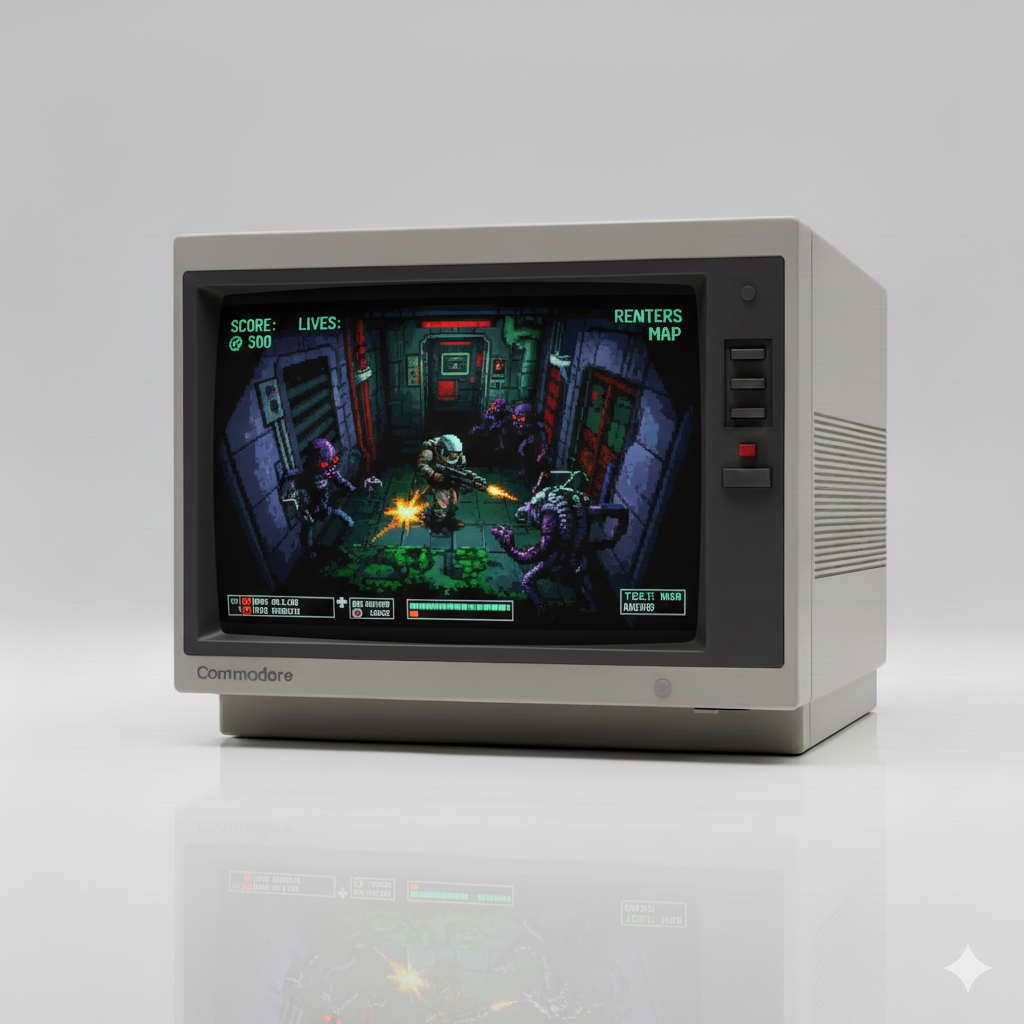
The Genesis of Alien Breed
The origins of Alien Breed can be traced back to the early 1990s, a time when the gaming industry was rapidly evolving and new genres were emerging. Developed by the British company Team17, Alien Breed was influenced by a variety of sources, notably the science fiction films of the era, particularly those like Aliens, which significantly shaped the game’s aesthetic and atmosphere. This admiration for the sci-fi genre was reflected in the narrative and overall design, creating an immersive experience that resonated with players.
At the core of Alien Breed’s design was a desire to push the boundaries of what was possible on the Amiga platform. The hardware limitations posed a significant challenge for Team17, but they turned these constraints into creative opportunities. The Amiga’s graphical capabilities allowed for nuanced pixel art and atmospheric sound, vital components that helped build tension during gameplay. The team skillfully utilized the system’s capabilities to create vividly detailed backdrops and fluid animations, which enhanced the player’s immersion in the game world.
Team17 aimed to blend classic arcade gameplay with innovative elements, resulting in a unique co-op experience that encouraged teamwork and strategizing. The developers sought to incorporate elements such as limited resources, tactical combat, and maze-like levels, all of which contributed to a tense gaming experience. This careful consideration of game mechanics was pivotal to Alien Breed’s success, allowing it to stand out among contemporary titles. Ultimately, the genesis of Alien Breed was marked by a combination of inspiration from cinema, the technical constraints of the Amiga, and a bold vision from Team17 that would come to define the game and its sequels, solidifying its legacy in gaming history.
Gameplay Mechanics and Features
Alien Breed, a defining title in the classic gaming landscape, is renowned for its innovative gameplay mechanics that captivated players during its initial release and continue to resonate even today. Central to its appeal is the cooperative multiplayer option, which allows two players to join forces as they navigate through an alien-infested spacecraft. This cooperative gameplay fosters a sense of camaraderie, as players must communicate and strategize to survive against the overwhelming odds presented by the game.
The weapon systems in Alien Breed are diverse and their upgradeability adds strategic depth to the gameplay. Players are equipped with an array of firearms, ranging from standard pistols to heavy-duty laser cannons. This variety encourages players to experiment with different weapons as they confront various types of enemies, each with unique behaviors and attack patterns. For instance, some adversaries may exhibit swarm behavior, while others might have formidable defense mechanisms, pushing players to continually adapt their tactics.
Additionally, environmental interactions play a pivotal role in the gameplay of Alien Breed. The game features destructible scenery and traps, which can be utilized against enemies or manipulated to navigate through the challenging levels. This layer of interaction not only adds complexity to the gameplay but also enhances the player’s immersion in the game’s universe. Overall, it is these distinctive gameplay mechanics that set Alien Breed apart from contemporaneous games, establishing a strong following within the Amiga gaming community and ensuring its status as a beloved classic.

Reception and Legacy
Upon its release in 1991, Alien Breed was met with a prominent reception within the gaming community. Critics praised its impressive audiovisual presentation, innovative gameplay mechanics, and compelling atmosphere, which were considered groundbreaking for the time. Many reviews highlighted the game’s ability to blend horror and action, creating an engaging experience that resonated with players. The game’s use of cinematic storytelling elements and strategic gameplay captured the attention of many, and it quickly became a defining title for the Amiga platform.
From a commercial standpoint, Alien Breed achieved significant success, becoming one of the best-selling titles for the Amiga. Reports indicate that the game sold over 150,000 copies within its first few months, contributing substantially to the growing library of Amiga games. Furthermore, the game received several accolades, including nominations for awards celebrating its artistry and gameplay innovation, which helped solidify its status in the genre of action-adventure.
Over the years, Alien Breed has left a lasting legacy, influencing numerous other titles and genres. Its unique combination of cooperative and competitive multiplayer elements inspired later games in the twin-stick shooter category. The franchise has seen several sequels and remastered versions, illustrating its relevance in modern gaming culture. Game developers have drawn inspiration from **Alien Breed’s** suspenseful atmosphere and strategic gameplay mechanics, signalling its enduring impact on the industry. Today, the game is often favorably referenced in discussions about classic gaming, serving as an essential touchstone in the evolution of the horror-action genre.
The Future of Alien Breed: Reboots and Remakes
The classic game Alien Breed has undergone numerous iterations since its original release in the early 1990s, cementing its position as a beloved title among gaming enthusiasts. The advancements in technology have opened avenues for remakes and reboots, enabling developers to update the game’s graphics, gameplay mechanics, and overall player experience. The essence of Alien Breed, characterized by its intense multiplayer modes and thrilling sci-fi narrative, remains a significant source of inspiration for modern adaptations.
While several remakes have aimed to bring the charm of the original Alien Breed to new audiences, they have faced unique challenges. Chief among these is the need to balance nostalgia with innovation, as older fans desire a faithful recreation of the quirky ambiance and gameplay, while newer players expect contemporary aesthetics and streamlined mechanics. Notable titles such as Alien Breed: Impact (2010) and Alien Breed: Evolution (2010) successfully managed to implement enhanced graphics and controls, catering to both demographics.
Moreover, the transition from 2D to 3D environments posed significant challenges for developers, necessitating a thoughtful approach to maintain the franchise’s core elements while adapting to modern gameplay standards. The complexity of creating engaging narratives in a cooperative multiplayer context remains a focal point as well, especially within action-adventure genres that emphasize player collaboration.
Looking forward, the future of the Alien Breed franchise appears promising, with possibilities for continued reboots that leverage cutting-edge technologies, including virtual and augmented reality. As audiences positively respond to retro gameplay experiences, developers might delve deeper into the lore and expand upon the existing universe, potentially introducing new characters and intricate storylines. Ultimately, the lasting legacy of Alien Breed lies in its ability to evolve while retaining the elements that made it a classic staple in the gaming community.