
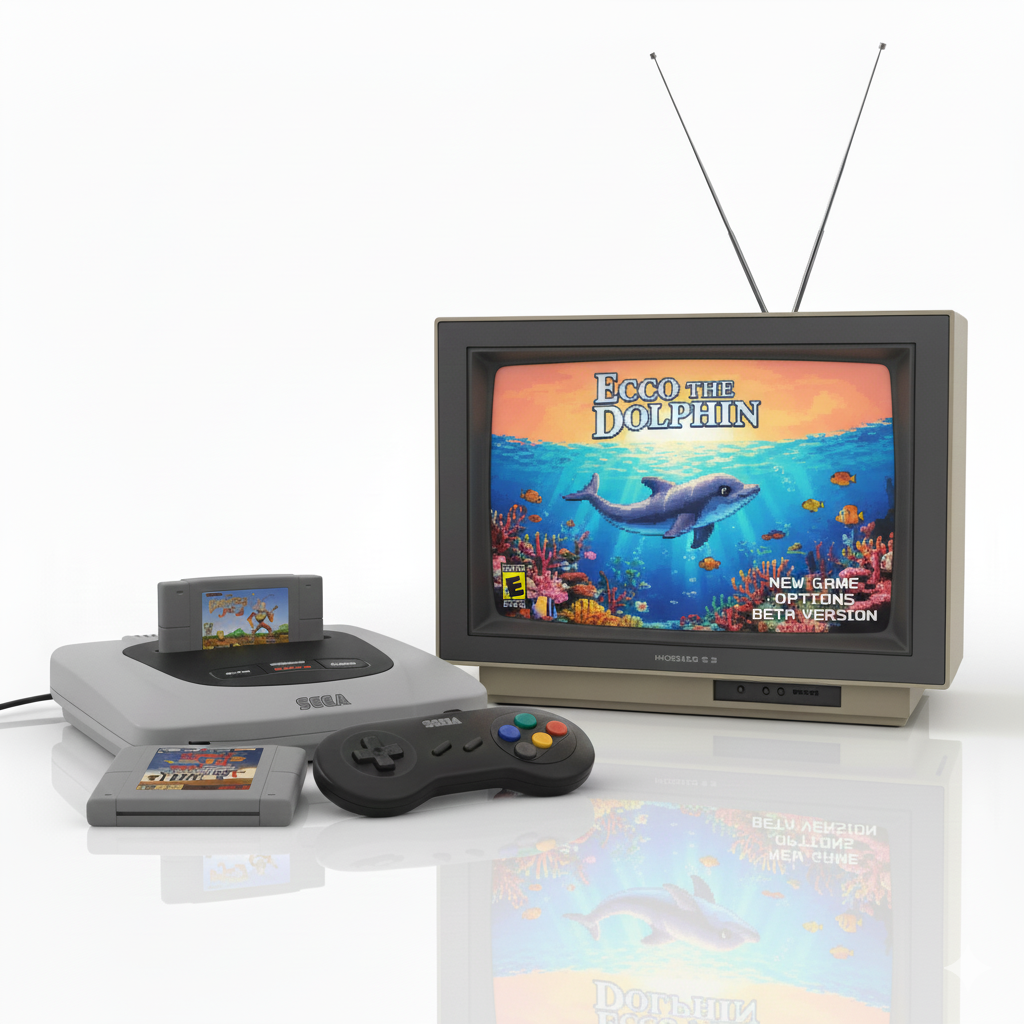
Introduction to Ecco the Dolphin
Released in 1992 by Sega, Ecco the Dolphin quickly became a notable title in the world of video gaming. Set against the backdrop of a vast and vibrant underwater world, the game invites players to experience the life of Ecco, a young dolphin on a mission to rescue his pod and explore the mysteries of the ocean. The narrative begins when Ecco’s fellow dolphins disappear into the depths of the sea, prompting him to embark on an adventurous quest that intertwines elements of mythology and environmental themes.
Ecco, with his striking blue-grey skin and agile movements, provides a unique gaming experience, allowing players to explore various aquatic environments packed with splendid visuals and intricate details. The game leverages an expansive series of levels, each designed with distinct challenges that require players to utilize Ecco’s abilities, such as swimming, diving, and echolocation. This innovative gameplay mechanic promotes exploration and problem-solving, setting Ecco the Dolphin apart from traditional platformers of its era.
The underwater setting of Ecco the Dolphin is one of its most compelling attributes. Players are immersed in a beautifully crafted aquatic landscape, ranging from serene coral reefs to treacherous underwater caves. The game’s sound design, featuring a tranquil and atmospheric soundtrack, further enriches the experience, drawing players deeper into Ecco’s world. Upon its release, the game received critical acclaim for its stunning graphics and unique gameplay, which was both challenging and rewarding. Overall, Ecco the Dolphin has left a lasting impression on the gaming landscape, paving the way for further exploration of its features and legacy.
Gameplay Mechanics and Design
‘Ecco the Dolphin’ is a landmark title that offers a rich and immersive gaming experience through its gameplay mechanics and design. At its core, the game is built around the player’s ability to control Ecco, a dolphin navigating various underwater environments. The controls are intuitively designed, allowing for smooth navigation as players explore beautifully rendered oceanic levels. The game’s design encourages engagement with the tranquil yet perilous underwater world, with a primary objective of rescuing Ecco’s pod, which has been captured by extraterrestrial beings.
As players traverse the ocean depths, they encounter a variety of challenges that test both their reflexes and strategic thinking. The integration of puzzle-solving elements is a significant aspect of the gameplay; players must decode environmental clues and use Ecco’s abilities, such as sonar communication, to interact with other marine life and unveil hidden paths. This feature enriches the exploration experience and fosters a sense of curiosity and discovery, essential components of effective design in adventure games.
Moreover, combat features add a layer of complexity to the gameplay. Ecco must confront underwater threats, including predatory sea creatures. Players must utilize precise movements and timing to evade danger or engage in combat, showcasing the game’s dual focus on exploration and action. The design choices effectively balance these elements, ensuring that both new and veteran players find enjoyment and challenge throughout their journey.
In essence, ‘Ecco the Dolphin’ exemplifies clever gameplay mechanics that emphasize exploration, puzzle-solving, and combat. These interconnected gameplay elements create a unique experience that has stood the test of time, making it an enduring classic in the realm of video games.
Narrative and Themes
The adventure of Ecco the Dolphin unfolds in a beautifully crafted underwater world, presenting players with a narrative that is both engaging and poignant. Players are introduced to Ecco, a young dolphin who embarks on a quest to uncover the mystery behind the disappearance of his pod. Throughout the game, Ecco’s journey takes him through various aquatic environments, each with its challenges and secrets, ultimately leading him to confront formidable foes and uncover deeper truths about the ocean.
A central theme in Ecco’s saga is environmentalism. The game prompts players to reflect on the delicate balance of marine ecosystems and the impact of external threats. By portraying the ocean as both a vibrant habitat and a perilous environment, the storyline emphasizes the importance of preserving natural resources and protecting the creatures that inhabit these waters. This theme resonates strongly in today’s context, as many players are increasingly aware of environmental issues.
Another critical aspect of the narrative is the interconnectedness of ocean life. Ecco’s interactions with various marine species highlight the symbiotic relationships that exist within the ocean—demonstrating that every creature plays a vital role in the ecosystem. These encounters often serve as lessons about cooperation and understanding, adding depth to the gameplay experience.
The struggle for survival against various threats also features prominently in Ecco’s journey. From facing predators to navigating treacherous waters, Ecco embodies resilience and determination. This portrayal not only enhances the emotional depth of the game but also allows players to connect with Ecco on a personal level, feeling a sense of empathy for his trials. The storyline’s ability to evoke such emotion contributes to the lasting impact that Ecco the Dolphin has on its players, making it a timeless classic that resonates with both young and old alike.

Visual and Audio Aesthetics
The visual and audio elements of Ecco the Dolphin are paramount to its status as a classic Sega adventure. The game artfully employs pixel art to create a vibrant underwater world filled with intricate aquatic flora and fauna. Each level of the game presents a meticulously crafted environment that immerses the player in a stunning aquatic landscape. The use of color is particularly noteworthy; shades of blue and green envelop players, simulating the depths of the ocean while variants in hue hint at the varying moods of each underwater habitat.
The design of aquatic creatures in Ecco the Dolphin is particularly impressive. From the playful dolphins to menacing sharks, each character is rendered with a distinct style that not only reflects their real-life counterparts but also contributes significantly to the game’s narrative and atmosphere. The smooth animations accentuate the flow and movement of the marine life, allowing players to experience a sense of freedom and exploration as they guide Ecco through challenging waters.
Moreover, the atmospheric effects enhance the underwater experience. Each level is characterized by unique visual effects such as shifting currents and bioluminescent plants that create a dynamic and engaging environment. The interplay of light and shadow plays an essential role in achieving a realistic depiction of underwater life.
Complementing the visuals is the hauntingly beautiful soundtrack composed by Spencer Nilsen. The music, which elegantly transitions through different phases of the game, captures the essence of the ocean and reflects the emotional highs and lows associated with Ecco’s journey. The ambient sounds of the sea, the calls of other sea creatures, and the resonating echoes all contribute to a rich audio tapestry that enhances the player’s immersive experience.
The Legacy of Ecco the Dolphin
Released in 1992 for the Sega Genesis, Ecco the Dolphin has left an indelible mark on the video game industry. Its unique blend of platforming, puzzle-solving, and action heightened players’ immersion in an underwater world filled with vibrant graphics and ethereal sound design. The game introduced players to the challenges faced by marine life, creating a strong narrative driven by the quest of Ecco to save his pod. This emphasis on storytelling through gameplay was somewhat novel for its time, paving the way for greater narrative depth in future platform genres.
The impact of Ecco the Dolphin can be seen in its devoted cult following, which has grown over the years. Fans appreciate its artistic and environmental themes, often reflecting on the need for oceanic conservation and awareness of marine ecosystems. The game championed the concept of using video games as a medium to raise environmental consciousness, influencing subsequent titles that similarly incorporated ecological messages into their narratives.
As a result of its success and cultural resonance, Ecco the Dolphin spawned sequels, including Ecco: The Tides of Time and Ecco the Dolphin: Defender of the Future. Most recently, the title was remastered and released on modern platforms, allowing a new generation of gamers to experience its underwater adventures. This resurgence not only introduces classic gameplay mechanics to contemporary audiences but also highlights the game’s timeless relevance regarding environmental issues.
In conclusion, Ecco the Dolphin stands as a seminal work in the platform genre, illustrating the potential of video games to engage players in meaningful narratives, raising awareness about important ecological issues while solidifying its legacy within the gaming community.
Challenges and Rewards in Gameplay
In the realm of classic video games, few titles present the multifaceted challenges found in Ecco the Dolphin. Players are presented with a series of intricate levels that not only test their reflexes but also their cognitive abilities. Each stage is meticulously designed, featuring diverse underwater environments that can quickly shift from serene exploration to perilous navigation filled with hazards.
One of the prominent challenges players face is the intricate puzzle-solving inherent in the gameplay. These puzzles often require not only logical thinking but also an understanding of the game’s mechanics and environment. Players must learn to strategize and utilize Ecco’s unique abilities, such as echolocation, to progress. This fosters critical problem-solving skills, as they must frequently adapt to new obstacles and think creatively to move forward.
Moreover, the difficulty of Ecco the Dolphin is intentional and serves to heighten player engagement. The game offers a rewarding experience for those who persevere through challenges. Successfully navigating a difficult level or solving a complex puzzle can elicit a strong sense of achievement. This intrinsic motivation is integral to the overall gaming experience, driving players to improve their skills and discover new strategies. The satisfaction derived from overcoming these hurdles is not merely about completing the game but also about the journey and personal growth players undergo.
In addition, the game’s reward system enhances player motivation. By providing tangible rewards such as new abilities or access to hidden areas, Ecco the Dolphin encourages exploration and continued engagement. The blend of challenge and reward creates a compelling cycle that keeps players invested in the game, highlighting the importance of well-crafted gameplay mechanics in creating an immersive experience.
Fan Community and Cultural Impact
The game’s legacy is upheld by a passionate fan community that remains active decades after its initial release. Dedicated forums allow fans to discuss strategies, share fan art, and create engaging content that pays homage to the beloved character of Ecco and the underwater worlds he explores. Various fan websites serve as archives, collecting not only gameplay tips but also fan fiction and videos that further enrich the community’s experience.
Art inspired by Ecco the Dolphin is particularly notable. Artists often present their interpretations of Ecco, his friends, and the vibrant marine environments, showcasing the creativity and talent of the fan base. Platforms such as DeviantArt and Tumblr have become hotspots for these artworks, where fans can celebrate their love for the oceanic adventure. Game developers, on occasion, share and even acknowledge fan creations on social media, reinforcing the dialogue between creators and admirers.
Speedruns of Ecco the Dolphin have emerged as a popular subculture within the gaming community. Enthusiasts strive to complete the game in record time, showcasing exceptional skill and deep knowledge of its mechanics. These events are streamed live on platforms such as Twitch, where they not only draw substantial viewership but also inspire discussions about strategy and gameplay among attendees.
Beyond gaming, Ecco the Dolphin has found its place in popular culture. References and parodies appear in various forms, including television shows and online media, emphasizing its influence. Such instances reveal the broader cultural significance of Ecco and the universe surrounding him. Even long after its initial release, the game’s storytelling and artistry continue to resonate, ensuring its place in the annals of video game history.
Comparison to Contemporary Games
Ecco the Dolphin, released during the early 1990s, stands as a remarkable example of innovative gameplay, particularly when compared to its contemporary titles. At that time, the gaming landscape was dominated by simplistic mechanics; however, Ecco introduced players to a richly detailed underwater world, blending platforming with puzzle-solving elements. Titles like Sonic the Hedgehog exemplified fast-paced action, while Super Mario World focused on straightforward platforming challenges. In contrast, Ecco emphasized exploration and environmental storytelling, uncovering significant themes such as ecological struggles, which were less common in games of its day.
In comparing Ecco the Dolphin to modern games, it is evident that its influence extends into current titles exploring aquatic themes. Games such as Abzû and Subnautica have resurfaced the concept of underwater exploration, enriched with immersive graphics and storytelling. These contemporary titles capture similar mechanics of navigating expansive aquatic environments and highlight the importance of environmental narratives, akin to Ecco. Furthermore, the atmospheric soundtrack of Ecco, an integral part of the player’s experience, paved the way for modern sound design in video games, creating an emotional connection between players and in-game settings.
Moreover, the rise of indie games has seen a resurgence of titles inspired by Ecco’s unique mechanics. For instance, games like Spiritfarer incorporate themes of nature and coexistence, reflecting the ecological motifs present in Ecco. The blend of adventure and emotion engages players while promoting conservation themes that resonate with an increasing number of contemporary gamers. Although Ecco the Dolphin faced challenges in mainstream success during its time, its innovative approach not only distinguished it from contemporary games but also laid foundational principles that continue to inspire modern gaming adventures centered around aquatic environments and environmental awareness.
Final Thoughts and Conclusion
In reflecting upon the significance of Ecco the Dolphin within gaming history, it becomes clear that this pioneering title has left an indelible mark on the industry. Released during an era marked by evolving gameplay mechanics and narrative techniques, Ecco the Dolphin distinguished itself through its rich and immersive storytelling. Players were not merely engaging with a game; they were unraveling a captivating narrative woven into the fabric of a stunning underwater world.
The game showcased a unique approach to gameplay that emphasized exploration and environmental themes, diverging from conventional platformers of its time. This gameplay style, combined with its ethereal soundtrack and visually appealing graphics, contributed to a truly atmospheric experience that resonated with audiences. The challenges presented in Ecco, including its complex puzzles and skillful navigation through obstacles, further enriched the overall player experience, allowing for a blend of engagement and learning.
Moreover, Ecco the Dolphin continues to delight a diverse audience, appealing to both nostalgic gamers familiar with its original release and newcomers discovering its charm for the first time. The game’s themes of environmentalism and the connection between humanity and nature remain relevant today, further cementing its legacy. As we look back at its impact, it is evident that Ecco the Dolphin is not just a nostalgic relic but a timeless classic with enduring appeal.
In conclusion, Ecco the Dolphin stands as a testament to the power of storytelling and gameplay within the medium of video games. Its contributions to the genre and lasting popularity serve as reminders of the profound connections games can form with their players and the impact they can have on the cultural landscape.