
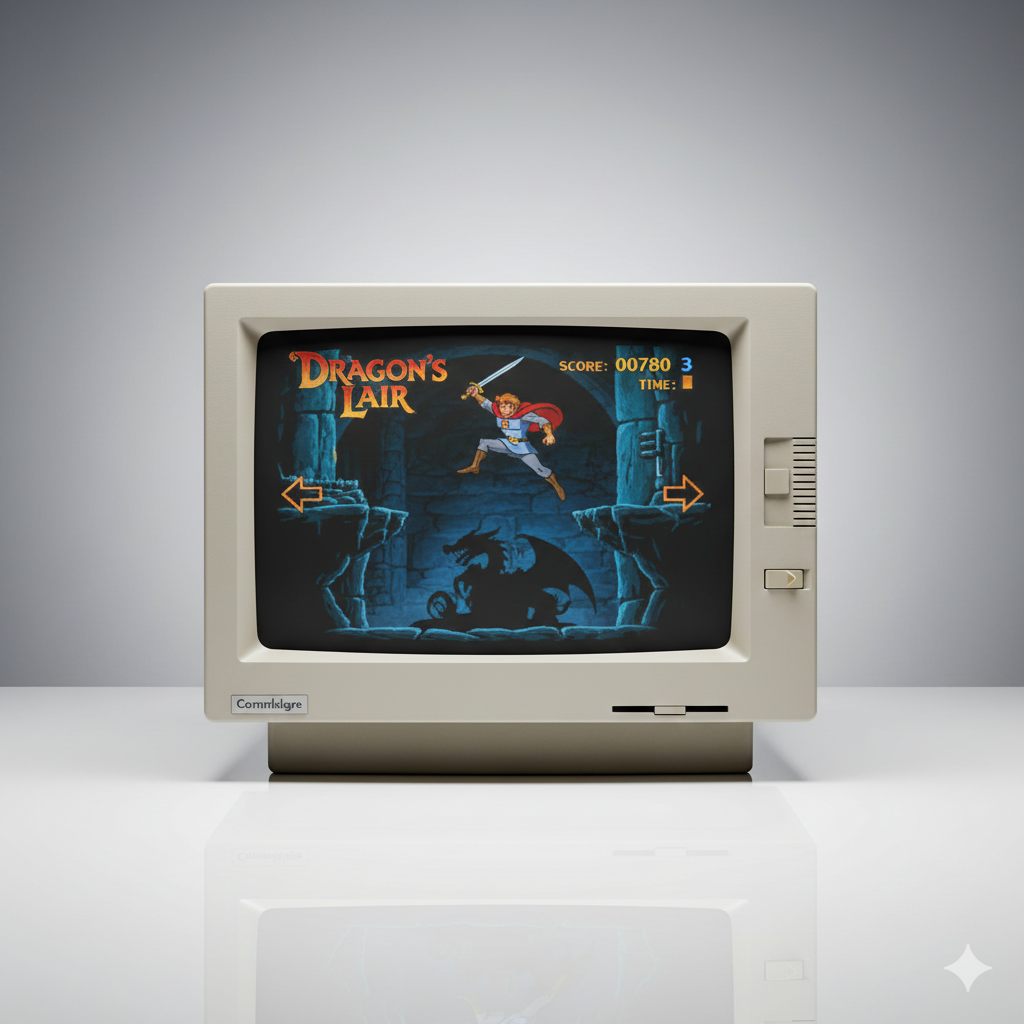
Introduction to Dragon’s Lair
Dragon’s Lair is a pioneering title in the realm of interactive animated video games, originally released in 1983. Developed by Cinematronics, the game was notable for its innovative use of laserdisc technology, which enabled the incorporation of high-quality animated sequences created by ex-Disney animator Don Bluth. The game was initially designed for the arcade platform, but its popularity soon saw it ported to various home consoles, including the Amiga, further solidifying its legacy in video game history.
The significance of Dragon’s Lair extends beyond mere entertainment; it represents a major turning point in the gaming industry. While most games of that era were characterized by simple graphics and limited interactivity, Dragon’s Lair mesmerized players with its rich, vibrant animations and captivating storytelling, thus setting a new standard for visual appeal in games. Players assumed the role of Dirk the Daring, a knight on a quest to rescue Princess Daphne from the clutches of the evil dragon Singe. The player’s decisions influenced the progression through the game, resulting in a unique blend of animation and gameplay.
What set Dragon’s Lair apart was not only its animation style but also the interactive elements woven into the narrative. Players engaged directly with the animated sequences, making choices that would lead to either success or failure. The rich dialog, detailed characters, and intricate scenes transported players into an enchanting medieval fantasy, making it a memorable experience. Dragon’s Lair not only paved the way for future interactive animated games but also demonstrated the potential of combining cinematic storytelling with video gaming, influencing countless titles in the years to come.
Game Mechanics and Gameplay
Dragon’s Lair, a hallmark in the landscape of classic gaming, offers a unique fusion of animation and gameplay that immerses players into its enchanting narrative. At its core, the mechanics are predicated on timing and quick reflexes, compelling players to react swiftly to on-screen challenges. As players assume the role of Dirk the Daring, they navigate through a series of perilous encounters, each necessitating a selection from a designated set of commands. These interactive decisions are critical in guiding Dirk through the labyrinthine adventure.
The gameplay loop is focused on a sequence of choices that influence the progression of the story. Players must anticipate the correct actions to counter various obstacles, such as leaping over traps or warding off enemies. This requirement for cognitive engagement is coupled with a visual experience that is both engaging and demanding, which appeals to players aiming to master the game. The potential for failure is ever-present, as selecting the wrong action results in a quick demise and a loss of a life.
The game employs a limited lives system, making strategic planning essential for success. Each encounter can lead to the forfeiture of one of Dirk’s lives, pushing players to carefully contemplate their next move. This aspect brings an additional layer of challenge, as players must not only recognize the correct sequence of actions but also develop their reflexes and instincts. Failure is an inherent part of the experience, and with each retry, players glean insights into the mechanics, gradually honing their skills and improving their performance.
In conclusion, Dragon’s Lair epitomizes a gaming era that prioritized reflex-driven gameplay and visual storytelling. The intricate mechanics require players to engage actively and strategically, providing a rewarding challenge that enhances the allure of this classic title.
The Visual and Audio Experience
One of the most striking aspects of Dragon’s Lair on the Amiga is its exceptional visual presentation. Created by renowned animator Don Bluth, the game’s art style is characterized by vibrant colors and fluid animations that bring the narrative to life. Bluth’s innovative use of hand-drawn animation techniques allowed for a level of detail and expressiveness that was unprecedented for its time. Each frame resonates with the charm of classic animation, making players feel as if they have stepped directly into a fairy tale.
The game’s distinct visual storytelling is complemented by an engaging narrative that guides players through a perilous adventure. The sequences are crafted meticulously to ensure that every action is not only visually appealing but also meaningful to the storyline. The characters are nothing short of memorable, each embodied with personality and flair that is vividly depicted through animation. This artistic approach creates an immersive environment that draws players into the world of the game, making every challenge a pivotal moment in the adventure.
Alongside the stunning visuals, the sound design in Dragon’s Lair significantly elevates the overall gaming experience. The score features a dynamic orchestral soundtrack that complements the on-screen action, enhancing emotional responses during key moments in the game. Coupled with expertly designed sound effects, each clash of swords or gasp of a character is designed to resonate with players, further embedding them into the unfolding drama. Sounds are not merely incidental; they are integrated seamlessly with the narrative, supporting the game’s underlying themes and adding depth to the interactive experience. The synchronization of audio and visuals forms a cohesive atmosphere that ultimately left an indelible mark on players.

Legacy and Influence of Dragon’s Lair
Since its initial debut in the early 1980s, Dragon’s Lair has left an indelible mark on the gaming industry and animation. Its pioneering use of laserdisc technology to present cinematic sequences was unprecedented, setting a new standard for visual storytelling in video games. This innovative approach not only captivated audiences but also inspired a wave of developers to explore narrative depth in interactive entertainment.
The legacy of Dragon’s Lair is evident in its numerous re-releases across various platforms, including the popular Amiga. By adapting the game to fit different technologies, it became accessible to a broader audience, demonstrating its enduring appeal and relevance. The Amiga version, in particular, showcased how advanced graphics could enhance gameplay experiences, further solidifying Dragon’s Lair‘s status as a cult classic. Over the years, it has been reimagined for modern consoles and mobile devices, keeping the spirit of the original alive and introducing it to new generations.
Moreover, the impact of Dragon’s Lair extends beyond gaming. Its distinctive animation style influenced countless animators and game designers, illustrating the potential of combining film and interactive play. The game’s protagonist, Dirk the Daring, remains an iconic figure in gaming lore, symbolizing the intersection of animation and gameplay. As developers continue to draw from its rich history, the elements of quick-time events and player choice implemented in Dragon’s Lair have paved the way for modern gameplay mechanics found in many contemporary titles.
In conclusion, the legacy and influence of Dragon’s Lair are profound, providing a foundation upon which future video games and animations have been built. Its preservation in the cultural canon of gaming, coupled with ongoing adaptations, ensures that its magic endures, inspiring both gamers and developers alike.