
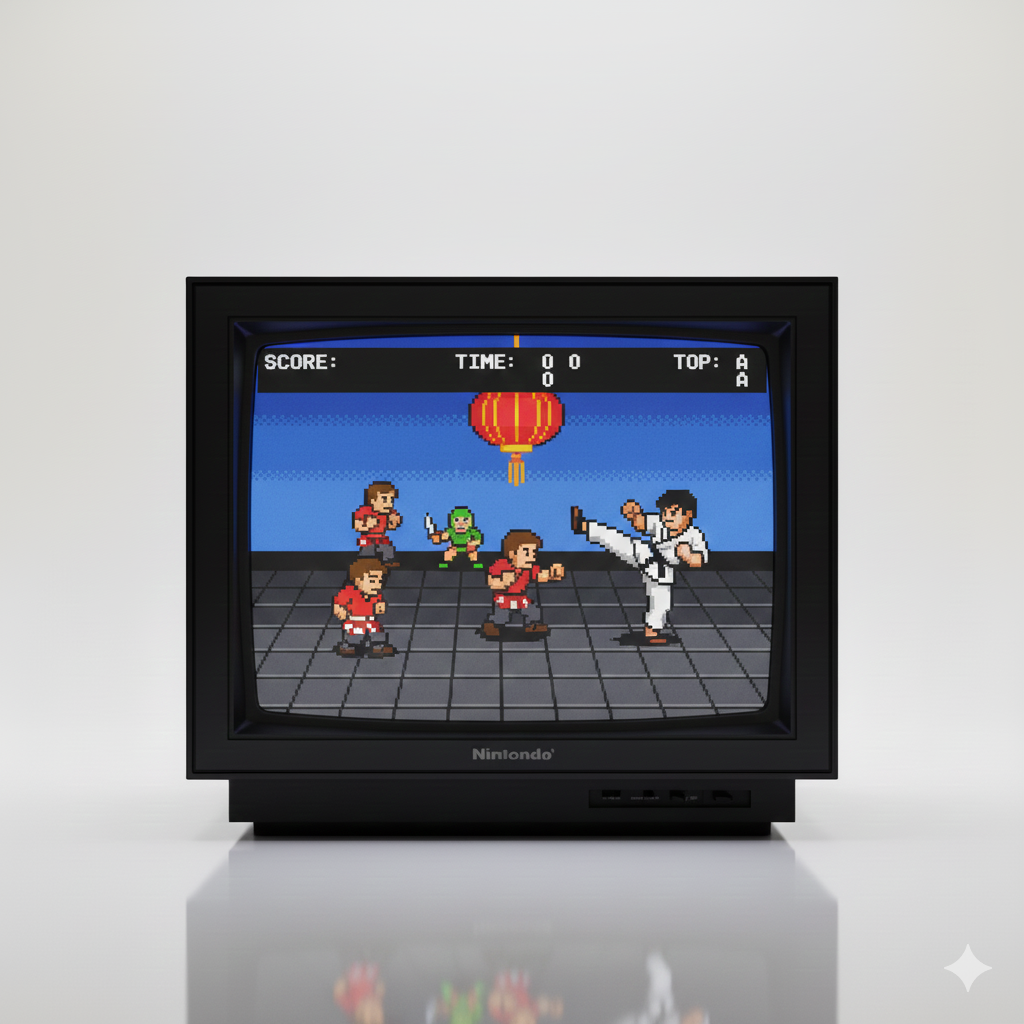
Introduction to Kung Fu: A Glimpse into 1985 Gaming
In 1985, the gaming industry was undergoing a significant transformation, as home consoles began to emerge as viable platforms for interactive entertainment. Among the notable entries during this era was Nintendo’s “Kung Fu,” a beat ’em up game that would later become a staple in the Nintendo Entertainment System (NES) library. Developed by Irem and published by Nintendo, Kung Fu was inspired by martial arts films and popular culture trends of the time, which contributed to its appeal among players across various age groups.
Kung Fu allowed players to step into the shoes of a martial artist, tasked with rescuing a kidnapped love interest while battling through increasingly difficult levels filled with enemies. The game utilized a side-scrolling style, which was characteristic of many titles released during this period, offering players a sense of progression and accomplishment as they navigated through various stages. Additionally, Kung Fu introduced a unique control scheme that enabled players to perform a variety of kicks and punches, setting it apart from other games in its genre.
The mid-1980s gaming landscape was heavily influenced by arcade gaming, which was experiencing a peak in popularity. Nintendo’s entry into the home console market with the NES marked a key shift, as it allowed players to enjoy arcade-quality gameplay in the comfort of their homes. Kung Fu played a significant role in establishing Nintendo’s reputation in this competitive environment, garnering positive reviews and a strong following. Its success demonstrated the potential for home console gaming, paving the way for future titles that would continue to build on its legacy. As such, Kung Fu is not just a title from the past; it represents a critical moment in the evolution of video gaming and showcases Nintendo’s pioneering spirit during the rise of home entertainment systems.
Gameplay Mechanics and Features
Kung Fu, released in 1985, is an iconic representation of early arcade-style gaming, standing out for its engaging gameplay mechanics and innovative features. The controls are simple yet effective, allowing players to execute a variety of moves with relative ease. Players navigate through levels using directional inputs to control their character’s movement, while specific button combinations unleash punches and kicks, reflecting a straightforward but satisfying combat system.
The character mechanics are tailored to convey a sense of realism in martial arts. Players assume the role of a kung fu master who battles through multiple stages while rescuing a kidnapped character. Each stage presents a unique set of challenges, with varying enemy types — ranging from agile ninjas to tougher opponents. This diversity in enemies enhances gameplay by requiring players to adapt their strategies for each encounter.
Combat dynamics are a pivotal aspect of Kung Fu’s appeal. Players can employ different fighting styles, involving a mix of special moves and basic attacks, which keeps the combat experience fresh and engaging. The leveling structure is designed to reward skillful play; as one progresses, the difficulty escalates, introducing players to new enemies and obstacles that test their mastery of the controls and combat techniques.
One notable feature of Kung Fu is its emphasis on martial arts aesthetics. The game incorporates fluid animations, vivid colors, and an atmosphere that immerses players in a kung fu-themed world. This emphasis on combat finesse distinguishes it from contemporaneous titles that often prioritized simplistic action over intricate gameplay mechanics. Thus, Kung Fu serves not only as a nostalgic experience for many but also as an early example of applying martial arts principles within a video game framework.

Cultural Impact and Legacy
Nintendo’s Kung Fu, released in 1985, is often regarded as a significant title within the realm of retro gaming, carving out its niche in both the gaming community and extends even beyond. At a time when martial arts themes began to flourish in popular culture, Kung Fu tapped into this rising trend, establishing a blueprint that would influence generations of video games to come. The game not only popularized martial arts gameplay mechanics but also introduced players to a variety of character archetypes, such as the martial artist protagonist battling wave after wave of enemies.
As a pioneer in the genre, Kung Fu played a crucial role in establishing a foundation upon which many subsequent titles were built. Notable games such as Street Fighter and Mortal Kombat borrowed several elements, including the concept of character development and skill progression derived from classic martial arts motifs. The game’s simple yet engaging gameplay has been recognized as an essential stepping stone in the evolution of fighting games, ensuring its place in gaming history.
The legacy of Kung Fu is not limited to gaming alone; it has frequently appeared in other media forms, often being referenced or parodied in various television shows and films. Its cultural resonance demonstrates the game’s impact, as it has sparked discussions about video game narratives and the portrayal of martial arts in entertainment. Over the years, fans have embraced Kung Fu, leading to remakes and sequels that attempt to recapture the original’s charm while introducing updated gameplay mechanics and graphics.
Its continued relevance in modern gaming affirmatively illustrates the lasting influence of Nintendo’s Kung Fu; with each recent adaptation, new audiences are introduced to this retro classic, reminding us of its enduring legacy.
Conclusion: Why Kung Fu Still Matters Today
The legacy of Nintendo’s Kung Fu transcends its initial release in 1985, as it continues to resonate within the gaming community. This iconic title holds an enduring appeal, particularly for those who experienced its roll-out first-hand. The game’s simplistic yet engaging gameplay, combined with its unique martial arts theme, laid the foundation for numerous similar titles that followed. Its influence can be seen in the evolution of fighting games, where players now expect intricate mechanics and immersive storytelling—a testament to Kung Fu’s pioneering design.
Nostalgia plays a significant role in the ongoing appreciation of Kung Fu. Older gamers often reminisce about their experiences, recalling the thrill of leveling up their characters and mastering techniques to defeat ruthless opponents. This emotional connection emboldens the game’s relevance, as it brings together generations of players who value both the challenge and the excitement the game provides. The visuals and soundtracks may appear dated by today’s standards, yet they evoke a sense of charm and authenticity that many contemporary titles strive for.
Moreover, discussions surrounding Kung Fu in modern gaming forums continue to reflect its significance. Enthusiasts critically analyze its mechanics and aesthetic, exploring its contributions to the medium as a whole. As gaming evolves, revisiting these classics like Kung Fu enriches the dialogue around historical moments in gaming and offers insight into how design philosophies have transformed. Thus, engaging with Kung Fu is not merely an act of nostalgia but also a way to understand the trajectory of interactive entertainment. As we embrace the new, it is essential to revisit the old, as it shapes the future of gaming.