
Introduction to Urban Champion
Urban Champion, released in 1984, stands as a significant milestone in Nintendo’s evolution as a prominent player in the gaming industry. Initially introduced as an arcade game, it marked a transitional phase for the company, which was primarily known for their toy manufacturing at the time. Urban Champion offered a unique blend of competitive gameplay, paving the way for various future fighting games.
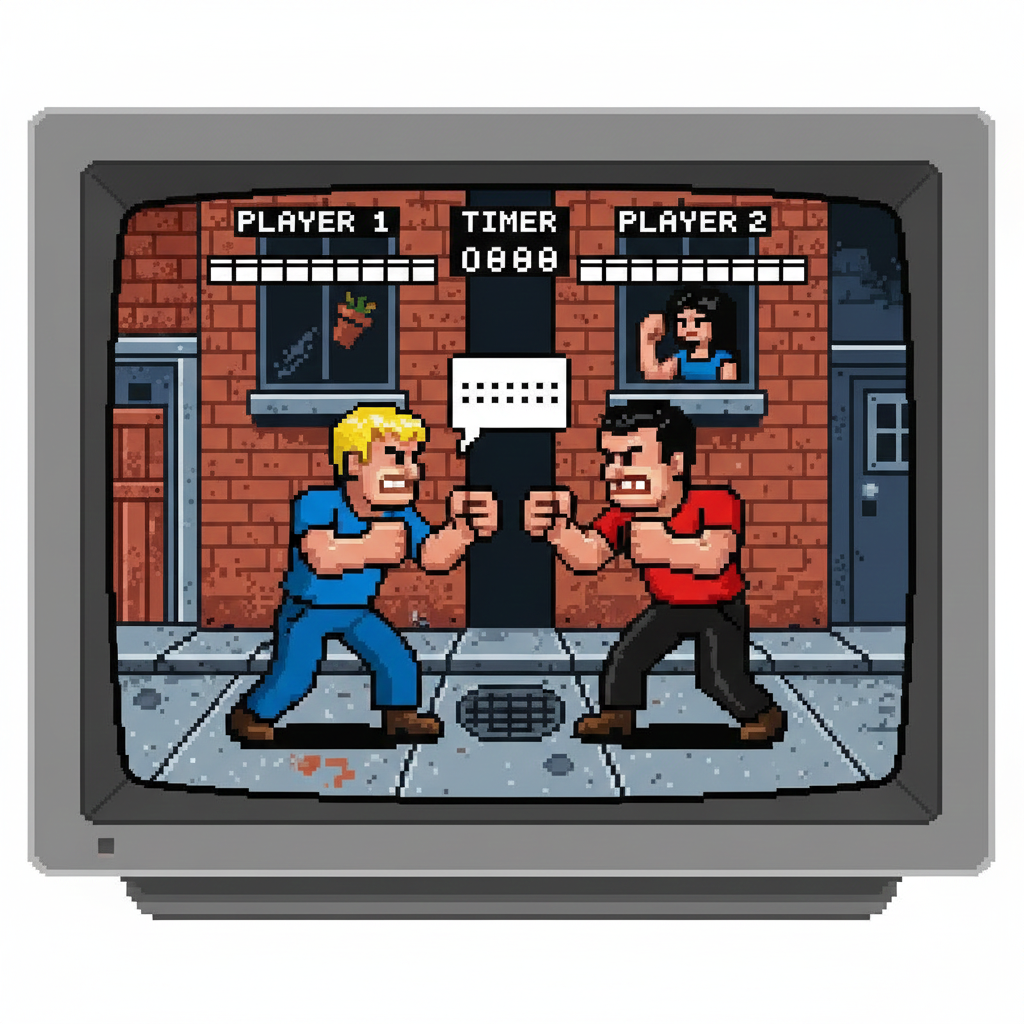
The premise of Urban Champion is relatively straightforward yet engaging. Players assume the role of a street fighter, taking on the persona of either a white or green-clad character, with the objective to defeat a rival fighter while navigating the challenges posed by urban scenery. The primary mechanics revolve around manual combat; players can throw punches, block attacks, and maneuver around the environment. Notably, the gameplay rewards strategic moves and timing, which contributes to its appeal among players aiming for victory.
In retrospect, Urban Champion serves as a reflection of its time while highlighting Nintendo’s commitment to exploring diverse genres and fostering player engagement. As we delve deeper into its features, cultural impact, and long-term legacy, it becomes evident that this arcade classic holds a special place in gaming history.
Gameplay Mechanics and Design
Urban Champion, released by Nintendo in 1984, introduces players to an engaging fighting experience set against the backdrop of a stylized urban environment. The gameplay mechanics revolve around players engaging in one-on-one brawls within the streets, emphasizing a unique take on urban fighting. This arcade classic simplifies combat while ensuring a level of depth that captivates players. The basic premise involves two fighters competing to knock each other off the screen while navigating through various stages of an urban landscape. Each character possesses distinct moves and abilities, enhancing the gameplay experience.
The controls in Urban Champion are straightforward, allowing players to execute a combination of punches, kicks, and defensive maneuvers with ease. Movement is primarily restricted to the left and right, promoting strategic positioning during bouts. Players must master timing and distance to land effective attacks while avoiding their opponent’s strikes. This simplicity contributes to the accessible nature of the game, enabling players of all skill levels to engage with its mechanics.
Graphically, Urban Champion employs a minimalist design befitting its arcade roots. The characters are represented with simple yet recognizable sprites, encapsulating the era’s aesthetic. The backgrounds depict colorful urban environments, providing visual context to the fights. This design choice not only enhances the nostalgic appeal but also allows players to focus on combat without unnecessary distractions. Furthermore, the repetitive yet lively sound effects enhance the atmosphere, creating an immersive experience as players immerse themselves in each match.
In summary, the gameplay mechanics and design of Urban Champion successfully combine simplicity with engagement, making it a noteworthy title in the realm of arcade fighting games. Its intuitive controls and appealing graphics contribute to a memorable player experience while reinforcing the unique nature of urban combat.
Cultural Impact and Context
The early 1980s marked a significant period in the evolution of the video game industry, characterized by rapid growth and an expanding cultural landscape. During this era, arcade gaming began to dominate the recreational habits of many, driven by a competitive spirit that engaged players both individually and socially. Urban Champion, released by Nintendo in 1984, epitomized the trends that were prevalent in gaming at that time.
One of the most profound influences on Urban Champion was the burgeoning popularity of martial arts films, propelled by stars such as Bruce Lee and Jackie Chan. This cinematic trend introduced audiences to the excitement and aesthetic of martial arts, which Urban Champion sought to emulate with its street brawling mechanics. The game encapsulated the essence of these films, offering players a digital arena where they could showcase fighting skills, reminiscent of the on-screen battles that captivated audiences in theaters.
Additionally, the competitive arcade culture of the 1980s played a crucial role in shaping Urban Champion’s design and reception. Arcades became social hubs where individuals could gather to challenge friends or strangers, fostering a sense of community and competition. Urban Champion’s straightforward gameplay mechanics allowed for quick matches, appealing to the arcade-goer who sought immediacy and engagement. Its two-player mode enabled direct competition, making it particularly popular among gamers eager to test their skills against peers.
In the broader context of the gaming landscape, Urban Champion can be viewed as a critical stepping stone that paved the way for future fighting games. Its unique combination of martial arts inspiration and competitive gameplay contributed to the establishment of conventions that would influence subsequent titles in the genre. By embracing the cultural elements of its time, Urban Champion not only entertained but also contributed to the cultural dialogue surrounding gaming in the early 1980s.
Urban Champion’s Development
The development of Urban Champion was spearheaded by Nintendo in the early 1980s, during a time when the company was embarking on an ambitious foray into the arcade gaming sector. A creativity-driven team comprised of talented designers, programmers, and artists collaborated to bring this unique project to fruition.
At the core of Urban Champion’s design philosophy was the aim to create a game that encapsulated the urban street fighting culture of the era. Early prototypes and brainstorming sessions led to various ideas being pitched, where the idea of players controlling fighters to knock each other out in a city setting emerged as a standout concept. This innovative approach allowed the team to construct an engaging player experience that applied simple controls while delivering thrilling gameplay.
Technologically, the development team faced several challenges, particularly pertaining to the limitations of arcade hardware at the time. Achieving a smooth handling of graphics was critical, and substantial effort went into ensuring that both characters displayed dynamic animations with minimal lag. The programmers utilized the capabilities of the Nintendo VS. System, which allowed for enhanced graphical output and sound fidelity compared to the contemporaries.
As Urban Champion’s development progressed, the team also focused on its multiplayer aspects. They envisioned a competitive experience that would attract players to challenge each other, deepening the social aspect of gaming in arcades. Balancing character abilities and fighting mechanics was essential, as this helped to foster a sense of fairness and competitiveness within the game. Ultimately, these elements combined effectively to create a captivating arcade experience when Urban Champion was launched in 1984, marking an important milestone in Nintendo’s evolving gaming legacy.
Legacy of Urban Champion
Urban Champion, released by Nintendo in 1984, played a significant role in shaping the early days of the fighting game genre. While not as renowned as some of its successors, Urban Champion introduced fundamental gameplay mechanics that would later become staples in various fighting games. The game’s unique premise, centered around two characters engaging in street brawls, laid the foundation for competitive gameplay that emphasizes player skill and strategy.
One of the most notable legacies of Urban Champion is its contribution to character-driven combat mechanics. The game allowed players to control distinct characters, each with unique sprites, thereby introducing players to a form of representation that would prevail in future Nintendo titles and beyond. This character-centric approach is evident in later Nintendo franchises such as Super Smash Bros., where diverse character abilities and interactions become central to gameplay.
Furthermore, Urban Champion’s emphasis on positioning and tactical fighting aligns itself with conventions found in later fighting games. The ability to knock opponents into windows and out of the street represents a precursor to the environmental interactions seen in more modern titles. This aspect not only serves gameplay mechanics but also enhances the overall narrative of urban conflict, a theme that continues to be explored in subsequent game designs.
As time progressed, the impact of Urban Champion can be traced in games that adopted similar mechanics, whether in 2D brawlers or more complex 3D fighting systems. Its relatively simple controls also opened the door for players new to the fighting game genre, democratizing access to a form of entertainment that had previously remained niche. Thus, the influence of Urban Champion resonates through the annals of gaming history, illustrating how even the simplest concepts can pioneer new frontiers in game design and inspire future generations of developers.
Reception and Critique
Upon its release in 1984, Urban Champion was met with a diverse range of reactions from players and critics alike. As one of Nintendo’s early forays into the arcade scene, it showcased the company’s ambition but also highlighted some limitations of the technology at the time. Many contemporary reviews pointed out the game’s simplistic mechanics, wherein players engage in one-on-one street fights with minimal controls, primarily the ability to punch and dodge. While this accessibility was praised for attracting novice gamers, seasoned players often critiqued the game for lacking depth and variety.
Gaming magazines, such as Electronic Gaming Monthly, provided mixed feedback. Some critics lauded the game for its innovative premise—introducing a competitive fighting genre in arcades—while others noted that it failed to take full advantage of its potential. The decision to set the game in a single urban environment also received scrutiny, with players expressing a desire for more diverse settings and character choices. Despite its simplicity, Urban Champion did garner a loyal fan base, particularly among younger audiences who enjoyed its straightforward gameplay.
In retrospective reviews, Urban Champion’s status as an early fighting game has led to a reevaluation of its impact on the genre. It is often recognized for pioneering elements that would later be refined in more successful titles. Today, criticisms about its gameplay mechanics are somewhat tempered by an appreciation for its historical significance within Nintendo’s catalog. Subsequent generations of gamers have revisited Urban Champion through the lens of nostalgia, viewing it as an endearing relic of arcade history rather than merely a flawed game.
Modern Relevance and Rediscovery
Urban Champion, originally released by Nintendo in 1984, has maintained a notable presence in modern gaming culture despite its age. Current gamers often find themselves drawn to this arcade classic not only through nostalgia but also due to its unique gameplay mechanics and charm. The essence of Urban Champion has been preserved through its availability on contemporary platforms, which has allowed a new generation of players to experience the game. Various Nintendo consoles, as well as emulation systems, have made it accessible, bridging the gap between the past and present.
Within gaming communities, Urban Champion has garnered a dedicated following. Fan sites and forums discuss strategies, share tips, and reminisce about their experiences with the game. These discussions often reveal the ways in which Urban Champion has influenced other titles within the beat ’em up genre. Moreover, fan art and remixes can be found across social media platforms, showcasing the enduring impact of this arcade classic. The game’s quirky characters and distinctive setting contribute to its charm, making it a beloved topic in retro gaming circles.
Nostalgia plays a pivotal role in the rediscovery of Urban Champion. Many players who experienced the game during their childhood have introduced it to younger relatives or friends, fostering a sense of community around its retro appeal. This sharing of experiences highlights the role that nostalgia plays not only in individual enjoyment but also in the broader cultural appreciation of older games. As modern gaming continues to evolve, the rediscovery of classics like Urban Champion reminds us of the foundational moments that have shaped today’s gaming landscape. By celebrating these relics of gaming history, enthusiasts create a vibrant dialogue that helps to keep these cherished games alive.
Urban Champion, released by Nintendo in 1984, may not have reached the iconic status of some of its peers, but it has made notable appearances in popular culture that underscore its legacy in the gaming world. As one of the earlier fighting games, its impact can be traced through various media, including video games, television, and more.
The game has been referenced in several other video games, often showcasing the influence it had on the genre. For instance, in the critically acclaimed Super Smash Bros. series, players can spot an homage to Urban Champion through character moves and stage design that evoke the original’s block-busting street fights. This inclusion underscores how Nintendo honors its history while allowing new generations of gamers to appreciate the classic titles.
Additionally, Urban Champion’s presence in the broader culture can be identified through various television shows that reference its gameplay or themes. For example, episodes of animated series like The Simpsons have featured parodies or allusions to classic video games, including Urban Champion, highlighting its role in shaping the gaming landscape of the 1980s. Such references serve to keep the memory of Urban Champion alive and serve as a reminder of the early video game industry.
Film adaptations or documentaries occasionally touch on the topic of early video games, with Urban Champion being mentioned among other classic titles that helped pave the way for future gaming innovations. This recognition indicates that, while Urban Champion may not be at the forefront of gaming discussions today, it is still regarded as a significant piece of video gaming history.
The ongoing interest in Urban Champion and references in popular culture demonstrate its enduring impact, as it remains a part of conversations about the evolution of video games. Through these appearances, both nostalgic and new audiences can appreciate how this early Nintendo title contributed to shaping the landscape of fighting games.
Conclusion: The Enduring Spirit of Urban Champion
Urban Champion, a distinctive title in Nintendo’s early arsenal, remains a noteworthy piece of gaming history. Released in 1984 as an arcade classic, it introduced players to a unique blend of brawling and strategy set against a vibrant urban backdrop. Its influence on subsequent fighting games cannot be overstated, laying foundational mechanics that would be fine-tuned in later titles.
The game’s simple yet effective premise, where players engage in street fights while avoiding obstacles, highlights the charming simplicity that characterized many games of its era. Critics and fans alike praise Urban Champion for its accessibility, allowing gamers of all skill levels to jump in and experience the fun without overwhelming complexity. This quality underscores the importance of gameplay mechanics that prioritize enjoyment over intricate controls, a lesson still relevant to modern game design.
Moreover, Urban Champion’s multiplayer features encouraged social play, a principle that continues to resonate with contemporary gaming. As players fought against each other, they enjoyed both competition and camaraderie, which are essential elements of the gaming experience today. This ethos of community and engagement is something modern gamers can learn from, as the industry shifts towards more isolated and single-player experiences.
In summary, Urban Champion embodies a spirit of innovation and playfulness that is timeless. Its legacy in the Nintendo catalog is solidified, not only as a historical artifact but as a source of inspiration for numerous game developers. Understanding the principles of Urban Champion allows for a deeper appreciation of the progression of video games, highlighting the importance of fun, social interaction, and straightforward design in crafting memorable gaming experiences.