
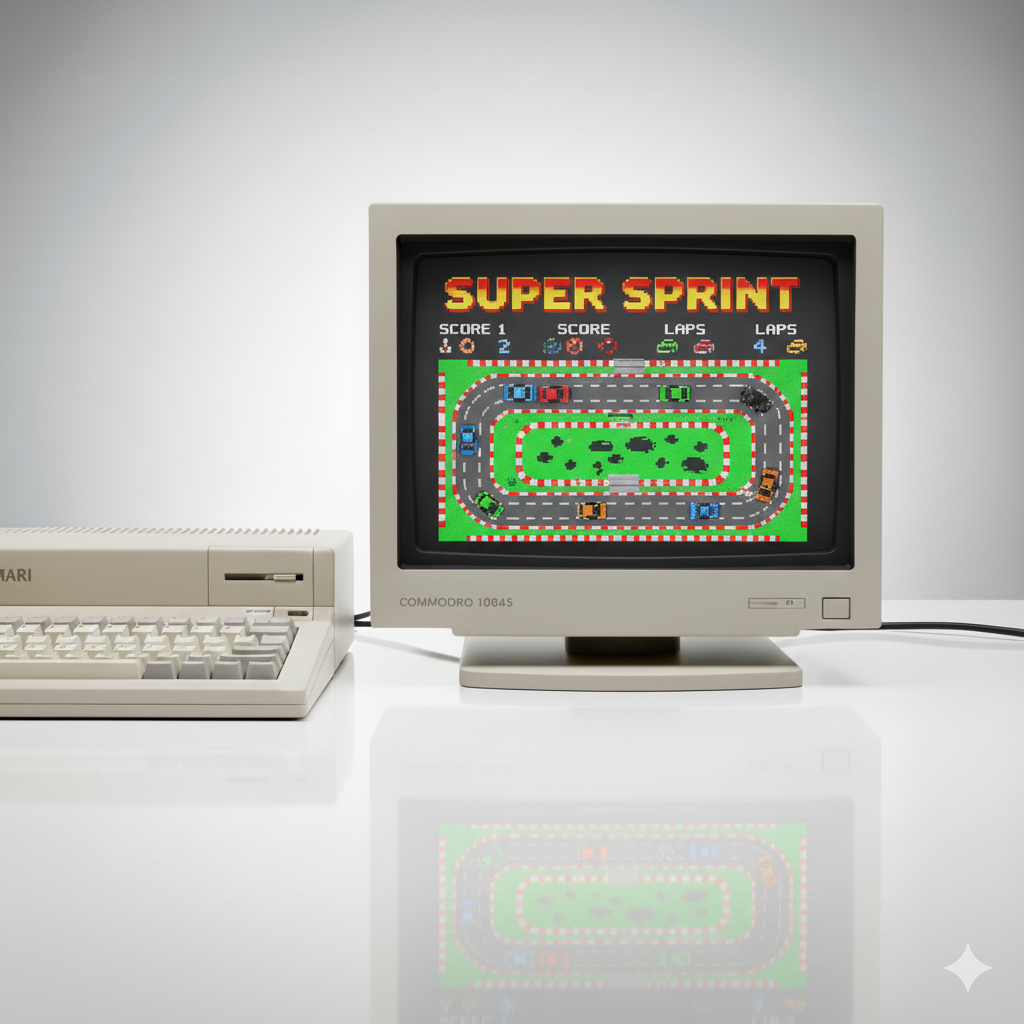
Introduction to Super Sprint
Released in 1986, Atari’s Super Sprint marked a significant milestone in the world of arcade games, primarily designed for the arcade platform. As a sequel to the original Sprint 2, which was a prominent racing game at the time, Super Sprint distinguished itself with its innovative design and engaging gameplay. This title is often lauded for its top-down perspective and the ability to race against three other players, which was a novel feature that fostered a competitive spirit in the arcade setting.
One of the standout characteristics of Super Sprint is its unique track layout. Unlike many racing games of its era that offered linear tracks, Super Sprint featured intricate circuits filled with sharp turns and varied elevations, which required players to master not just speed but also precision in maneuvering their vehicles. Players navigated multiple courses, each designed with distinct challenges, such as oil slicks and tight corners that demanded careful control and strategic routing.
Another defining element of Super Sprint was its emphasis on car upgrades. Players could collect coins throughout the race to enhance their vehicles, gaining improved handling, speed, and acceleration. This feature encouraged repeated play as individuals sought to enhance their cars and gain an edge over opponents. The game’s enticing gameplay, combined with its innovative features, positioned Super Sprint as an influential touchstone in the arcade racing genre, paving the way for subsequent games that would borrow from its approach to competitive multiplayer racing.
Gameplay Mechanics
Atari’s Super Sprint offers a unique and engaging arcade racing experience that combines skill, strategy, and competition. Players take control of small race cars, navigating intricate and diverse tracks that vary in design and complexity. The primary control method is intuitive; players utilize a joystick to steer their vehicles while engaging buttons to accelerate and make precise maneuvers, which proves essential in a game where every turn can significantly impact race outcomes.
The tracks in Super Sprint feature a wide range of racing dynamics characterized by sharp turns, jumps, and obstacles, challenging players’ dexterity and reflexes. The game is designed for multiple players, allowing up to three participants to race simultaneously against one another, thus fostering a competitive atmosphere. Players must not only focus on racing their opponents but also on avoiding hazards that could lead to crashes and hinder their progress.
One of the standout features of Super Sprint is the incorporation of power-ups strategically placed throughout the tracks. These power-ups provide vehicles with advantageous boosts such as speed enhancements, temporary invincibility, or the ability to lay traps for opponents. The strategic use of these power-ups can alter the course of a race, adding depth to gameplay and encouraging players to master the timing of their usage.
The game also includes a variety of track layouts that demand the player’s adaptability and strategic thinking. As players progress, they encounter increasingly difficult courses that test their skills, promoting replayability and sustained engagement. Overall, Super Sprint encapsulates a well-balanced blend of racing mechanics that enhances the arcade racing genre while instilling a lasting sense of nostalgia for both new and veteran players alike.
Graphics and Sound Design
Atari’s Super Sprint is renowned for its distinctive visual style and engaging sound design, which were pivotal in crafting an immersive gameplay experience. The graphics were specifically designed to take advantage of the Atari system’s limitations, resulting in a vibrant and colorful aesthetic that still captivates players today. Unlike many of its contemporaries, Super Sprint utilized a top-down perspective, allowing developers to create intricate race tracks filled with obstacles and power-ups. The vehicles were rendered in a cartoonish style, which helped convey speed and movement despite the pixel-heavy graphics. Each car was customizable, lending a unique character to the racing experience while adhering to the graphical constraints of the era.
Compared to other racing games of its time, Super Sprint‘s graphics were innovative. Many titles relied on more simplistic graphics with limited colors and less detailed environments. In contrast, Super Sprint featured a bright palette and a variety of track designs that created an immediate visual excitement. This graphical innovation offered players a dynamic backdrop against which they could enjoy frantic races. Additionally, the cars’ animations showcased a fluidity that was rare for an Atari game, further enhancing the overall gameplay experience.
The sound design of Super Sprint also played a crucial role in establishing the game’s engaging atmosphere. The use of catchy sound effects, including engine roars and crash noises, brought the racing action to life. The audio elements were complemented by a simple but effective musical score that looped throughout the game. By drawing players into the fast-paced world of racing, the sound contributed significantly to the excitement that Super Sprint promised. Overall, the graphics and sound collectively helped define the game’s identity and maintain its status as a classic in Atari’s extensive library.
Development History
The development of Super Sprint, an arcade racing game, is a fascinating journey of creativity, innovation, and collaboration among a talented team at Atari Games. Released in 1986, Super Sprint emerged from the creative minds of multiple developers, most notably including engineers like Greg Fishback and designer John Newcomer. These individuals played crucial roles in shaping the essence of the game, embedding thrilling racing dynamics in a captivating arcade format.
Throughout the development process, the Atari team faced numerous challenges. One of the significant hurdles was the limitation of the technology at the time. The hardware capabilities, which dictated graphics and processing speed, were far less advanced than today’s standards. The team had to engineer innovative coding techniques to create a visually appealing experience while ensuring smooth gameplay. This necessitated extensive testing and iterations to refine the game’s mechanics, ultimately contributing to its engaging action and strategic depth.
An interesting anecdote from the development phase includes the decision to incorporate the “super” aspect in Super Sprint, differentiating it from existing racing games. During brainstorming sessions, the team wanted to amplify the adrenaline rush associated with racing. They experimented with adding features like turbo boosts and tighter cornering, which substantially influenced the final design. The inclusion of these elements not only enhanced gameplay but also set a benchmark for subsequent arcade racing games.
Moreover, as Super Sprint progressed towards completion, the team celebrated various milestones. For instance, the successful implementation of its unique four-player cabinet was a notable achievement, providing a social gaming experience that attracted crowds to arcades. These efforts culminated in Super Sprint’s release, marking a significant innovation in the competitive racing genre and solidifying its legacy in gaming history.
Impact on Racing Games
Atari’s Super Sprint significantly influenced the racing game genre, not only as a prominent arcade title but also as a precursor to numerous racing games that followed. Released in 1986, Super Sprint introduced an innovative top-down perspective that allowed players to experience fast-paced action in a competitive yet accessible manner. This distinctive viewpoint set a precedent for future racing titles, shaping their mechanics and aesthetics.
One of the most notable aspects of Super Sprint was its emphasis on multiplayer gameplay, enabling up to three players to compete simultaneously. This feature encouraged social interaction in arcade settings, a concept that would carry on in various forms in the racing genre. Games such as Micro Machines and Mario Kart owe a substantial part of their multiplayer dynamics to this foundational title. Both of these franchises embraced the spirit of competitive racing while building on the multiplayer experience initiated by Super Sprint.
Moreover, the game’s simplistic controls and vibrant graphics created an approachable gaming experience that appealed to a broad audience. This laid the groundwork for many home console racing titles, influencing games like F-Zero and Wipeout, which would expand upon the arcade gameplay formula by introducing enhanced graphics and intricate track designs. As the racing genre evolved, the influence of Super Sprint remained evident in the mechanics of speed boosts, power-ups, and vehicle customization, which became staples in modern racing games.
In summary, Atari’s Super Sprint served as a launching pad for the evolution of the racing genre, inspiring not only direct successors but also offering a framework for innovative mechanics that continue to resonate in contemporary gaming. Its impact on both arcade and home console racing games highlights the game’s enduring legacy within the industry.

Multiplayer Experience
Atari’s Super Sprint is a seminal arcade racing game that epitomizes the exhilarating multiplayer experience characteristic of its time. Designed primarily for competitive play, this game allows up to three players to race head-to-head on spirited tracks, competing for the best times while navigating sharp turns and avoiding obstacles. Each player pilots their miniature race car, engaging directly with friends in a lively, social atmosphere at the arcade.
One of the standout features of Super Sprint is the use of a unique cabinet that houses multiple steering wheels and buttons, allowing players to easily engage with the controls and each other. This layout encourages camaraderie and rivalry, as players can see their opponents’ progress in real time and adjust their strategies accordingly. The visceral thrill of competitive racing fosters a dynamic gaming environment, where players cheer for their victories and rally to support their friends.
Furthermore, the game’s setup enhances its social aspect. Players often gather around a single machine, not just to compete, but also to engage in banter and share in the collective excitement of the arcade experience. This social interaction extends beyond the gameplay as players might exchange racing tips, discuss track strategies, or simply revel in the nostalgia that a game like Super Sprint conjures up. The game’s inviting nature encourages newcomers to join in, creating an inclusive community atmosphere that strengthens bonds through shared moments of triumph and defeat.
In conclusion, Super Sprint’s multiplayer features encapsulate the essence of competitive racing in a classic arcade format. It nurtures player interaction, fostering an environment where friendships can be formed, and memories can be made, all while navigating the deceptively simple yet challenging tracks that define this iconic game.
Atari’s Role in Gaming History
Atari, founded in 1972, is often regarded as one of the pioneering companies in the video game industry. Its introduction of arcade games such as Pong marked a significant turning point in gaming, laying the groundwork for future developments and a burgeoning market. The role of Atari in the historical context of video gaming cannot be overstated, as it was instrumental in popularizing gaming culture, rendering it accessible to a wider audience beyond niche hobbyists.
The release of titles like Super Sprint in 1986 was essential not just for Atari’s portfolio but also for the arcade landscape. This top-down racing game exemplified the evolution of arcade gameplay, transitioning from simpler formats to more complex experiences that engaged players on multiple levels. Super Sprint’s emphasis on skill and strategy through its innovative track designs and multiplayer functionality resonated with the arcade-going public and contributed to the game’s popularity.
Atari’s influence extended well beyond individual titles, shaping the development of gaming technology and concepts. The introduction of the Atari 2600 home console in 1977 exemplified the shift from arcade to home gaming, democratizing access to video games. This transformation permitted families to experience gaming in the comfort of their homes, serving as a catalyst for the home gaming revolution.
Additionally, Atari’s contributions have been essential in the establishment of gaming as a legitimate entertainment medium. Through various iterations, Atari has maintained a legacy of innovation, inspiring countless developers and establishing standards that are still relevant in today’s gaming landscape. The company’s commitment to creativity and technological advancement demonstrates its long-lasting impact on both the gaming community and cultural milieu.
Modern Nostalgia and Reboots
Since its original launch in the late 1980s, Atari’s Super Sprint has carved a significant niche in the realm of arcade racing games. The game’s entertaining gameplay and emphasis on competitive multiplayer racing have contributed to its lasting appeal. In recent years, nostalgia for classic titles such as Super Sprint has surged, leading to a revival of many retro games through various means, including reboots, ports, and inclusion in legacy collections.
One notable aspect of this nostalgic revival is the inclusion of Super Sprint in legacy collections released for modern consoles. These collections often bundle classic games together, allowing players to experience a piece of their childhood while introducing new generations to these titles. For example, several compilations featuring Atari games have successfully incorporated Super Sprint, making it accessible on contemporary platforms, thereby expanding its audience.
Moreover, Super Sprint’s mechanics have been leveraged in modern gaming contexts, where updates and graphical enhancements are implemented to retain the core gameplay experience while refreshing the visuals and mechanics for a new audience. Reboots or remakes of iconic games are becoming increasingly common, with developers recognizing the potential to draw in both nostalgic players and new fans.
Nostalgia plays a pivotal role in the ongoing relevance of Super Sprint today. For many players, the game represents fond memories of arcade visits, competitive play with friends, and the simple thrill of racing. This emotional connection fuels interest in not just Super Sprint, but other retro games as well. To those players, engaging with Super Sprint today feels like reviving cherished memories, bridging the gap between generations and keeping the spirit of classic gaming alive in a rapidly evolving digital landscape.
Conclusion
In examining Atari’s Super Sprint, we have explored the game’s historical significance and its innovative design that has contributed to its enduring appeal. Initially released as an arcade racing game in the late 1980s, Super Sprint captivated players with its unique multiplayer experience and engaging gameplay mechanics. The overhead perspective, combined with the ability to customize cars and navigate challenging tracks, set a standard for future racing titles.
The nostalgic elements of Super Sprint, such as its pixelated graphics and catchy sound effects, evoke memories for many players who experienced the game in arcades or on home consoles. Its accessible gameplay makes it appealing for both seasoned gamers and newcomers alike, who can appreciate the simplicity yet challenge that Super Sprint offers. The game stands as a testament to the creative ingenuity of its time, reflecting not only the cultural context of the late 80s but also the universal enjoyment of competitive racing.
Encouraging readers to revisit their experiences with Super Sprint is a valuable exercise in recollection. For those who have yet to explore this classic, diving into Super Sprint may reveal an engaging and entertaining racing experience that holds a special place in gaming history. Whether revisiting old tracks or experiencing them for the first time, players can find joy in the competitive spirit and camaraderie that Super Sprint fosters. This game not only showcases Atari’s legacy but also invites us to remember and relish the simpler times of gaming.